
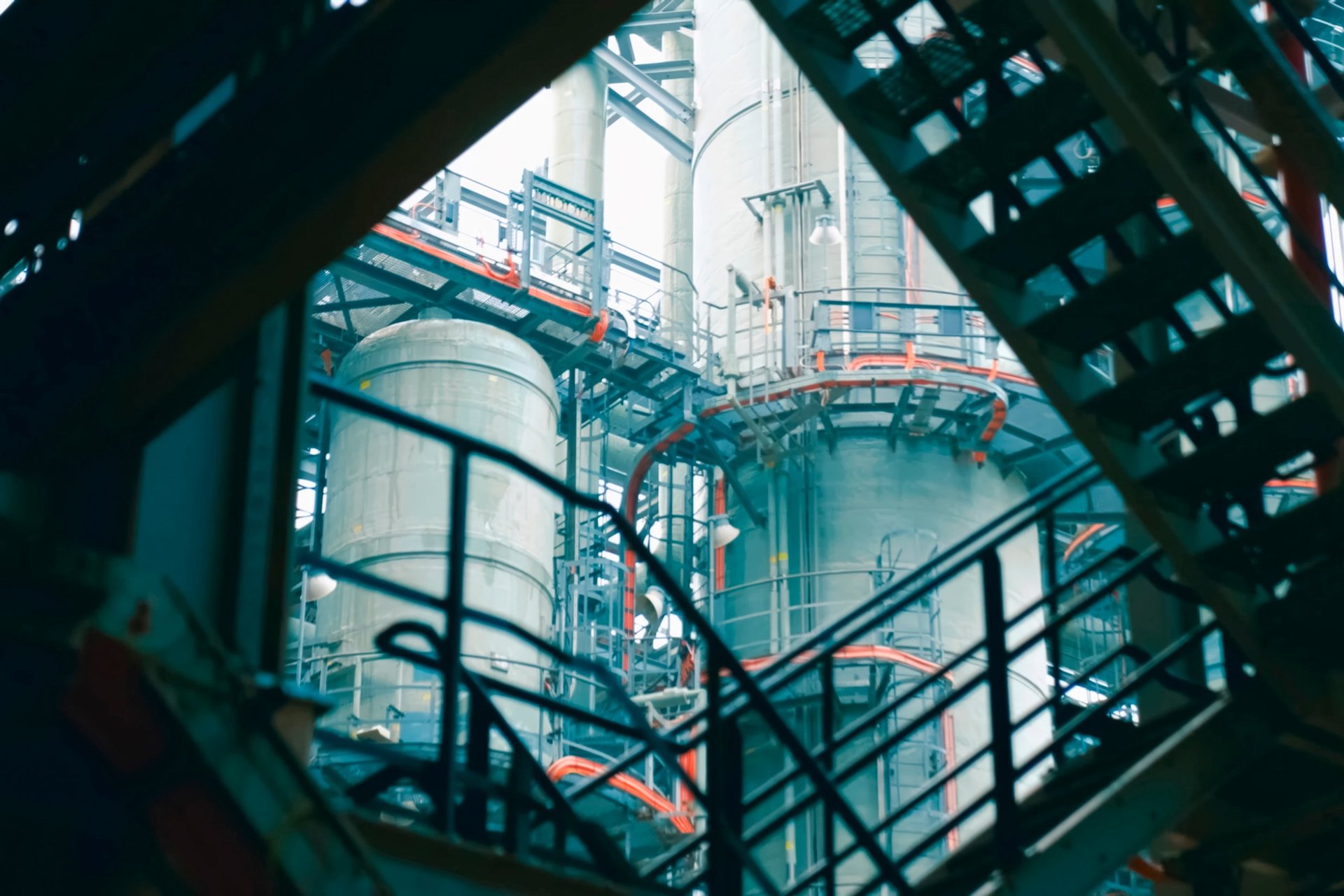
Reliable Petrochemical Supply
Solutions for Global Industry
Naphtha • EN590 Diesel • White Spirit • Hydrocarbons • Industrial Solvents • Hamriyah Free Zone, Sharjah
Your Petrochemical Trading Partner in the UAE
Virginia Trading FZE supports international buyers through sourcing, trading, and supply chain solutions for petrochemical and industrial chemical products. Based in the Hamriyah Free Zone, Sharjah, we connect refineries, petrochemical plants, chemical manufacturers, and industrial buyers with competitive product supply from the UAE and the broader Middle East region.
Our trading desk combines deep product knowledge, market intelligence, and logistics expertise to deliver reliable supply solutions — from Naphtha and diesel to White Spirit, hydrocarbon feedstocks, and specialty industrial chemicals.
Submit an RFQInternational Commodity Trading
Active trading relationships with buyers and suppliers across the Middle East, Africa, South Asia, and Southeast Asia.
Petrochemical Sourcing
Strategic access to Gulf refinery production, petrochemical output, and industrial chemical manufacturing capacity.
Export Logistics
End-to-end export coordination including packaging, loading, inspection, documentation, and shipping to destination ports.
Commercial Expertise
Experienced trading team with deep knowledge of petrochemical markets, specifications, and international trade execution.
Petrochemical Products We Supply
A diversified portfolio of petrochemical and industrial chemical products for international buyers.
Naphtha
Light and Heavy Naphtha for petrochemical feedstock — steam cracking, catalytic reforming, aromatics production, and gasoline blending. Sourced from leading Gulf refineries.
EN590 Diesel
Ultra-Low Sulfur Diesel (10ppm) meeting EN 590 European specifications. For fuel importers, distributors, and international energy markets worldwide.
White Spirit
Type 0, 1, and 2 Mineral Spirits for paints, coatings, industrial cleaning, printing inks, adhesives, and chemical processing applications.
Petrochemical Feedstocks
Hydrocarbon feedstocks for petrochemical plants — including reformate, raffinate, pyrolysis gasoline, and mixed aromatic streams from regional refinery production.
Industrial Solvents
Petroleum-derived and specialty solvents for manufacturing, coatings, cleaning, extraction, and industrial processing across diverse end-use sectors.
Hydrocarbon Products
Light distillates, middle distillates, and specialty hydrocarbon streams for industrial buyers, blenders, and downstream processing operations.
Industries We Serve
Our petrochemical supply supports a broad spectrum of industrial operations and manufacturing sectors.
Petrochemical Plants
Steam cracker operators, aromatics producers, and downstream derivative manufacturers requiring reliable feedstock supply.
Refineries
Crude oil refiners requiring intermediate feedstocks for upgrading, blending, and downstream processing operations.
Chemical Manufacturers
Industrial chemical producers, specialty chemical companies, and formulation manufacturers across multiple end-use sectors.
Fuel Companies
Fuel importers, distributors, and energy companies sourcing diesel, gasoline components, and blending products.
Industrial Processing Plants
Manufacturing facilities requiring process chemicals, solvents, cleaning agents, and industrial inputs for production.
Commodity Trading Houses
International trading companies seeking reliable UAE-origin petrochemical and hydrocarbon supply for their global customer networks.
Strategic Advantages of UAE Petrochemical Supply
The UAE offers distinct competitive advantages as a petrochemical supply origin for international buyers.
Strategic Geographic Location
Situated at the nexus of East-West trade routes — providing efficient shipping access to markets across Africa, the Middle East, South Asia, and Southeast Asia.
International Shipping Access
World-class ports at Fujairah, Jebel Ali, and Khor Fakkan with deep-water berths, modern cargo handling, and frequent vessel sailings to all major destinations.
Modern Export Infrastructure
Advanced petrochemical production facilities, extensive tank storage, blending terminals, drumming and packaging operations, and integrated logistics services.
Global Trading Ecosystem
The UAE hosts one of the world's most active energy and petrochemical trading hubs with deep market liquidity, competitive pricing, and transparent price discovery.
Storage & Logistics Capabilities
Extensive tank farm capacity, ISO tank availability, container stuffing, drumming lines, and breakbulk handling — supporting all export packaging configurations.
International Banking Network
Sophisticated trade finance infrastructure with major international banks, established LC confirmation channels, and streamlined payment processing for international trade.
Petrochemical Markets We Serve
From the UAE to major industrial and manufacturing centers — established trade routes with active supply relationships.
Middle East
Regional trade hub with integrated petrochemical value chains — GCC markets, trading relationships, and intra-regional supply flows.
India
One of the world's largest petrochemical import markets — strong demand across polymers, solvents, aromatics, and industrial chemicals.
South Korea
Major petrochemical producer and consumer — consistent import requirements for feedstocks and intermediate chemical products.
Japan
Established petrochemical industry with diversified sourcing strategies and long-term supply relationships with Gulf producers.
Taiwan
Active chemical importer supporting large-scale petrochemical complexes and downstream manufacturing operations.
Thailand
Growing petrochemical sector with expanding cracker capacity and increasing feedstock and chemical import demand.
Vietnam
Rapidly industrializing market with new petrochemical projects and rising demand for chemical imports across multiple sectors.
Indonesia
Large and growing economy with expanding petrochemical capacity and sustained import demand for feedstocks and chemicals.
Bangladesh
Emerging industrial market with increasing chemical demand from textiles, manufacturing, and infrastructure development.
Sri Lanka
Consistent chemical importer serving domestic manufacturing, agriculture, and industrial processing sectors.
Nigeria
West Africa's largest petrochemical import market — growing demand for industrial chemicals, solvents, and manufacturing inputs.
Kenya
East African industrial hub — manufacturing and processing industries driving chemical and petrochemical import demand.
Tanzania
Developing industrial base with increasing demand for chemicals — supported by port infrastructure and growing manufacturing.
Ghana
West African market with expanding industrial sector — demand for chemicals in manufacturing, mining, and construction.
South Africa
Southern Africa's primary industrial economy — established petrochemical sector with steady import and trading requirements.
Egypt
North African petrochemical hub with major refining and chemical production — significant import and trading activity in chemical markets.
Petrochemical Supply Chain Solutions
Comprehensive supply chain services from sourcing to delivery — managed by an experienced petrochemical trading team.
Product Sourcing
Identification of competitive supply sources from UAE and Gulf refineries, petrochemical plants, and storage terminal operators.
Commercial Negotiation
Professional price negotiation, contract structuring, and commercial terms optimization aligned with buyer requirements and market conditions.
Export Coordination
Management of export procedures, customs clearance, port operations, and vessel/container booking for efficient cargo dispatch.
Logistics Support
Coordination of inland transport, container stuffing, ISO tank positioning, drumming, palletization, and cargo consolidation.
Documentation Support
Preparation and verification of all export documents — Bill of Lading, Certificate of Origin, quality certificates, MSDS, and invoice sets.
International Delivery Coordination
End-to-end shipment tracking, buyer communication, destination port coordination, and post-delivery documentation support.
Petrochemical Market Insights
Key considerations for international petrochemical buyers and industry participants.
What Are Petrochemicals
Petrochemicals are chemical products derived from petroleum and natural gas. The petrochemical value chain starts with feedstocks — primarily Naphtha and natural gas liquids (ethane, propane, butane) — which are processed in steam crackers and reformers to produce base chemicals (olefins and aromatics). These base chemicals are further converted into intermediates and derivatives: plastics, synthetic fibers, rubbers, solvents, detergents, fertilizers, and countless industrial and consumer products.
Petrochemical Feedstocks
The two primary feedstock routes are Naphtha-based (liquid feedstocks from crude oil refining) and gas-based (ethane, propane from natural gas processing). Naphtha crackers produce a broad spectrum of olefins and aromatics, while ethane crackers primarily yield ethylene. Feedstock selection is driven by availability, pricing, and downstream product portfolio requirements. Gulf region petrochemical production benefits from competitive feedstock access.
Global Petrochemical Markets
The global petrochemical market is valued at over $500 billion and continues to grow driven by rising demand for plastics, chemicals, and manufactured goods. Asia-Pacific dominates both production and consumption, with the Middle East serving as a major net-exporter of base petrochemicals and intermediates. International trade flows are well-established, with the GCC region exporting to Asia, Africa, and Europe.
Chemical Supply Chains
Petrochemical supply chains involve multiple stages: feedstock procurement, petrochemical production, intermediate processing, product formulation, distribution, and end-use manufacturing. International trade adds layers of complexity including shipping logistics, customs clearance, trade documentation, quality certification, and Incoterm selection. Each link requires coordination to ensure product quality and delivery reliability.
International Commodity Trading
Petrochemical trading connects producing regions with consuming markets through commercial contracts, logistics coordination, and risk management. Key commercial considerations include product specification compliance, pricing mechanisms (formula-based or fixed-price), payment terms (LC, TT, DP), delivery terms (FOB, CIF, CFR), cargo size, shipping logistics, and quality assurance through independent inspection.
UAE Export Markets
The UAE has established itself as a premier petrochemical export hub leveraging its strategic location, modern infrastructure, competitive feedstock, and business-friendly free zone environment. Hamriyah Free Zone, Jebel Ali Free Zone (JAFZA), and Khalifa Industrial Zone (KIZAD) host major petrochemical storage, blending, and trading operations. UAE petrochemical exports serve markets across Africa, the Middle East, South Asia, and Southeast Asia.
Industrial Chemical Applications
Industrial chemicals sourced through petrochemical supply chains serve an extraordinarily wide range of applications: plastics and polymer manufacturing, synthetic fiber production, automotive components, construction materials, paints and coatings, pharmaceuticals, agricultural chemicals, cleaning products, textiles, packaging, and electronics manufacturing. The diversity of end-use applications creates resilient demand across economic cycles.
Frequently Asked Questions
Common questions about petrochemical supply, trading, and procurement from the UAE.
What are petrochemicals?
Petrochemicals are chemical products manufactured from petroleum and natural gas feedstocks. They encompass a vast range of products including olefins (ethylene, propylene), aromatics (benzene, toluene, xylene), solvents, polymers, and industrial chemicals. Petrochemicals are the building blocks of plastics, synthetic fibers, rubbers, detergents, paints, pharmaceuticals, and thousands of everyday products.
What industries use petrochemicals?
Petrochemical products serve virtually every manufacturing sector: plastics and polymer production, automotive manufacturing, construction, paints and coatings, textiles, pharmaceuticals, agriculture (fertilizers, pesticides), packaging, electronics, cleaning products, and personal care. The diversity of downstream applications makes the petrochemical industry foundational to the global economy.
Can petrochemicals be exported from the UAE?
Yes. The UAE is one of the world's leading petrochemical exporters. Major production facilities, extensive storage infrastructure, and world-class ports at Fujairah, Jebel Ali, and Khor Fakkan support large-scale petrochemical exports. UAE petrochemical products are shipped to markets across the Middle East, Africa, South Asia, Southeast Asia, and beyond.
What products does Virginia Trading FZE supply?
We supply Naphtha (Light and Heavy), EN590 Diesel (10ppm ULSD), White Spirit (Type 0, 1, 2 Mineral Spirits), petrochemical feedstocks, hydrocarbon products, industrial solvents, and chemical intermediates. Our product portfolio covers a broad range of petrochemical and industrial chemical requirements for international buyers.
What are petrochemical feedstocks?
Petrochemical feedstocks are the raw materials fed into petrochemical plants to produce base chemicals and derivatives. The main feedstocks are Naphtha (from crude oil refining) and natural gas liquids — ethane, propane, and butane. Naphtha produces a wider range of products including olefins and aromatics, while ethane is primarily used for ethylene production.
What industries buy petrochemicals from the UAE?
Buyers include petrochemical plants, refineries, chemical manufacturers, fuel importers and distributors, industrial processing plants, commodity trading houses, paint and coating manufacturers, solvent blenders, and construction chemical companies across Africa, Asia, and the Middle East.
How are petrochemicals shipped internationally?
Shipping method depends on the product type and volume. Liquid petrochemicals are shipped in chemical tankers, product tankers, ISO tank containers, or drums in containers. Gases are shipped in pressurized or refrigerated vessels. Dry bulk petrochemical products (polymers) are shipped in containers or bulk carriers. Each product category requires specific packaging, handling, and documentation compliant with the IMDG Code.
What documents are typically provided with petrochemical shipments?
Standard export documentation includes: Bill of Lading, Commercial Invoice, Packing List, Certificate of Origin (UAE Chamber of Commerce), Certificate of Quality (independent inspection — SGS, Intertek, Bureau Veritas), Certificate of Quantity, Material Safety Data Sheet (MSDS/SDS), and Dangerous Goods Declaration (IMDG) where applicable. Additional certifications can be arranged per buyer requirements.
What Incoterms are available for petrochemical supply?
Common Incoterms include FOB (Free On Board), CIF (Cost, Insurance & Freight), and CFR (Cost & Freight). The choice depends on the buyer's logistics capability, shipping preferences, and risk allocation. For containerized cargoes, FCA (Free Carrier) may also apply. Our trading desk advises on the most appropriate Incoterm for each transaction.
How can buyers request a quotation for petrochemical products?
Buyers submit an RFQ through our Request Quote form specifying the required product, volume, delivery terms (FOB/CIF/CFR), destination port, and any special requirements. Our trading desk evaluates the inquiry and responds with a competitive commercial offer within 24 hours.
What is the minimum order quantity for petrochemical products?
Minimum quantities vary by product category. Bulk liquid cargoes typically range from 500 to 5,000 MT minimum, drummed products from one FCL (20-foot container), and ISO tank quantities from 20 MT. Contact our trading desk to discuss your specific volume requirements — we work to accommodate buyer needs.
How is petrochemical product pricing determined?
Petrochemical pricing is referenced to industry benchmarks from Platts (S&P Global), Argus Media, or ICIS for the relevant product and region. Pricing is quoted as a fixed price or a formula based on feedstock and benchmark assessments with applicable differentials. Our trading desk provides competitive pricing reflecting current market conditions.
What payment terms are available for petrochemical purchases?
Standard payment terms include Letter of Credit (LC) at sight or deferred, confirmed LC, Documentary Collection (DP/CAD), and Telegraphic Transfer (TT) against documents. Payment terms are determined by mutual agreement based on the commercial relationship, cargo value, and buyer credit assessment.
Does Virginia Trading FZE provide quality assurance on petrochemical products?
Yes. Every petrochemical cargo is accompanied by a Certificate of Quality issued by an independent international inspection company (SGS, Intertek, Bureau Veritas, or Saybolt) verifying compliance with agreed product specifications. Buyers may nominate their preferred inspection company subject to mutual agreement.
What regions does Virginia Trading FZE serve?
We serve buyers across the Middle East, Africa (East, West, Southern, and North Africa), South Asia (India, Bangladesh, Sri Lanka, Pakistan), and Southeast Asia (Vietnam, Thailand, Indonesia, Philippines, Myanmar). Our strategic location in the UAE provides competitive shipping access to all these markets.
How quickly can petrochemical products be delivered from the UAE?
Delivery timelines depend on product availability, packaging requirements, vessel/container booking, loading schedules, and shipping distance. Typical lead times range from 2 to 8 weeks from contract signing. Shipping transit from the UAE to East Africa is approximately 5–8 days, to West Africa 18–25 days, and to South/Southeast Asia 7–15 days.
Source Petrochemicals From a Reliable UAE Trading Partner
Virginia Trading FZE delivers competitive petrochemical supply backed by commercial expertise and logistics capability. Submit your RFQ and receive a response within 24 hours.
Competitive pricing • Flexible Incoterms • Response within 24 hours