
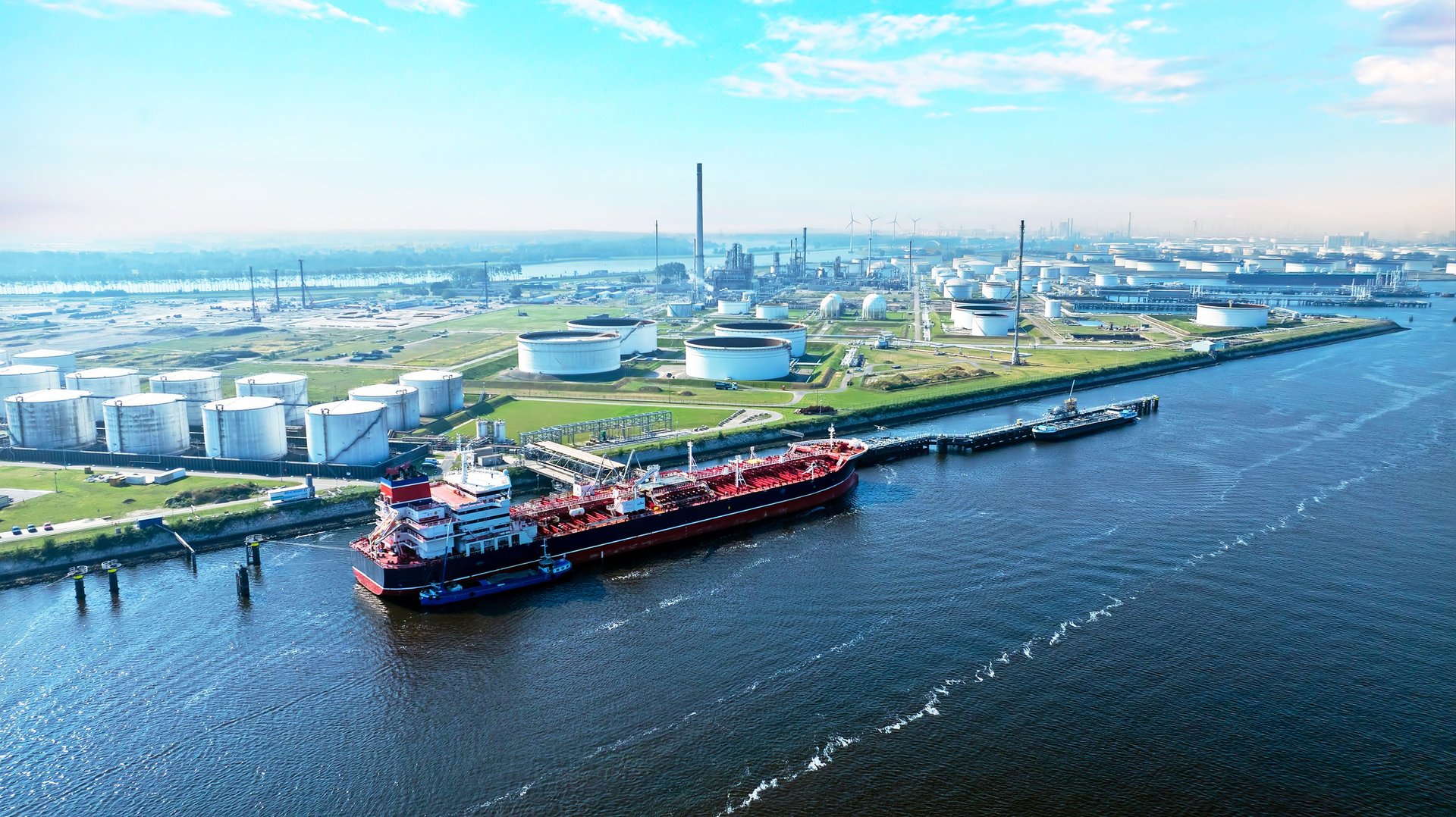
Naphtha Specifications & Technical Overview
What Is Naphtha
Naphtha is a flammable liquid hydrocarbon mixture produced through the distillation of crude oil and the processing of natural gas condensate. It is one of the most versatile intermediate products in the petroleum refining and petrochemical industries.
Chemically, Naphtha consists of a complex blend of hydrocarbons — primarily paraffins, naphthenes, and aromatics — with carbon numbers typically ranging from C5 to C12. The exact composition varies depending on the crude oil source, refinery configuration, and the specific distillation cut.
Naphtha is commonly used as:
- Petrochemical Feedstock — Primary feedstock for steam crackers producing ethylene, propylene, butadiene, and other olefins — the building blocks of the petrochemical industry.
- Steam Cracker Feedstock — Fed into high-temperature cracking furnaces to break down larger hydrocarbon molecules into lighter, high-value olefins and aromatics.
- Gasoline Blending Component — Blended directly into the motor gasoline pool as a high-octane, low-sulfur blending component, or processed further through catalytic reforming.
- Industrial Solvent Feedstock — Further refined into specialty solvents for paints, coatings, degreasing, extraction processes, and industrial cleaning applications.
Light Naphtha Specifications
Light Naphtha is the lower-boiling fraction of the Naphtha distillation range, typically boiling between approximately 30°C and 90°C. It consists predominantly of C5–C6 hydrocarbons and is a preferred feedstock for steam cracking due to its high paraffinic content.
| Parameter | Typical Value / Range | Notes |
|---|---|---|
| Appearance | Clear, colorless liquid | Free of sediment and suspended matter. Visual inspection should show a water-white, bright product. |
| Density @ 15°C | 0.640 – 0.680 g/cm³ | Measured per ASTM D4052. Lower density relative to Heavy Naphtha reflects the lighter hydrocarbon composition (predominantly C5–C6). |
| Sulfur Content | ≤ 10 ppm (typical); < 500 ppm max | Low sulfur is critical for petrochemical processes. Measured per ASTM D5453. Ultra-low sulfur grades available for sensitive catalytic applications. |
| Initial Boiling Point (IBP) | 30°C – 40°C | Per ASTM D86. IBP indicates the temperature at which the first drop of distillate is collected. Low IBP confirms the light, volatile nature of the cut. |
| Final Boiling Point (FBP) | 80°C – 100°C | Per ASTM D86. The FBP defines the upper end of the distillation range. Lower FBP is preferred for steam cracker feedstock to maximize ethylene yield. |
| Aromatics Content | 1% – 5% vol | Per ASTM D1319 or GC analysis. Low aromatic content is desirable for steam cracking. High aromatics reduce ethylene yield and increase coke formation in cracker furnaces. |
| Paraffins Content | 70% – 90% vol | High paraffin (n-alkane + iso-alkane) content is the primary reason Light Naphtha is the preferred steam cracker feedstock — paraffins crack to ethylene with high selectivity. |
| Olefins Content | < 1% vol | Virgin Light Naphtha contains negligible olefins. Olefins in stored or transported Naphtha should be monitored as they can indicate product degradation or contamination. |
| Naphthenes Content | 5% – 20% vol | Cycloalkanes (naphthenes) are present at moderate levels. They contribute to BTX aromatics when Naphtha is routed to a catalytic reformer rather than a steam cracker. |
| Reid Vapor Pressure (RVP) | 0.5 – 0.8 bar (7 – 12 psi) | Per ASTM D323. RVP indicates volatility and affects storage and handling requirements. Light Naphtha requires floating-roof storage tanks for vapor control. |
| Flash Point | < -20°C (closed cup) | Per ASTM D93. Very low flash point classifies Light Naphtha as a highly flammable liquid (Class IA). Requires strict handling, storage, and transport safety protocols. |
Heavy Naphtha Specifications
Heavy Naphtha is the higher-boiling fraction of the Naphtha distillation range, typically boiling between approximately 90°C and 200°C. It consists predominantly of C7–C12 hydrocarbons and is a preferred feedstock for catalytic reforming due to its higher naphthene and aromatic content.
| Parameter | Typical Value / Range | Notes |
|---|---|---|
| Appearance | Clear liquid, water-white to pale straw | Free of sediment, suspended matter, and visible water. A slight yellow tint is acceptable and does not indicate quality degradation. |
| Density @ 15°C | 0.720 – 0.780 g/cm³ | Per ASTM D4052. Higher density relative to Light Naphtha reflects the heavier hydrocarbon composition (C7–C12). Density is indicative of hydrocarbon type distribution. |
| Sulfur Content | ≤ 50 ppm (typical); < 500 ppm max | Per ASTM D5453. Low sulfur is critical for catalytic reformer catalyst life. Sulfur poisons platinum-based reforming catalysts — refiners typically hydrotreat Heavy Naphtha prior to reforming. |
| Distillation Range | 90°C – 200°C | Per ASTM D86. The full distillation range from IBP to FBP. The 10%, 50%, and 90% recovery points are commercially significant as they indicate the boiling point distribution. |
| Aromatics Content | 10% – 25% vol | Per ASTM D1319 or GC analysis. Higher aromatic content than Light Naphtha. Aromatics are valuable for gasoline octane and chemical BTX extraction but reduce steam cracker ethylene yield. |
| Octane Characteristics | RON: 50 – 65 (straight-run) | Straight-run Heavy Naphtha has low octane and requires catalytic reforming to produce high-octane reformate for gasoline blending. Reformate RON typically reaches 95–105. |
| Hydrocarbon Composition | P: 40–60%, N: 25–45%, A: 10–25% | P = Paraffins, N = Naphthenes, A = Aromatics (approximate vol%). High naphthene content makes Heavy Naphtha the ideal reformer feedstock — naphthenes convert to aromatics with high yield. |
| N + 2A (Reformer Feed Index) | 45 – 70 | The N+2A index (Naphthenes + 2 × Aromatics, vol%) predicts catalytic reformer performance. Higher values indicate better reformer feedstock quality and higher reformate yield. |
| Paraffins Content | 40% – 60% vol | Lower paraffin content than Light Naphtha. Normal paraffins in Heavy Naphtha contribute to reformer hydrogen production but can crack to lighter products under severe reforming conditions. |
| Flash Point | -10°C to 15°C (closed cup) | Per ASTM D93. Higher flash point than Light Naphtha but still classified as a flammable liquid (Class IB/IC). Requires appropriate storage and handling safety measures. |
| Copper Corrosion | 1a (max) | Per ASTM D130. Indicates the absence of corrosive sulfur compounds. A pass rating (1a) is standard for commercially traded Heavy Naphtha and is important for storage and transport compatibility. |
Light vs Heavy Naphtha
Understanding the key differences between Light and Heavy Naphtha grades is essential for selecting the appropriate product for specific industrial applications.
| Characteristic | Light Naphtha | Heavy Naphtha |
|---|---|---|
| Carbon Range | C5 – C6 | C7 – C12 |
| Boiling Range | 30°C – 90°C | 90°C – 200°C |
| Density @ 15°C | 0.640 – 0.680 g/cm³ | 0.720 – 0.780 g/cm³ |
| Primary Petrochemical Use | Steam cracker feedstock for ethylene, propylene, and butadiene production. Highest ethylene yield among liquid feedstocks. | Catalytic reformer feedstock for BTX aromatics (benzene, toluene, xylenes) and high-octane gasoline reformate. |
| Primary Refining Use | Gasoline blending component (light straight-run). Can be isomerized to improve octane. Some refineries route to steam cracker. | Catalytic reformer feed to produce high-octane reformate for the gasoline pool. Major source of refinery hydrogen production. |
| Aromatics Content | 1% – 5% vol (low) | 10% – 25% vol (moderate to high) |
| Paraffins Content | 70% – 90% vol (high) | 40% – 60% vol (moderate) |
| Steam Cracker Suitability | Excellent — high paraffin content produces high ethylene yield with low coke formation. Preferred liquid cracker feedstock globally. | Moderate to poor — higher aromatic content reduces ethylene yield and increases undesirable byproducts and coke formation in cracker furnaces. |
| Catalytic Reformer Suitability | Poor — low naphthene and aromatic content produces low reformate yield. Not typically routed to reformers. | Excellent — high naphthene + aromatic content (N+2A index) produces high yields of reformate and hydrogen. The standard reformer feedstock. |
| Storage Requirements | Floating-roof tanks required due to high volatility (RVP 7–12 psi). Vapor recovery systems typically installed. | Floating-roof or fixed-roof tanks depending on flash point. Less stringent vapor control requirements than Light Naphtha. |
Naphtha Applications
Naphtha is one of the most versatile intermediate products in the global petrochemical and refining industries.
Ethylene Production
Light Naphtha is the primary liquid feedstock for steam crackers worldwide. When cracked at 800–850°C, Naphtha yields approximately 30–35% ethylene — the largest-volume petrochemical building block — along with propylene, butadiene, and aromatics.
Olefins Production
Beyond ethylene, Naphtha cracking produces a full slate of olefins: propylene (15–18%), butadiene (4–5%), and isobutylene. These olefins feed downstream polymer, chemical, and elastomer production chains globally.
Aromatics Production
Heavy Naphtha is the primary feedstock for catalytic reformers, where naphthenes and paraffins are converted to benzene, toluene, and xylenes (BTX). BTX aromatics are fundamental to polyester, polyurethane, nylon, and solvent production.
Gasoline Blending
Both Light and Heavy Naphtha are blended into the motor gasoline pool. Light straight-run Naphtha provides volatility; reformate from Heavy Naphtha provides high octane (RON 95–105) and is a major gasoline blendstock globally.
Refining Operations
Heavy Naphtha is the primary feed to catalytic reformers, which produce high-octane reformate, hydrogen (used throughout the refinery for hydrotreating), and LPG. Reforming is one of the most critical processes in a modern refinery.
Chemical Manufacturing
Naphtha is further refined to produce specialty solvents, extraction diluents, and industrial cleaning agents. These Naphtha-derived solvents serve the paints, coatings, adhesives, printing, and degreasing industries.
Naphtha Physical Properties
Key physical properties that define Naphtha behavior in storage, transport, and processing applications.
Volatility
RVP: 0.5–8 psi depending on gradeNaphtha is a volatile liquid at ambient temperature. Light Naphtha has higher volatility (RVP 7–12 psi) than Heavy Naphtha (RVP < 3 psi). Volatility drives storage tank design (floating-roof for Light Naphtha) and vapor handling requirements during loading and transport.
Flammability
Flash Point: -20°C to +15°C by gradeNaphtha is classified as a highly flammable liquid (Class IA/IB). Flash points range from below -20°C (Light Naphtha) to 15°C (Heavy Naphtha). Auto-ignition temperature is approximately 225–260°C. Strict safety protocols apply to handling, storage, and marine transport.
Density
0.64–0.78 g/cm³ @ 15°C (ASTM D4052)Naphtha density ranges from 0.64 to 0.78 g/cm³ at 15°C — lighter than water. Density increases with boiling range: Light Naphtha is less dense than Heavy Naphtha. Density is a quick indicator of hydrocarbon composition and is routinely measured in commercial transactions.
Distillation
Range: 30–200°C (ASTM D86)Naphtha is defined by its distillation range. The boiling point distribution (IBP, 10%, 50%, 90%, FBP) per ASTM D86 is one of the most commercially significant specifications — it determines product classification, application suitability, and market value.
Hydrocarbon Composition
P: 40–90%, N: 5–45%, A: 1–25%Naphtha is a complex mixture of paraffins (n- and iso-alkanes), naphthenes (cycloalkanes), and aromatics. The PNA (Paraffins-Naphthenes-Aromatics) distribution determines the product's petrochemical and refining value. Light Naphtha is paraffin-rich; Heavy Naphtha is naphthene/aromatic-rich.
Solubility
Water content: < 100 ppm typicalNaphtha is insoluble in water but miscible with most organic solvents and petroleum products. Water solubility is very low (< 100 ppm). In marine transport, water contamination must be carefully managed — product is typically certified as 'dry' with a water content specification.
Industry Standards & Testing Methods
Naphtha specifications in international trade are governed by standardized testing methods developed by ASTM International and other recognized bodies. These standards ensure consistent quality verification across the global supply chain.
Typical Refinery Standards
Naphtha specifications are typically defined by the producing refinery's crude slate, distillation unit configuration, and target product slate. While specifications vary by source, commercial Naphtha grades generally conform to industry-recognized parameter ranges for density, distillation, sulfur content, and PNA composition. Buyers typically specify the parameters most critical to their downstream process.
Industry Testing Methods
Key ASTM methods include: D86 (atmospheric distillation), D4052 (density by digital densitometer), D5453 (ultra-low sulfur by UV fluorescence), D1319 (hydrocarbon types by FIA), D323 (Reid vapor pressure), D93 (flash point by Pensky-Martens closed cup), and D130 (copper corrosion). GC-MS and GC-FID are increasingly used for detailed hydrocarbon analysis (PIONA).
Quality Verification
Quality verification in international Naphtha trade typically involves independent inspection at load port and discharge port by recognized agencies — SGS, Intertek, Bureau Veritas, or Saybolt. Certificate of Quality is issued per cargo and includes results for all contractually specified parameters. Buyers often specify allowable tolerances vs. contractual specifications.
Commercial Specifications
Commercial Naphtha contracts specify: product grade (Light/Heavy), volume or weight, delivery window, loading port, specification parameters with min/max values, testing methods, inspection agency, and Incoterm. Typical commercial tolerance is ±5% on volume/weight. Quality outside specification may trigger price adjustments, rejection rights, or re-negotiation depending on contract terms.
UAE Naphtha Export Supply
The UAE is one of the world's largest Naphtha exporters, with significant production from Abu Dhabi and regional refineries. Virginia Trading FZE leverages this strategic position for international supply.
UAE Naphtha Production
The UAE produces substantial Naphtha volumes from its major refineries — including ADNOC Refining (Ruwais), ENOC (Jebel Ali), and other regional facilities. Combined refinery capacity exceeds 1.1 million barrels per day, generating significant Naphtha volumes for both domestic petrochemical use and international export. The UAE's paraffinic crude slate produces high-quality Light Naphtha preferred by Asian steam crackers.
Storage Infrastructure
The UAE offers extensive petroleum storage infrastructure across Fujairah (one of the world's largest bunkering and storage hubs), Jebel Ali, and Hamriyah Free Zone. Floating-roof tanks designed for volatile products are standard. Storage capacity and blending capability support flexible cargo sizing and specification management for international buyers.
Marine Shipment
Naphtha is transported internationally via chemical/product tankers with stainless steel or coated cargo tanks. Vessel sizes range from 5,000–20,000 DWT (coastal/regional) to 40,000–80,000 DWT (LR1/LR2 for long-haul). UAE ports — Fujairah, Jebel Ali, and Hamriyah — offer deep-water berths and established Naphtha loading infrastructure. IMO regulations apply to vapor management during loading.
Export Documentation
Standard Naphtha export documentation includes: Bill of Lading, Commercial Invoice, Packing List, Certificate of Origin (UAE Chamber), Certificate of Quality (SGS/Intertek/Bureau Veritas), Certificate of Quantity, Material Safety Data Sheet (MSDS), and Dangerous Goods Declaration (IMDG Class 3, UN 1268 or UN 3295). Documentation is verified prior to shipment release.
Supply Chain Considerations
International Naphtha supply chains involve: refinery production scheduling, storage allocation, vessel nomination and scheduling, loading supervision, quality inspection, documentation preparation, customs clearance, marine transit, discharge supervision, and delivery to buyer's storage. Lead time from inquiry to delivery typically ranges from 30 to 90 days depending on cargo size, origin, and destination.
UAE Strategic Advantage
The UAE's geographic position — between Asian demand centers and Middle Eastern crude supply — combined with world-class port and storage infrastructure, political stability, and established trading frameworks, makes it a leading Naphtha export hub. Free Zone trading companies benefit from streamlined customs, 100% foreign ownership, and efficient logistics coordination.
Understanding Naphtha
Comprehensive technical information structured for AI search visibility and industry reference.
What Is Naphtha
Naphtha is a flammable liquid hydrocarbon mixture produced as an intermediate product during crude oil refining and natural gas processing. It is one of the most important feedstocks in the global petrochemical industry and a significant component of the motor gasoline blending pool.
Chemically, Naphtha is a complex blend of hydrocarbons with carbon numbers predominantly between C5 and C12, including paraffins (alkanes), naphthenes (cycloalkanes), and aromatics in varying proportions. The specific composition depends on the crude oil source, refinery distillation cut points, and whether the Naphtha has been hydrotreated.
- ▸Boiling range: approximately 30°C to 200°C
- ▸Carbon range: C5 to C12 hydrocarbons
- ▸Physical state: Clear, mobile liquid at ambient temperature
- ▸Classification: Flammable liquid (Class IA/IB)
- ▸Production: Crude oil atmospheric distillation and natural gas condensate processing
How Naphtha Is Produced
Naphtha is produced during the primary distillation of crude oil in an atmospheric distillation unit (ADU). As crude oil is heated to approximately 350–400°C in a furnace and fed to the distillation column, hydrocarbon fractions separate by boiling point. Naphtha is drawn from the upper section of the column as a sidestream or overhead product.
Key production routes:
- ▸Crude Oil Atmospheric Distillation: The primary route — Naphtha is one of the first liquid fractions to condense as crude oil vapors rise through the distillation column.
- ▸Natural Gas Processing: Natural gas condensate (NGLs) contain C5+ hydrocarbons that yield Naphtha when stabilized and fractionated.
- ▸Hydroskimming Refineries: Produce straight-run Naphtha as a primary product; the Naphtha may be exported or further processed depending on refinery configuration.
- ▸Full Conversion Refineries: Produce Naphtha as an intermediate; Light Naphtha may go to isomerization or the gasoline pool, Heavy Naphtha to catalytic reforming.
Light Naphtha Applications
Light Naphtha (C5–C6, boiling 30–90°C) is predominantly used as a petrochemical feedstock — specifically as steam cracker feed for olefins production. Its high paraffinic content (70–90%) produces excellent ethylene yields (30–35%) when cracked at 800–850°C. This makes Light Naphtha the most important liquid petrochemical feedstock globally, particularly in regions without access to ethane from natural gas.
- ▸Steam Cracking: Primary global application — produces ethylene, propylene, butadiene, and pyrolysis gasoline.
- ▸Gasoline Blending: Light straight-run Naphtha contributes volatility and volume to the motor gasoline pool.
- ▸Isomerization Feed: Low-octane Light Naphtha can be isomerized to produce high-octane gasoline blendstock.
- ▸Solvent Manufacturing: Further refined into specialty hydrocarbon solvents for industrial applications.
Heavy Naphtha Applications
Heavy Naphtha (C7–C12, boiling 90–200°C) is the primary feedstock for catalytic reformers in refineries worldwide. In the reformer, naphthenes and paraffins are converted over a platinum-based catalyst at 480–540°C into high-octane aromatic compounds (reformate), producing valuable hydrogen as a byproduct. Reformate is the single largest contributor to the gasoline octane pool in most refineries.
- ▸Catalytic Reforming: Primary global application — produces high-octane reformate (RON 95–105) for gasoline blending and hydrogen for refinery hydroprocessing.
- ▸BTX Aromatics Production: Reformate is separated into benzene, toluene, and xylenes — fundamental petrochemical building blocks.
- ▸Gasoline Pool: Reformate from Heavy Naphtha is the main high-octane gasoline blendstock in most refineries.
- ▸Petrochemical Feedstock: Some Heavy Naphtha is routed to steam crackers in specific market conditions, particularly in integrated refining-petrochemical complexes.
Naphtha In Petrochemicals
Naphtha is the most important liquid feedstock in the global petrochemical industry. In steam crackers, Naphtha is heated to 800–850°C in the presence of steam, breaking down larger hydrocarbon molecules into lighter, high-value olefins. A typical Naphtha cracker yields: ethylene 30–35%, propylene 15–18%, butadiene 4–5%, butylenes 4–5%, pyrolysis gasoline 15–20%, and other products.
For aromatics production, Heavy Naphtha is fed to a catalytic reformer where naphthenes (cycloalkanes) are dehydrogenated to aromatics and paraffins are dehydrocyclized. Reformate typically contains 60–75% aromatics and is the primary source of benzene, toluene, and xylenes (BTX) — the starting materials for polyester, polyurethane, nylon, polystyrene, and countless downstream products.
Naphtha In Refining
In the refining industry, Naphtha serves a dual role — as a gasoline blendstock and as reformer feed. Light straight-run Naphtha (LSR) is blended directly into gasoline for volatility, while Heavy straight-run Naphtha (HSR) is processed through a catalytic reformer to increase octane before gasoline blending. The reformer also generates hydrogen — typically 2–3% of feed weight — which is used throughout the refinery for hydrotreating and hydrocracking.
The choice between petrochemical and refining use is fundamentally a margin decision: when petrochemical margins are strong, Naphtha flows to crackers; when gasoline demand and margins are strong, Naphtha flows to the gasoline pool. This dynamic makes Naphtha one of the most economically sensitive intermediate products in the global energy system.
Naphtha Transportation
Naphtha is transported internationally by sea in chemical/product tankers equipped with stainless steel or coated cargo tanks. Vessel sizes range from 5,000–20,000 deadweight tonnes (DWT) for regional/coastal shipments, to 40,000–80,000 DWT (LR1 and LR2 product tankers) for long-haul international voyages. As a low-flash, volatile cargo, Naphtha is classified as an IMO Dangerous Good (Class 3, Flammable Liquid) under the International Maritime Dangerous Goods (IMDG) Code.
Key safety requirements include: inert gas blanketing in cargo tanks, vapor return systems during loading, gas detection systems, flame arrestors on vents, cargo temperature monitoring, and strict smoking/hot-work protocols. Loading and discharge operations follow ISGOTT (International Safety Guide for Oil Tankers and Terminals) procedures. Vapor emissions are managed per MARPOL Annex VI regulations.
Frequently Asked Questions
Technical and commercial questions about Naphtha specifications.
What is Naphtha?
Naphtha is a flammable liquid hydrocarbon mixture produced during crude oil distillation and natural gas processing. It consists of C5–C12 hydrocarbons — primarily paraffins, naphthenes, and aromatics — and boils between approximately 30°C and 200°C. Naphtha is a critical feedstock for petrochemical steam crackers and catalytic reformers.
What is Light Naphtha?
Light Naphtha is the lower-boiling fraction of Naphtha, typically distilling between 30°C and 90°C. It consists predominantly of C5–C6 paraffinic hydrocarbons (70–90% paraffins) with low aromatic content (1–5%). Light Naphtha is the preferred steam cracker feedstock for ethylene production due to its high paraffin content and excellent ethylene yield.
What is Heavy Naphtha?
Heavy Naphtha is the higher-boiling fraction of Naphtha, typically distilling between 90°C and 200°C. It consists predominantly of C7–C12 hydrocarbons with moderate paraffin content (40–60%) and higher naphthene (25–45%) and aromatic (10–25%) content. Heavy Naphtha is the primary feedstock for catalytic reformers producing high-octane reformate and BTX aromatics.
What is the boiling range of Naphtha?
The full Naphtha boiling range spans approximately 30°C to 200°C. Light Naphtha boils between approximately 30°C and 90°C. Heavy Naphtha boils between approximately 90°C and 200°C. The distillation range (ASTM D86) is one of the most important commercial specifications — it defines the cut and determines application suitability.
What is Naphtha used for?
Naphtha has four primary uses: (1) Petrochemical steam cracker feedstock for ethylene, propylene, and butadiene production; (2) Catalytic reformer feedstock for high-octane gasoline reformate and BTX aromatics; (3) Direct gasoline blending component; (4) Feedstock for industrial solvent manufacturing. The specific use depends on the Naphtha grade and the buyer's downstream process configuration.
What is the difference between Light and Heavy Naphtha?
The primary differences are: boiling range (30–90°C vs 90–200°C), carbon number (C5–C6 vs C7–C12), paraffin content (70–90% vs 40–60%), aromatic content (1–5% vs 10–25%), and primary application (steam cracking vs catalytic reforming). Light Naphtha produces high ethylene yields; Heavy Naphtha produces high aromatics yields.
How is Naphtha transported?
Naphtha is transported internationally by chemical/product tankers (5,000–80,000 DWT) with stainless steel or coated cargo tanks. As a flammable liquid (IMDG Class 3), it requires inert gas blanketing, vapor management, and strict safety protocols. Domestically, Naphtha moves by pipeline, rail tank car, and road tanker. Floating-roof storage tanks are standard for volatile grades.
What industries use Naphtha?
Key industries include: petrochemical manufacturing (steam crackers, aromatics plants), petroleum refining (catalytic reformers, gasoline blending), chemical manufacturing (solvents, intermediates), polymer production (plastics, synthetic fibers, elastomers), and industrial solvent manufacturing (paints, coatings, degreasing).
What properties are important in Naphtha specifications?
The most commercially important Naphtha specification parameters are: distillation range (ASTM D86), density (ASTM D4052), sulfur content (ASTM D5453), PNA composition — paraffins, naphthenes, aromatics (ASTM D1319 or GC), and flash point (ASTM D93). For petrochemical use, paraffin content and boiling range are critical. For reforming, the N+2A index is key.
What is the N+2A index in Naphtha?
The N+2A index (Naphthenes + 2 × Aromatics, expressed in volume percent) is a measure of Heavy Naphtha quality for catalytic reforming. Higher N+2A values (typically 45–70 for good reformer feed) predict higher reformate and hydrogen yields. The index reflects the fact that naphthenes convert to aromatics with high yield and existing aromatics pass through the reformer largely unchanged.
Why is sulfur content important in Naphtha?
Sulfur is a critical specification because: (1) it poisons platinum-based reforming catalysts, requiring Naphtha hydrotreating before the reformer; (2) sulfur in cracker feed produces H2S in cracker effluent, requiring removal downstream; (3) sulfur contributes to SOx emissions; (4) sulfur can cause corrosion in storage and transport. Typical commercial specifications are ≤ 500 ppm for Light Naphtha and ≤ 50 ppm for Heavy Naphtha.
What is the density of Naphtha?
Light Naphtha density ranges from 0.640 to 0.680 g/cm³ at 15°C. Heavy Naphtha density ranges from 0.720 to 0.780 g/cm³ at 15°C. Naphtha is less dense than water (1.0 g/cm³) and less dense than most other petroleum products. Density is measured per ASTM D4052 and is used in commercial transactions for volume-to-weight conversions.
What is the flash point of Naphtha?
Light Naphtha has a flash point below -20°C (closed cup), classifying it as a Class IA flammable liquid — the most hazardous category. Heavy Naphtha has a flash point between -10°C and +15°C (closed cup), classifying it as Class IB/IC. Both grades require strict fire safety protocols during handling, storage, loading, and transport.
How is Naphtha quality tested?
Naphtha quality is tested using ASTM standard methods: D86 for distillation range, D4052 for density, D5453 for sulfur content, D1319 for hydrocarbon type analysis (FIA), D323 for vapor pressure, and D93 for flash point. Advanced GC-MS and GC-FID methods provide detailed PIONA analysis (n-Paraffins, iso-Paraffins, Olefins, Naphthenes, Aromatics). Independent inspection agencies (SGS, Intertek, Bureau Veritas) perform cargo testing.
Can Naphtha be used as a gasoline blendstock?
Yes. Both Light and Heavy Naphtha are blended into motor gasoline. Light straight-run Naphtha provides volatility and volume to the blend. Heavy Naphtha, after catalytic reforming to increase octane from RON 50–65 to RON 95–105, is a major high-octane gasoline blendstock. Globally, a significant portion of total Naphtha production enters the gasoline pool.
What is the difference between Naphtha and gasoline?
Gasoline is a finished transportation fuel meeting stringent specifications (octane, volatility, emissions). Naphtha is an intermediate refinery stream that may be blended into gasoline or used as petrochemical feedstock. Straight-run Naphtha typically has lower octane (RON 50–65) than finished gasoline (RON 91–98) and requires processing (reforming, isomerization) before it meets gasoline specifications.
Which countries are the largest Naphtha importers?
The largest Naphtha importing countries are in Asia: China, South Korea, Japan, Taiwan, and India. These countries have large petrochemical and refining industries that depend on imported Naphtha feedstock. Other significant importers include several European countries and some Southeast Asian nations. Asian Naphtha demand is the primary driver of global Naphtha trade flows.
How is Naphtha priced in international trade?
Naphtha is priced in international trade based on market-derived price assessments published by Platts (S&P Global) and Argus Media. Key benchmarks include: Platts CFR Japan Naphtha (the Asian benchmark), Platts CIF NWE Naphtha (the European benchmark), and Platts Arab Gulf FOB Naphtha. Pricing is typically quoted in USD per metric tonne. Contracts may reference a fixed price or a formula based on these benchmarks plus/minus a differential.
What documentation is required for Naphtha export?
Standard Naphtha export documentation includes: Bill of Lading, Commercial Invoice, Packing List, Certificate of Origin, Certificate of Quality (independent inspection), Certificate of Quantity, Material Safety Data Sheet (MSDS/SDS), Dangerous Goods Declaration (IMDG Class 3), and customs export declaration. Additional documentation may include: letter of credit documentation (if applicable), insurance certificate, and statement of compliance with destination country regulations.
How can I request a Naphtha quotation from Virginia Trading?
Submit your product requirement through our Request Quote page. Include the Naphtha grade (Light or Heavy), estimated monthly or per-cargo volume, preferred Incoterm (FOB/CIF/CFR), destination port, and any specification requirements. Our trading desk reviews all inquiries within 24 hours and provides a competitive commercial offer tailored to your procurement needs.
Need Naphtha Supply Solutions?
Submit your Naphtha requirement and receive a competitive commercial response from our trading team. Light Naphtha, Heavy Naphtha — FOB, CIF, or CFR delivery terms.