

Industry Insights & Market Intelligence
Explore Market Intelligence
Expert analysis and industry knowledge across petrochemical, fuel, and commodity trading sectors.
Naphtha Markets
Market analysis, trade flows, and technical insights covering Light and Heavy Naphtha across global petrochemical and refining markets.
EN590 Diesel Markets
Fuel quality standards, international diesel trade, 10ppm adoption trends, and market developments across Africa, Asia, and the Middle East.
White Spirit Markets
Industrial solvent demand, paint and coatings industry trends, manufacturing applications, and global supply developments.
Petrochemical Industry
Feedstock markets, olefins and aromatics, steam cracker economics, and global petrochemical supply chain developments.
Supply Chain Intelligence
International logistics, shipping routes, storage infrastructure, export documentation, and procurement best practices.
International Trade
Incoterms, commercial contracts, trade finance, commodity trading processes, and global procurement considerations.
Market Intelligence Hub
In-depth articles and analysis covering petrochemical, fuel, and international commodity trading topics.
Naphtha Insights
What Is Naphtha?
A comprehensive overview of Naphtha — production, properties, grades, and primary industrial applications in the petrochemical and refining industries.
Light Naphtha vs Heavy Naphtha
Understanding the key differences between Light and Heavy Naphtha — boiling ranges, compositions, and application suitability for steam cracking and catalytic reforming.
Naphtha Market Outlook
Analysis of global Naphtha supply and demand, key trade flows, price dynamics, and the outlook for petrochemical feedstock markets.
Naphtha Applications In Petrochemicals
How Naphtha is used as steam cracker feedstock for ethylene, propylene, butadiene, and aromatics production — the backbone of the global petrochemical industry.
Global Naphtha Trade Flows
Major Naphtha trade routes, exporting and importing countries, shipping logistics, and the role of the Middle East in global Naphtha supply.
EN590 Diesel Insights
What Is EN590 Diesel?
A detailed explanation of the EN590 European diesel specification, 10ppm ultra-low sulfur requirements, fuel quality parameters, and global adoption.
EN590 10ppm Explained
Why the 10 parts per million sulfur limit matters — environmental impact, engine compatibility, emission control systems, and the global shift to ultra-low sulfur diesel.
Global Diesel Markets
Overview of international diesel trade, key importing and exporting regions, market dynamics, and the growing demand for EN590-quality diesel worldwide.
Diesel Import Trends
Analysis of diesel import trends across Africa, Asia, and the Middle East — which markets are growing fastest and what it means for international fuel suppliers.
Fuel Quality Standards
Comparison of diesel fuel quality standards worldwide — EN590, Euro IV/V/VI, BS-VI, and other national specifications. How standards drive trade flows and refinery investment.
White Spirit Insights
What Is White Spirit?
A complete guide to White Spirit — also known as Mineral Turpentine and Stoddard Solvent — its chemical properties, grades, and primary industrial applications.
White Spirit Applications
Comprehensive overview of White Spirit applications in paints, coatings, industrial cleaning, printing inks, adhesives, and construction chemicals.
Industrial Solvent Markets
Analysis of global industrial solvent demand, key consuming industries, regional market dynamics, and growth trends driving White Spirit consumption.
Paint Industry Demand
How the paint and coatings industry drives White Spirit demand — architectural paints, industrial coatings, marine paints, and manufacturing trends.
Manufacturing Applications
White Spirit in manufacturing — degreasing, surface preparation, parts washing, and process solvent applications across industrial sectors.
Petrochemical Industry
Petrochemical Feedstocks Explained
Overview of petrochemical feedstocks — Naphtha, ethane, propane, butane, and gas oil — their sources, economics, and role in olefins and aromatics production.
Global Petrochemical Markets
Analysis of global petrochemical supply and demand, regional production capacity, trade flows, and market dynamics shaping the industry.
Olefins And Aromatics
Understanding the two major petrochemical value chains — olefins (ethylene, propylene) from steam crackers and aromatics (BTX) from catalytic reformers.
Refining And Petrochemicals
The integration of refining and petrochemical operations — how modern refineries optimize production across fuel and chemical value chains.
Supply Chain Trends
Key trends in petrochemical supply chains — logistics optimization, regionalization, sustainability, and the impact of new production capacity on global trade flows.
International Trade
Incoterms Explained
A practical guide to Incoterms 2020 — EXW, FOB, CFR, CIF, DAP, DDP — what they mean, buyer/seller responsibilities, and how to choose the right term for international commodity transactions.
CIF vs FOB
Detailed comparison of CIF and FOB delivery terms — cost allocation, risk transfer, insurance, and practical considerations for international petrochemical and fuel buyers.
Commodity Trading Process
Step-by-step overview of the international commodity trading process — from inquiry and commercial negotiation to shipment coordination and delivery.
Export Documentation
Essential export documentation for international commodity shipments — Bill of Lading, Certificate of Origin, Certificate of Quality, MSDS, and customs requirements.
International Procurement
Best practices for international petrochemical and fuel procurement — supplier evaluation, contract terms, quality assurance, logistics planning, and risk management.
Latest Insights
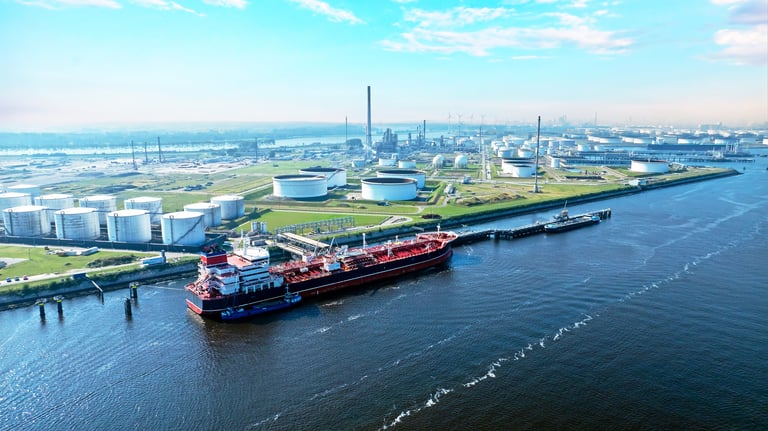
Understanding Light and Heavy Naphtha Grades for Petrochemical Applications
A detailed analysis of Light Naphtha and Heavy Naphtha specifications, production routes, and how grade selection impacts steam cracker and catalytic reformer economics.
Read More
Why 10ppm Diesel Is Becoming the Global Standard for International Fuel Trade
Examining the worldwide shift to ultra-low sulfur diesel — regulatory drivers, engine technology requirements, and what this means for fuel importers and exporters.
Read More
Incoterms for Commodity Buyers: FOB vs CIF — Which Is Right for Your Procurement?
A practical comparison of delivery terms for petrochemical and fuel buyers — cost allocation, risk transfer, insurance, and logistics considerations.
Read More
White Spirit Applications Across Industrial Sectors — From Paint Manufacturing to Precision Cleaning
Comprehensive overview of White Spirit's role in paint manufacturing, coatings, industrial cleaning, printing inks, adhesives, and construction chemicals.
Read MoreHow UAE Refining Infrastructure Supports International Petrochemical Supply Chains
Exploring the UAE's strategic position in global petrochemical supply — refinery production capacity, storage infrastructure, and shipping connectivity.
Read MoreExport Documentation for International Petrochemical Shipments — A Buyer's Guide
Essential guide to Bill of Lading, Certificate of Origin, Certificate of Quality, MSDS, and customs documentation required for international commodity transactions.
Read MoreGlobal Commodity Trading Intelligence
Expert perspectives on petrochemical markets, fuel supply chains, and international commodity trading.
Why UAE Is A Global Commodity Trading Hub
The United Arab Emirates has strategically positioned itself as one of the world's premier commodity trading hubs. With world-class port infrastructure at Fujairah, Jebel Ali, and Hamriyah, extensive petroleum storage capacity, and a business-friendly Free Zone environment, the UAE connects Middle Eastern energy production with global demand centers across Africa, Asia, and Europe.
- ▸Geographic position between major production and consumption regions
- ▸Deep-water ports with established international shipping connectivity
- ▸Extensive petroleum and petrochemical storage infrastructure
- ▸Free Zone system enabling 100% foreign ownership and efficient trade operations
- ▸International banking and trade finance ecosystem supporting commodity transactions
Understanding Petrochemical Supply Chains
International petrochemical supply chains are complex networks connecting crude oil and natural gas production, refinery and petrochemical plant operations, storage and logistics infrastructure, and end-use manufacturing across continents. Understanding these supply chains is essential for procurement professionals, commodity traders, and industrial buyers.
Key supply chain stages include: feedstock production (crude oil refining, natural gas processing), petrochemical conversion (steam crackers, reformers), product storage and logistics, international shipping, import terminal operations, distribution, and final delivery to manufacturing consumers.
Global Fuel Markets Overview
International fuel markets — diesel, gasoline, jet fuel — are shaped by transportation demand, power generation requirements, industrial activity, and marine fuel consumption. Global diesel trade exceeds 1.2 billion tonnes annually, with Africa and Asia representing the fastest-growing import regions.
The progressive adoption of ultra-low sulfur diesel (10ppm) standards is reshaping international fuel trade — creating growing demand for high-quality EN590 diesel from modern refineries while progressively phasing out higher-sulfur diesel grades from international commerce.
Industrial Solvent Markets
Industrial solvents — led by White Spirit — are essential to paint and coating manufacturing, industrial cleaning, printing inks, adhesives, and construction chemicals. Global demand is driven by construction activity, manufacturing output, infrastructure investment, and consumer goods production.
Key market trends include: growing preference for Low Aromatic (de-aromatized) White Spirit for health and environmental reasons, expansion of paint and coating manufacturing in developing markets, and increasing solvent demand linked to industrialization across Africa and Asia.
Commodity Trading Best Practices
International commodity trading requires expertise across commercial negotiation, contract terms, quality specifications, logistics coordination, trade finance, and export documentation. Professional commodity trading houses provide value through market knowledge, supplier relationships, logistics capabilities, and transaction execution expertise.
Best practices include: clear specification definition, appropriate Incoterm selection, independent quality inspection at load and discharge ports, comprehensive documentation preparation, and working with experienced trading partners who understand both the product and the logistics of international supply.
International Procurement Considerations
International procurement of petrochemical and fuel products requires careful attention to product specifications, delivery terms, logistics, documentation, and supplier reliability. Buyers should consider: specification compatibility with destination market requirements, shipping logistics and transit times, import regulations, payment terms, quality inspection, and the supplier's track record.
Working with established international trading companies provides access to market intelligence, competitive pricing, logistics coordination, and transaction support that individual buyers would find difficult to replicate independently — particularly when sourcing across continents.
Frequently Asked Questions
Common questions about industry insights and market intelligence.
What is Naphtha?
Naphtha is a flammable liquid hydrocarbon mixture produced during crude oil refining. It is a critical feedstock for petrochemical steam crackers (producing ethylene, propylene, butadiene) and catalytic reformers (producing BTX aromatics and high-octane gasoline). Light Naphtha (C5–C6, 30–90°C) is the preferred steam cracker feed; Heavy Naphtha (C7–C12, 90–200°C) is the primary reformer feed.
What is EN590 Diesel?
EN590 is the European standard specification for automotive diesel fuel. Its defining characteristic is the ≤ 10 parts per million (ppm) sulfur limit — classifying it as Ultra-Low Sulfur Diesel (ULSD). EN590 also specifies cetane number (≥ 51), density (820–845 kg/m³), flash point (≥ 55°C), lubricity (≤ 460 μm HFRR), and other quality parameters. It is the most widely recognized diesel specification in international trade.
What is White Spirit?
White Spirit is a refined petroleum-derived hydrocarbon solvent (C7–C12) used extensively in paints, coatings, industrial cleaning, printing inks, adhesives, and construction chemicals. Also known as Mineral Turpentine, Mineral Spirits, and Stoddard Solvent. Available in Low Aromatic (< 1% aromatics), Regular (15–20% aromatics), and High Flash (≥ 55°C) grades.
What does 10ppm mean in diesel?
10ppm means the diesel fuel contains a maximum of 10 parts per million of sulfur by mass — equivalent to 0.001%. This is the lowest commercially traded diesel sulfur specification and classifies the fuel as Ultra-Low Sulfur Diesel (ULSD). 10ppm sulfur is required for Euro V/VI emission compliance and compatibility with modern engine aftertreatment systems (DPF, SCR).
What is the difference between CIF and FOB?
FOB (Free On Board) means the seller delivers the product to the vessel at the load port — the buyer arranges and pays for shipping and insurance. CIF (Cost, Insurance & Freight) means the seller arranges and pays for shipping and insurance to the destination port. CIF provides convenience; FOB gives the buyer more control over logistics.
Why is the UAE a major commodity trading hub?
The UAE's strategic location between Middle Eastern production and Asian/African demand, world-class port infrastructure (Fujairah, Jebel Ali, Hamriyah), extensive petroleum storage capacity, Free Zone trading environment, stable regulatory framework, and international banking connectivity make it a leading global commodity trading center.
What are petrochemical feedstocks?
Petrochemical feedstocks are raw materials — Naphtha, ethane, propane, butane, gas oil — fed into steam crackers and catalytic reformers to produce olefins (ethylene, propylene, butadiene) and aromatics (benzene, toluene, xylenes). These base chemicals are the building blocks for plastics, synthetic fibers, solvents, and countless downstream products.
What is Incoterm?
Incoterms (International Commercial Terms) are standardized three-letter terms published by the International Chamber of Commerce (ICC) defining buyer and seller responsibilities in international trade. Common Incoterms include EXW, FOB, CFR, CIF, DAP, and DDP. They specify cost allocation, risk transfer point, and which party arranges transport and insurance.
How is diesel fuel quality tested?
Diesel fuel is tested using standardized methods: EN ISO 20846 / ASTM D5453 (sulfur), EN ISO 5165 / ASTM D613 (cetane), EN ISO 3675 / ASTM D4052 (density), EN ISO 2719 / ASTM D93 (flash point), EN ISO 12156-1 / ASTM D6079 (lubricity), EN ISO 3405 / ASTM D86 (distillation). Independent agencies (SGS, Intertek, Bureau Veritas) perform cargo testing.
What documents are needed for international commodity shipments?
Standard export documentation includes: Bill of Lading, Commercial Invoice, Packing List, Certificate of Origin (UAE Chamber), Certificate of Quality (independent inspection), Certificate of Quantity, Material Safety Data Sheet (MSDS/SDS), Dangerous Goods Declaration (for applicable products), and customs export declaration.
How do I request a quotation?
Submit your product requirement through our Request Quote page. Include the product, estimated volume, preferred Incoterm, destination port, and any specification requirements. Our trading desk reviews all inquiries and responds within 24 hours during business days.
What products does Virginia Trading FZE supply?
Virginia Trading FZE supplies Naphtha (Light and Heavy), EN590 Diesel (10ppm ULSD), White Spirit (Low Aromatic, Regular, High Flash), petrochemical feedstocks, hydrocarbon products, and industrial chemicals. We serve buyers across Africa, Asia, and the Middle East.
How long does international shipping take from the UAE?
Typical shipping times: East Africa 5–10 days, South Asia 3–7 days, Southeast Asia 10–18 days, North Africa (via Red Sea) 7–12 days, West Africa 18–25 days, and intra-regional Middle East 2–5 days. Actual transit times vary by destination port and vessel schedule.
What is the difference between Light and Heavy Naphtha?
Light Naphtha (C5–C6, boiling 30–90°C) has high paraffin content (70–90%), low aromatics (1–5%), and is the preferred steam cracker feedstock for ethylene production. Heavy Naphtha (C7–C12, boiling 90–200°C) has moderate paraffins (40–60%), higher naphthenes/aromatics (25–45%/10–25%), and is the primary catalytic reformer feedstock for BTX aromatics and high-octane gasoline.
Can Virginia Trading FZE supply to my country?
Virginia Trading FZE can supply to most countries with established shipping connectivity from UAE ports and where international trade is supported. Contact us with your destination country and product requirement, and our trading desk will confirm supply capability and provide a competitive quotation.
Need Reliable Supply Solutions?
Apply industry intelligence to your procurement. Submit your requirement and receive a competitive commercial response from our trading team.