
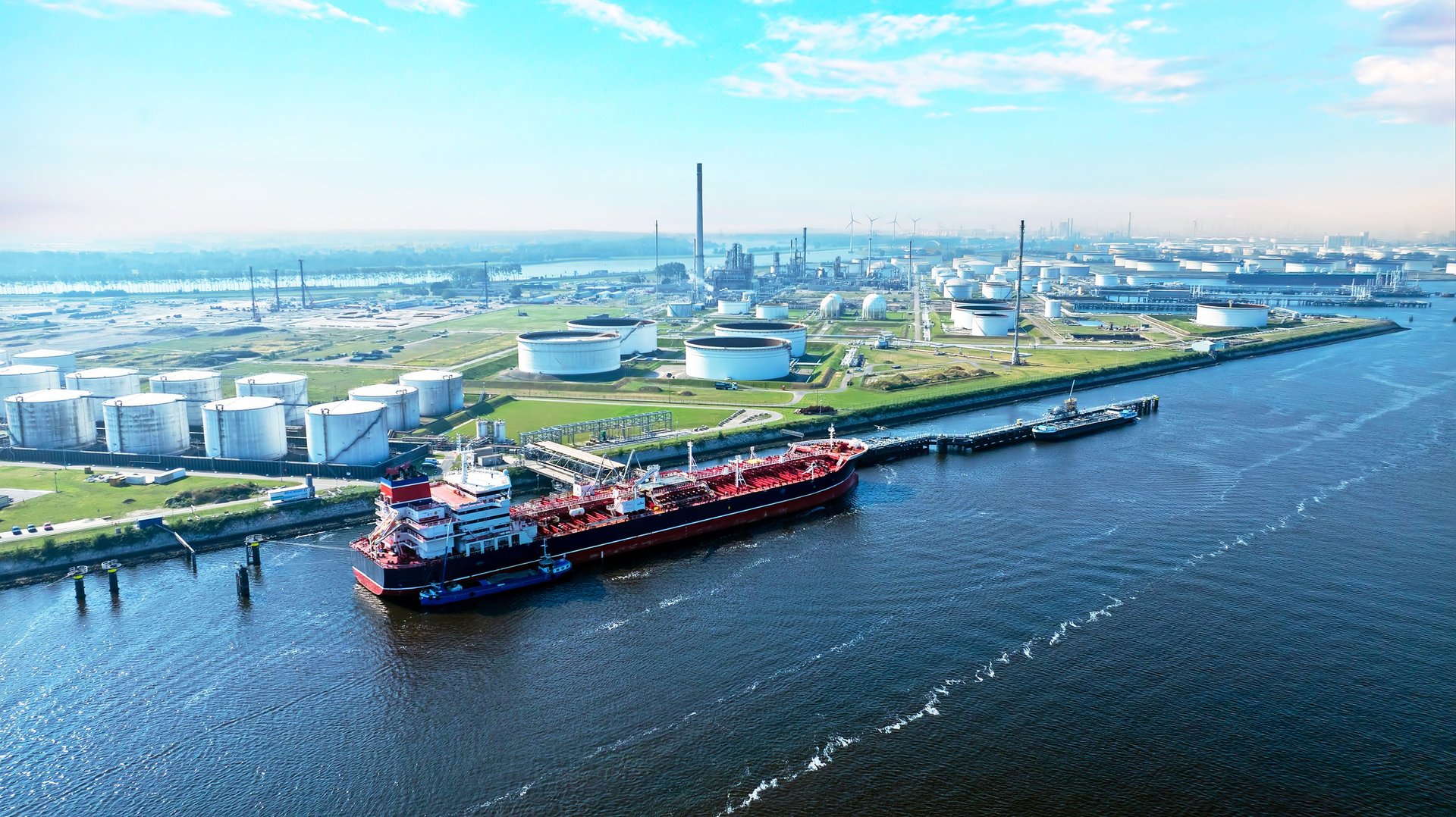
 Vietnam Market
Reliable Naphtha Supply Solutions
For Vietnam
Light & Heavy Naphtha • FOB & CIF Vietnamese Ports • Hamriyah Free Zone, Sharjah
Vietnam's Growing Industrial & Petrochemical Demand
Vietnam is one of Southeast Asia's fastest-growing manufacturing economies, with expanding petrochemical, refining, and chemical industries driving increasing demand for Naphtha feedstock.
Vietnam's Petrochemical & Manufacturing Landscape
Expanding Petrochemical Industry
Vietnam's petrochemical sector is in a major growth phase with the Long Son Petrochemical Complex (LSP) — a $5.4 billion investment by SCG — representing the country's first world-scale integrated petrochemical complex. The Nghi Son Refinery and Petrochemical Complex and planned additional crackers are transforming Vietnam from a net petrochemical importer toward greater domestic production, requiring substantial Naphtha feedstock.
Rapid Manufacturing Growth
Vietnam's manufacturing sector has grown at an average of 8–12% annually, driven by foreign direct investment, export-oriented industrialization, and shifting global supply chains. This manufacturing expansion — across plastics, textiles, packaging, construction materials, and consumer goods — is driving surging demand for petrochemical products ultimately derived from Naphtha feedstock.
Rising Industrial Demand
Vietnam's industrial chemical demand is expanding rapidly across paints and coatings, adhesives, printing inks, rubber chemicals, agricultural chemicals, and specialty chemical manufacturing. Naphtha serves as both a direct solvent and an upstream feedstock for the petrochemical intermediates that supply these growing industrial sectors.
Feedstock Requirements
As Vietnam's domestic refinery Naphtha production from the Dung Quat and Nghi Son refineries is partially consumed internally or directed to gasoline blending, dedicated petrochemical crackers require supplemental Naphtha imports. Light Naphtha for steam crackers and Heavy Naphtha for reformers represent growing import categories as Vietnam's petrochemical capacity expands.
UAE–Vietnam Trade Corridor
The UAE–Vietnam maritime trade route connects Middle Eastern energy production with Southeast Asia's dynamic manufacturing economies. Well-established shipping lanes through the Arabian Sea, Indian Ocean, and South China Sea provide reliable logistics for Naphtha cargoes from UAE ports to Vietnam's southern and northern port hubs.
Virginia Trading FZE provides Vietnamese buyers with reliable Naphtha supply via this established maritime corridor — supported by professional cargo management and comprehensive export documentation.
Key Naphtha Import Ports
Vietnam's strategic port infrastructure supports Naphtha imports through both southern and northern gateways — connected to the country's major industrial and petrochemical zones.
Ho Chi Minh City
Southern VietnamVietnam's largest port complex serving the southern economic hub — the country's primary industrial, manufacturing, and chemical production region. Multiple terminals handle liquid bulk cargoes supplying industrial consumers across Dong Nai, Binh Duong, and the greater Ho Chi Minh City metropolitan area. Proximity to Vietnam's largest concentration of chemical and plastics manufacturers.
Cai Mep
Ba Ria-Vung Tau, Southern VietnamVietnam's premier deep-water port complex — capable of accommodating larger parcel tankers (up to 40,000+ DWT). Cai Mep-Thi Vai port system is the key import gateway for bulk petrochemical cargoes feeding the Long Son Petrochemical Complex and industrial operations across southern Vietnam. World-class liquid bulk handling infrastructure.
Vung Tau
Ba Ria-Vung Tau, Southern VietnamStrategic port city serving Vietnam's offshore and petrochemical industries — in close proximity to the Long Son Petrochemical Complex, Vietnam's first world-scale integrated petrochemical facility. Vung Tau's liquid cargo terminals provide essential import infrastructure for Naphtha and petrochemical feedstock supply to the southern manufacturing region.
Da Nang
Central VietnamCentral Vietnam's primary deep-water port serving the region's expanding industrial base. Da Nang provides import access for petrochemical and industrial cargoes destined for central Vietnam's growing manufacturing and chemical processing operations. Developing liquid bulk handling capability supports the region's industrialization.
Hai Phong
Northern VietnamNorthern Vietnam's principal seaport — serving Hanoi and the Red River Delta industrial corridor, one of Vietnam's fastest-growing manufacturing regions. Hai Phong handles petrochemical imports for northern Vietnam's expanding plastics, textile, electronics, and automotive supply chains. Modernization and expansion programs are increasing liquid cargo handling capacity.
Industries Using Naphtha In Vietnam
Vietnam's industrial sectors that depend on specification-grade Naphtha for their operations.
Petrochemical Plants
Vietnam's petrochemical industry — led by the Long Son Petrochemical Complex (1.4 million tonnes/year olefins capacity), Nghi Son Refinery & Petrochemical, and Dung Quat Refinery — is the country's largest Naphtha consumer. These facilities convert Naphtha into olefins (ethylene, propylene) and aromatics that supply Vietnam's downstream polymer, fiber, and chemical manufacturing sectors.
Chemical Manufacturing
Vietnam's rapidly growing chemical industry — producing paints, coatings, adhesives, printing inks, solvents, rubber chemicals, and specialty chemicals — uses Naphtha both as a process solvent and as the upstream feedstock for petrochemical intermediates. Industrial clusters in Dong Nai, Binh Duong, and Hai Phong are major chemical manufacturing hubs.
Refining Industry
Vietnam's two operational refineries — Dung Quat (130,000 bpd) and Nghi Son (200,000 bpd) — produce Naphtha as well as consume it for reformer feedstock and gasoline blending operations. As Vietnam's refining sector matures and integrates with petrochemical production, the Naphtha balance between refinery output and petrochemical demand is a key supply consideration.
Industrial Processing
Vietnamese industrial operations — including metal processing, textile finishing, electronics manufacturing, and construction materials — use Naphtha-derived solvents and petrochemical intermediates extensively. Vietnam's emergence as a global manufacturing hub has amplified industrial demand across solvent and chemical supply chains.
Energy & Fuel Sector
Vietnam's growing domestic fuel market — driven by rising vehicle ownership, industrial activity, and power generation requirements — consumes Naphtha as a gasoline blending component. As Vietnam's fuel specifications tighten and demand grows, the role of Naphtha in the gasoline blending pool continues to evolve.
Why Source Naphtha From UAE For Vietnam
The UAE offers Vietnamese buyers a compelling combination of supply reliability, logistics connectivity, and commercial flexibility.
Strategic Shipping Routes
The UAE–Vietnam maritime corridor is a well-established international shipping route, connecting the Arabian Gulf to Southeast Asia via the Arabian Sea, Indian Ocean, Malacca Strait, and South China Sea. Regular parcel tanker services, multiple shipping lines, and competitive freight economics make this a reliable and cost-effective Naphtha supply route for Vietnamese buyers.
Reliable Export Infrastructure
UAE ports — Fujairah, Jebel Ali, and Hamriyah — feature world-class liquid bulk handling infrastructure, extensive tank storage capacity, and efficient export operations. These facilities are purpose-built for international petroleum and petrochemical trade, providing Vietnamese buyers with confidence in cargo availability, loading reliability, and vessel turnaround performance.
Competitive Logistics
While the UAE–Vietnam route is longer than the UAE–India corridor, competitive freight rates driven by high shipping frequency, backhaul cargo economics, and established trading relationships deliver attractive delivered-cost outcomes. The route's maturity and volume mean Vietnamese buyers benefit from logistics market efficiency.
International Trading Expertise
UAE-based international commodity trading companies bring deep expertise in global Naphtha markets, price discovery, logistics management, and trade finance. Vietnamese buyers gain access to this professional trading ecosystem — market intelligence, flexible commercial structures, and transaction support that complements direct procurement relationships.
Flexible Commercial Solutions
UAE-based suppliers offer Vietnamese buyers flexibility in cargo sizing, delivery terms (FOB, CIF, CFR), contract duration (spot, short-term, term contracts), and payment structures. This commercial flexibility allows Vietnamese petrochemical and industrial companies to optimize procurement strategy based on operational requirements, market conditions, and working capital considerations.
Growing UAE–Vietnam Trade Relations
Bilateral trade between the UAE and Vietnam has grown substantially, supported by diplomatic engagement, trade agreements, and increasing commercial ties. The UAE's role as a global energy and petrochemical trading hub — combined with Vietnam's manufacturing-led economic expansion — creates natural commercial alignment for Naphtha and petrochemical trade.
Light Naphtha Applications
Light Naphtha (C5–C6, boiling range 30–90°C, high paraffin content) is the optimal feedstock for ethylene production and olefins cracking — essential to Vietnam's expanding petrochemical industry.
Ethylene Production
The Long Son Petrochemical Complex's steam cracker — Vietnam's first world-scale olefins plant with 1.4 million tonnes/year capacity — uses Light Naphtha as its primary feedstock to produce ethylene. Ethylene feeds downstream polyethylene (PE) plants supplying Vietnam's massive plastics manufacturing sector. Light Naphtha's high paraffin content (70–90%) delivers optimal ethylene yields versus alternative feedstocks.
Steam Cracker Operations
Modern steam crackers — including LSP and planned additional Vietnamese petrochemical complexes — are designed for Light Naphtha feedstock due to its consistent composition, predictable cracking yields, and operational reliability. Specification-grade Light Naphtha ensures high cracker utilization rates, stable product quality, and optimized operational economics for Vietnamese petrochemical operators.
Petrochemical Feedstock
Beyond ethylene, Light Naphtha cracking produces propylene, butadiene, and other C3/C4 olefins essential for Vietnam's downstream industries — polypropylene (PP) for packaging and automotive components, synthetic rubber for Vietnam's growing tire manufacturing sector, and chemical intermediates for industrial and consumer products.
Olefins Production
Vietnam's olefins demand is growing rapidly — driven by plastics manufacturing, textile fiber production, and chemical intermediate requirements across Vietnam's export-oriented industrial base. Light Naphtha feedstock security from reliable international suppliers is critical for Vietnam's transition from olefins importer toward greater domestic production self-sufficiency.
Heavy Naphtha Applications
Heavy Naphtha (C7–C12, boiling range 90–200°C) is the primary feedstock for catalytic reforming — critical to aromatics production and refinery operations in Vietnam.
Aromatics Production
Heavy Naphtha's naphthene and aromatic content makes it the ideal feedstock for catalytic reformers producing BTX aromatics — benzene, toluene, and xylenes. These aromatics are essential building blocks for Vietnam's downstream industries: PET resin for packaging, polyester fiber for Vietnam's textile and garment industry (a global top-5 exporter), polystyrene for electronics and consumer goods, and industrial solvents.
Catalytic Reforming Units
Vietnam's Dung Quat and Nghi Son refineries operate catalytic reformers that convert Heavy Naphtha into high-octane reformate and aromatic-rich streams. Specification-grade Heavy Naphtha with balanced PNA (paraffin-naphthene-aromatic) composition ensures stable reformer operation, optimal catalyst life, and consistent product quality from Vietnam's refinery operations.
Refinery Operations
As Vietnam's refining capacity continues developing — with Dung Quat expansion and potential new refinery projects under consideration — the integration of refinery and petrochemical operations will increase Heavy Naphtha's importance. Efficient refinery-petrochemical integration optimizes the Naphtha balance between gasoline blending and petrochemical feedstock production.
Gasoline Blending
Reformate produced from Heavy Naphtha reforming is a critical high-octane gasoline blendstock for Vietnam's growing domestic fuel market. With vehicle ownership expanding rapidly — Vietnam's car and motorcycle market is among Southeast Asia's largest — the demand for high-quality gasoline blending components derived from Naphtha continues to rise.
Logistics & Supply Chain
End-to-end Naphtha logistics management from UAE load ports to Vietnamese discharge terminals — supported by professional cargo operations and documentation.
Marine Transportation
Naphtha cargoes shipped via parcel tankers (5,000–40,000 MT) from UAE ports — Fujairah, Jebel Ali, Hamriyah — to Vietnamese ports via the Arabian Sea → Malacca Strait → South China Sea route. Vessels are inspected and certified for Naphtha cargo compatibility. Experienced chartering team secures competitive freight rates and optimal scheduling to meet Vietnamese buyer delivery windows.
Cargo Handling & Inspection
Independent cargo inspection by SGS, Intertek, or Bureau Veritas at the UAE load port — covering density, distillation, PNA composition, sulfur, and full specification parameters. Cargo sampling, quality certification, and quantity measurement conducted per international petroleum measurement standards. Pre-loading tank and line inspection ensures cargo integrity.
Export Documentation
Complete export documentation package prepared for Vietnamese customs clearance: Bill of Lading, Commercial Invoice, Packing List, Certificate of Origin (UAE Chamber of Commerce — required for Vietnam import), Certificate of Quality, Certificate of Quantity, Material Safety Data Sheet (MSDS), Dangerous Goods Declaration, and UAE export declaration — all compliant with Vietnamese import regulations.
Delivery Coordination
Dedicated operations team manages vessel nomination, loading terminal scheduling, cargo inspection coordination, stowage planning, and post-loading documentation. Real-time cargo status updates throughout the voyage. Vietnamese port agency relationships ensure efficient discharge operations and customs clearance support.
Supply Chain Management
Professional supply chain execution including Incoterm selection (FOB UAE ports or CIF Vietnamese ports), letter of credit negotiation, marine insurance arrangement per Institute Cargo Clauses, demurrage management, and claims handling. Multi-cargo supply programs can be structured to provide Vietnamese buyers with regular, scheduled deliveries.
Vietnam Import Support
Understanding of Vietnamese import regulations, customs procedures, port operations, and buyer requirements. Our commercial team provides Vietnamese buyers with market intelligence, pricing transparency, supply planning support, and ongoing commercial relationship management — not just transactional execution.
Vietnam Naphtha Market Insights
Analysis of Vietnam's petrochemical growth, feedstock demand, and import dynamics — essential context for procurement planning.
Vietnam's Petrochemical Industry — A Sector In Transformation
Vietnam's petrochemical industry is at a pivotal inflection point. The Long Son Petrochemical Complex (LSP) — a $5.4 billion investment by Thailand's SCG — began operations with a 1.4 million tonnes/year olefins cracker, representing Vietnam's first world-scale integrated petrochemical facility. This single complex has transformed Vietnam from a near-total petrochemical importer to a country with substantial domestic olefins and polyolefins production capacity.
Looking forward, Vietnam's petrochemical sector has significant growth runway. Plans for additional crackers, downstream polymer plants, and specialty chemical facilities are under development as Vietnam pursues greater petrochemical self-sufficiency. Each new cracker represents incremental Naphtha feedstock demand — much of which will need to be sourced from international suppliers, creating sustained import opportunities for Middle Eastern Naphtha exporters.
Feedstock Demand Dynamics
Vietnam's Naphtha demand is driven by three primary sectors: petrochemical cracking (the largest and fastest-growing segment), refinery reforming operations (Dung Quat and Nghi Son refineries), and industrial solvent/chemical applications. The LSP cracker alone requires approximately 1.5–2.0 million tonnes of Naphtha feedstock annually at full capacity — volumes that significantly exceed Vietnam's domestic Naphtha production from its two refineries.
Vietnam's domestic refinery Naphtha production — approximately 1.0–1.5 million tonnes/year from Dung Quat and Nghi Son combined — is partially consumed for gasoline blending and refinery fuel, leaving a structural Naphtha deficit that must be filled through imports. As petrochemical capacity expands faster than refinery Naphtha output, Vietnam's Naphtha import requirement is projected to grow substantially over the coming decade.
Manufacturing Growth Driving Downstream Demand
Vietnam's manufacturing sector has been one of the world's standout growth stories — expanding at 8–12% annually as the country positions itself as a leading global manufacturing destination. This manufacturing expansion creates powerful downstream demand for petrochemical products: plastics and packaging for consumer goods exports, synthetic fibers for Vietnam's $40+ billion textile and garment industry, construction chemicals for Vietnam's infrastructure and real estate development, and automotive components for Vietnam's growing vehicle manufacturing sector.
Each of these downstream industries is ultimately connected to Naphtha feedstock — either directly through petrochemical cracking or indirectly through refinery and chemical intermediates. Vietnam's manufacturing trajectory is therefore a reliable indicator of sustained, growing Naphtha demand.
Import Requirements & Supply Considerations
Vietnamese Naphtha buyers should consider several factors when evaluating international supply options: product specification compatibility with cracker or reformer requirements, shipping logistics and transit times (12–18 days from UAE), vessel size compatibility with Vietnamese port draft restrictions (Cai Mep can accommodate larger vessels; smaller ports may require lightering or smaller parcels), Incoterm selection, payment terms and trade finance, independent cargo inspection, and Vietnamese import duty and VAT considerations.
Working with an experienced UAE-based international trading partner provides Vietnamese buyers with access to specification-grade Naphtha, flexible delivery options, competitive logistics, and professional transaction execution. The UAE's established position in global energy markets and growing bilateral trade relationship with Vietnam creates a strong foundation for reliable, long-term Naphtha supply partnerships.
UAE–Vietnam Trade Opportunities
The UAE and Vietnam have been strengthening bilateral economic ties — with growing trade volumes, diplomatic engagement, and commercial cooperation across energy, manufacturing, logistics, and investment. The UAE's position as a global energy and petrochemical trading hub and Vietnam's emergence as a major manufacturing economy create natural complementarity for Naphtha and petrochemical trade.
The established UAE–Southeast Asia maritime corridor provides reliable logistics connectivity. As Vietnam's petrochemical industry matures and its Naphtha import requirements grow, UAE-based suppliers are well-positioned to serve as long-term Naphtha supply partners — offering product availability, logistics reliability, commercial flexibility, and professional trading expertise that support Vietnamese buyers' operational and strategic objectives.
Frequently Asked Questions
Common questions about Naphtha supply for the Vietnamese market.
Does Vietnam import Naphtha?
Yes. Vietnam imports Naphtha to supplement domestic refinery production and meet the feedstock requirements of its growing petrochemical industry. The Long Son Petrochemical Complex (LSP) — Vietnam's first world-scale olefins cracker — requires approximately 1.5–2.0 million tonnes of Naphtha annually at full capacity, volumes that substantially exceed Vietnam's domestic Naphtha output from the Dung Quat and Nghi Son refineries.
Which Vietnamese industries use Naphtha?
Vietnam's primary Naphtha consumers include petrochemical plants (the Long Son Petrochemical Complex's steam cracker), refineries (Dung Quat and Nghi Son — for reforming and gasoline blending), chemical manufacturers (paints, coatings, adhesives, solvents, specialty chemicals), industrial processors (metal, textile, electronics), and the energy sector (gasoline blending for Vietnam's growing domestic fuel market).
What ports receive Naphtha cargoes in Vietnam?
Key Vietnamese ports for Naphtha imports include Cai Mep (Ba Ria-Vung Tau — Vietnam's premier deep-water port complex, serving the Long Son Petrochemical Complex), Ho Chi Minh City (largest port complex serving the southern industrial hub), Vung Tau (proximate to LSP), Da Nang (central Vietnam), and Hai Phong (northern Vietnam's principal seaport serving the Hanoi-Hai Phong industrial corridor).
Can Naphtha be supplied from UAE to Vietnam?
Yes. The UAE is a well-established Naphtha supply source for Asian markets, including Vietnam. The UAE–Vietnam maritime route (~3,500 nautical miles, 12–18 days transit) is served by regular parcel tanker services connecting Arabian Gulf ports to Southeast Asia via the Malacca Strait and South China Sea. Multiple shipping lines and competitive freight economics support this trade corridor.
What is the transit time from UAE to Vietnamese ports?
Transit times from UAE ports (Fujairah, Jebel Ali, Hamriyah) to Vietnam: approximately 12–15 days to southern ports (Cai Mep, Vung Tau, Ho Chi Minh City) and 15–18 days to northern ports (Hai Phong) via the Malacca Strait and South China Sea. Actual transit varies by vessel speed, routing, and any intermediate port calls.
What are common Naphtha shipment sizes to Vietnam?
Typical Naphtha parcel sizes to Vietnam range from 5,000 to 40,000 metric tonnes. Cai Mep's deep-water berths can accommodate larger parcel tankers (up to 40,000+ DWT). Smaller ports or buyers with limited storage may prefer 5,000–15,000 MT parcels. Virginia Trading FZE can structure shipment sizes to match Vietnamese buyer requirements and port capabilities.
What documents are provided with Naphtha shipments to Vietnam?
Standard export documentation includes: Bill of Lading, Commercial Invoice, Packing List, Certificate of Origin (UAE Chamber of Commerce), Certificate of Quality (SGS/Intertek/Bureau Veritas independent inspection), Certificate of Quantity, Material Safety Data Sheet (MSDS), Dangerous Goods Declaration, and UAE customs export declaration — all prepared in compliance with Vietnamese import documentation requirements.
What Incoterms are available for Naphtha supply to Vietnam?
Virginia Trading FZE offers FOB (Free On Board — UAE load port), CIF (Cost, Insurance & Freight — Vietnamese discharge port), and CFR (Cost & Freight) delivery terms. FOB gives Vietnamese buyers control over shipping and insurance; CIF provides delivered-price convenience. The optimal Incoterm depends on buyer logistics capability, trade finance structure, and commercial preference.
What is the Long Son Petrochemical Complex and why does it matter for Naphtha?
The Long Son Petrochemical Complex (LSP) in Ba Ria-Vung Tau province is Vietnam's first world-scale integrated petrochemical facility — a $5.4 billion investment by Thailand's SCG Group. Its 1.4 million tonnes/year olefins cracker uses Naphtha as primary feedstock, making LSP Vietnam's single largest Naphtha consumer. The complex has fundamentally changed Vietnam's petrochemical and Naphtha import dynamics.
What Naphtha specifications can Virginia Trading FZE supply?
We supply Light Naphtha (C5–C6, 30–90°C IBP–FBP, ≥ 70% paraffins, ≤ 5% aromatics, ≤ 500 ppm sulfur) for steam crackers and Heavy Naphtha (C7–C12, 90–200°C IBP–FBP, balanced PNA composition, ≤ 1,000 ppm sulfur) for reformers and aromatics production. Customized Naphtha grades to match specific buyer specifications are available. See our Naphtha Specifications page for detailed parameters.
What is the difference between Light and Heavy Naphtha?
Light Naphtha (C5–C6, boiling range 30–90°C) has high paraffin content (70–90%), low aromatics (1–5%), and is the preferred steam cracker feedstock for ethylene and olefins production. Heavy Naphtha (C7–C12, boiling range 90–200°C) has moderate paraffins (40–60%), higher naphthenes/aromatics, and is the primary catalytic reformer feedstock for BTX aromatics production and high-octane gasoline blending.
How is Naphtha quality verified before shipment?
Naphtha quality is verified by independent international inspection agencies — SGS, Intertek, or Bureau Veritas — at the UAE load port prior to vessel loading. A comprehensive Certificate of Quality covering density, distillation (IBP, FBP, boiling range), PNA composition, sulfur content, and full specification parameters is issued and provided to the Vietnamese buyer before payment under letter of credit terms.
What are the payment terms for Naphtha supply to Vietnam?
International Naphtha transactions typically use Letter of Credit (L/C) at sight, confirmed and irrevocable, issued by a reputable Vietnamese or international bank. Alternative structures including CAD (Cash Against Documents) or telegraphic transfer may be available depending on buyer relationship and transaction size. Payment terms are discussed and agreed during commercial negotiation.
How do I request a Naphtha quotation for Vietnam delivery?
Submit your requirement through our Request Quote page or email us directly. Include: Naphtha grade (Light or Heavy), estimated monthly or annual volume, preferred Vietnamese discharge port, Incoterm preference (FOB or CIF), and any specification requirements. Our trading desk reviews all Vietnam inquiries promptly and typically responds with a commercial proposal within 24 hours during business days.
What are Vietnamese import duties on Naphtha?
Vietnam applies import duty on Naphtha under its ASEAN Harmonized Tariff Nomenclature (AHTN) classification. Duty rates vary by Naphtha grade and HS code classification. Under the ASEAN Trade in Goods Agreement (ATIGA) and various free trade agreements Vietnam participates in, preferential rates may apply for qualifying imports. Vietnamese buyers should confirm the applicable duty rate with their customs broker or trade advisor for the specific Naphtha HS code.
Does Virginia Trading FZE have experience supplying to Vietnam?
Virginia Trading FZE serves petrochemical and industrial buyers across Southeast Asia, including Vietnam. Our trading team understands Vietnamese import procedures, port operations, buyer requirements, and commercial practices. We provide Vietnamese buyers with the professional international trading support needed for efficient and reliable Naphtha procurement.
Request A Naphtha Quotation For Vietnam
Submit your Naphtha requirement and receive a competitive commercial response — typically within 24 hours.
Light Naphtha • Heavy Naphtha • FOB & CIF Vietnamese Ports • Hamriyah Free Zone, Sharjah, UAE