
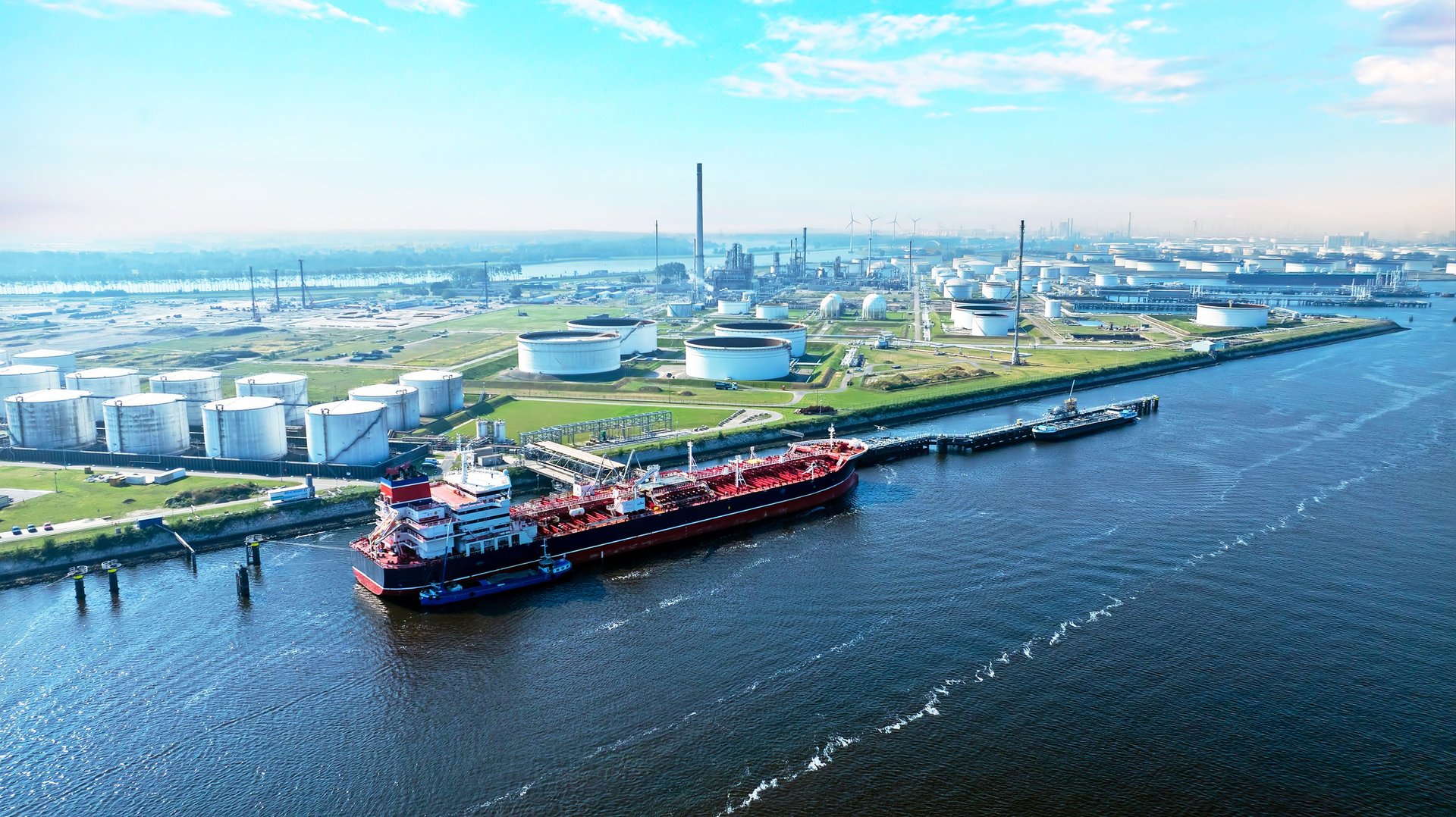
 Taiwan Market
Reliable Naphtha Supply Solutions
For Taiwan's Petrochemical Industry
Light & Heavy Naphtha • CIF Kaohsiung / Taichung / Mailiao • Hamriyah Free Zone, Sharjah
A Major Petrochemical Manufacturing Economy
Taiwan is one of Asia's most important petrochemical manufacturing centers — operating world-scale steam crackers, integrated refinery-petrochemical complexes, and advanced chemical manufacturing that is structurally dependent on imported Naphtha feedstock.
Taiwan's Petrochemical & Industrial Landscape
Advanced Petrochemical Industry
Taiwan operates over 4 million tonnes per year of ethylene capacity concentrated in two major complexes: the Kaohsiung-Linyuan petrochemical zone (CPC Corporation, Formosa Plastics) and the Mailiao complex (Formosa Petrochemical — Taiwan's largest, with approximately 2.9 million tonnes/year of ethylene capacity). These Naphtha-fed crackers are among the world's largest and most efficient single-site petrochemical operations.
Export-Oriented Manufacturing
Taiwan's petrochemical industry is deeply integrated with the island's export-oriented manufacturing economy — supplying ethylene, propylene, butadiene, and aromatics to downstream polymer, fiber, synthetic rubber, and specialty chemical producers. Taiwan is a globally significant exporter of purified terephthalic acid (PTA), ABS, synthetic fibers, and electronic-grade chemicals.
Olefins & Aromatics Production
Taiwan's crackers produce approximately 4 million tonnes of ethylene and 2.5 million tonnes of propylene annually. The country is also a major aromatics producer — paraxylene (PX), benzene, toluene — with Formosa Petrochemical and CPC Corporation operating large-scale reforming and aromatics extraction units supplying both domestic demand and substantial export volumes.
Significant Naphtha Import Dependency
Taiwan imports the vast majority of its Naphtha requirements — approximately 10–12 million tonnes annually — making it one of Asia's largest Naphtha import markets. While CPC's refining operations and Formosa's refinery produce domestic Naphtha, this is insufficient for Taiwan's cracker feedstock demand, creating sustained large-volume import requirements from Middle Eastern and international suppliers.
UAE–Taiwan Trade Corridor
The UAE–Taiwan maritime route connects Middle Eastern Naphtha supply with one of East Asia's most important petrochemical manufacturing centers. Regular parcel tanker services, established commercial relationships, and competitive freight economics support this increasingly important trade corridor.
Virginia Trading FZE provides Taiwanese petrochemical buyers with reliable Naphtha supply via this well-established maritime corridor — supported by professional cargo management and comprehensive documentation.
Key Naphtha Import Ports
Taiwan's major ports are equipped to handle large-volume Naphtha cargoes — directly connected to the country's integrated petrochemical and refining complexes.
Kaohsiung
Southern TaiwanTaiwan's largest port and the industrial heart of the country's petrochemical industry. Kaohsiung and the adjacent Linyuan petrochemical zone host CPC Corporation's crackers, China Petrochemical Development (CPDC), and numerous chemical manufacturers. The port's deep-water liquid bulk terminals handle the largest Naphtha cargoes serving Taiwan's southern petrochemical cluster — the island's most concentrated chemical manufacturing region.
Mailiao
Yunlin, Western TaiwanHome to the Formosa Petrochemical (FPCC) complex — Taiwan's single largest petrochemical and refining site and one of the world's largest integrated refinery-petrochemical operations. Mailiao's dedicated port and liquid cargo terminals supply Naphtha directly to FPCC's massive cracker fleet (approximately 2.9 million tonnes/year ethylene capacity). This is Taiwan's highest-volume Naphtha import point.
Taichung
Central TaiwanTaiwan's second-largest port and a growing petrochemical import gateway serving central Taiwan's industrial regions. Taichung provides supplementary Naphtha import capacity with modern liquid bulk handling infrastructure. Strategic location for supplying industrial consumers across central and northern Taiwan from an alternative discharge point.
Keelung
Northern TaiwanNorthern Taiwan's principal seaport, serving the greater Taipei area and northern Taiwan's petrochemical and chemical manufacturing operations. While handling less Naphtha volume than Kaohsiung and Mailiao, Keelung provides important import capability for chemical and industrial consumers in Taiwan's northern economic region.
Industries Using Naphtha In Taiwan
Taiwan's Naphtha-consuming sectors span world-scale petrochemical cracking, olefins production, aromatics manufacturing, and specialty chemicals — forming the backbone of Taiwan's industrial economy.
Petrochemical Plants & Steam Crackers
Taiwan's Naphtha-fed steam crackers — operated by Formosa Petrochemical (FPCC, Mailiao, ~2.9 million tpy ethylene — one of the world's largest single-site crackers) and CPC Corporation (Kaohsiung-Linyuan, ~1.1 million tpy) — represent over 4 million tonnes/year of ethylene capacity. These crackers are overwhelmingly Naphtha-fed and represent Taiwan's single largest Naphtha consumption source.
Olefins Producers
Taiwan produces approximately 4 million tonnes of ethylene and 2.5 million tonnes of propylene annually — all Naphtha-derived. These olefins feed Taiwan's downstream polymer plants producing polyethylene (PE), polypropylene (PP), PVC, ABS, synthetic rubber (TSRC, Chi Mei), and engineering plastics that supply Taiwan's electronics, automotive, packaging, and consumer goods industries.
Refining Industry
Taiwan's two major refiners — CPC Corporation (Taoyuan and Talin/Kaohsiung, ~600,000 bpd combined) and Formosa Petrochemical (Mailiao, ~540,000 bpd) — produce Naphtha as a refinery output while also consuming it for reformer feedstock and gasoline blending. The deep integration of refining and petrochemical operations at Mailiao and Kaohsiung is characteristic of Taiwan's industrial model.
Aromatics & Chemical Manufacturers
Taiwan is a globally significant aromatics producer — paraxylene (PX), benzene, toluene — with Formosa Petrochemical and CPC Corporation operating major reforming and aromatics extraction capacity. Taiwan's downstream chemical manufacturers produce PTA (for polyester), caprolactam (for nylon), styrene (for ABS, polystyrene), and specialty chemicals that are essential to Taiwan's semiconductor, electronics, and advanced materials industries.
Industrial Processing & Polymer Manufacturing
Taiwan's downstream industrial sector — including polymer producers (Formosa Plastics, USI Corporation, Chi Mei Corporation), synthetic fiber manufacturers (Nan Ya Plastics), and specialty chemical companies — converts Naphtha-derived olefins and aromatics into finished and semi-finished products for export and domestic consumption. Taiwan is a top global producer of ABS, PTA, and PVC.
Light Naphtha Applications
Light Naphtha (C5–C6, boiling range 30–90°C) is the primary feedstock for Taiwan's steam crackers — essential to sustaining the country's 4+ million tonnes/year ethylene production capacity.
Steam Cracking
Taiwan's world-scale crackers — Formosa Petrochemical's No. 1–3 crackers in Mailiao (2.9 million tpy total ethylene) and CPC's No. 4–5 crackers in Linyuan/Kaohsiung (~1.1 million tpy) — are overwhelmingly Naphtha-fed. Light Naphtha's high paraffin content (70–90%) delivers superior ethylene yields and consistent cracking performance essential for these operators' high utilization and efficiency targets.
Ethylene Production
Taiwan produces over 4 million tonnes of ethylene annually — virtually all from Light Naphtha cracking. Ethylene is the critical building block for Taiwan's downstream polymer industry: polyethylene (PE) for packaging, film, and pipes; ethylene glycol (MEG) for polyester fiber and PET; and styrene for ABS and polystyrene. Taiwan is a globally significant ethylene derivatives exporter.
Propylene Production
Light Naphtha cracking produces approximately 2.5 million tonnes/year of propylene co-product in Taiwan — feeding polypropylene (PP), acrylonitrile, propylene oxide, and oxo-alcohol plants. Taiwan's PP industry — led by Formosa Plastics, LCY Chemical, and others — is an important global supplier, linking Naphtha feedstock to automotive, packaging, and consumer goods manufacturing worldwide.
Petrochemical Feedstock Security
Taiwan's petrochemical industry is structurally dependent on reliable international Naphtha supply given limited domestic production relative to cracker capacity. Formosa Petrochemical's Mailiao crackers alone require approximately 6–7 million tonnes of Naphtha annually. Feedstock supply diversification and reliability are strategic priorities for Taiwanese cracker operators.
Heavy Naphtha Applications
Heavy Naphtha (C7–C12, boiling range 90–200°C) is the primary feedstock for Taiwan's catalytic reformers and aromatics complexes — supporting the country's globally significant aromatics industry.
Catalytic Reforming
Taiwan's refineries — CPC Corporation (Taoyuan, Kaohsiung-Talin) and Formosa Petrochemical (Mailiao) — operate extensive catalytic reforming capacity converting Heavy Naphtha into reformate and aromatic-rich intermediate streams. Specification-grade Heavy Naphtha with balanced PNA composition is essential for stable reformer operation and optimal catalyst cycle life in Taiwan's demanding operating environment.
Aromatics Production
Taiwan is a globally significant aromatics producer — paraxylene (PX), benzene, toluene — operated by Formosa Petrochemical (one of the world's largest single-site aromatics complexes) and CPC Corporation. PX is the feedstock for Taiwan's massive PTA (purified terephthalic acid) industry — Taiwan is a top-3 global PTA exporter, supplying polyester manufacturers worldwide from Heavy Naphtha-derived raw material.
Benzene Manufacturing
Taiwan's benzene production — predominantly Heavy Naphtha-derived through reforming — feeds the country's styrene monomer (SM) plants. Styrene is polymerized into polystyrene, ABS (Acrylonitrile Butadiene Styrene — Taiwan's Chi Mei is the world's largest ABS producer), and synthetic rubber — all core to Taiwan's electronics, automotive components, and consumer goods manufacturing.
Refinery-Petrochemical Integration
Taiwan's refinery-petrochemical integration — particularly at FPCC Mailiao and CPC Kaohsiung — is world-class, with reformers supplying aromatics directly to integrated downstream petrochemical plants. Heavy Naphtha serves as the critical bridge, with Taiwanese operators optimizing the Naphtha stream between gasoline blendstock and petrochemical aromatics based on product margins and market conditions.
Why Source Naphtha From UAE For Taiwan
The UAE offers Taiwanese petrochemical buyers supply reliability, logistics connectivity, and commercial flexibility — supporting Taiwan's strategic Naphtha procurement objectives.
Strategic Export Location
UAE ports — Fujairah (Indian Ocean, bypassing Strait of Hormuz, strategic for East Asia routing), Jebel Ali (world-class logistics), and Ruwais (integrated ADNOC terminal) — provide Taiwanese buyers with multiple, reliable Naphtha loading options. The UAE's position on the Arabian Sea/Indian Ocean provides efficient access to the Malacca Strait and South China Sea corridor.
Reliable Cargo Supply
The UAE's role as a global energy and petrochemical hub — supported by substantial refinery Naphtha production, large storage capacity, and active international trading — provides Taiwanese buyers with confidence in Naphtha availability. Multiple supply sources and cargo aggregation capability support Taiwanese buyers' supply diversification objectives.
Competitive Shipping Routes
The UAE–Taiwan route (~5,000 nautical miles, 16–20 days transit) is served by a liquid and competitive tanker market with regular parcel tanker services. The route benefits from backhaul cargo economics, multiple shipping line options, and established charter market practice — delivering competitive freight outcomes for Taiwanese buyers.
International Trading Expertise
UAE-based international commodity trading companies bring deep expertise in global Naphtha markets, Platts C+F Japan/Taiwan pricing dynamics, chartering and freight management, and trade finance. Taiwanese buyers benefit from professional transaction execution, market intelligence, and the commercial flexibility that experienced international trading partners provide.
Flexible Logistics Solutions
UAE-based suppliers offer Taiwanese buyers flexibility in cargo sizing (30,000–80,000 MT), delivery terms (FOB, CIF, CFR), contract structures (spot, term), and payment arrangements. This flexibility allows Taiwanese petrochemical companies to optimize procurement based on cracker feedstock plans, inventory position, and market conditions.
Supply Diversification
While Taiwan maintains diversified international Naphtha supply portfolios, UAE-based supply provides important diversification alongside other Middle Eastern and Asian sources. A diversified supply base enhances feedstock security and price competition — both strategic priorities for Taiwanese cracker operators importing large Naphtha volumes.
UAE–Taiwan Trade Routes & Logistics
End-to-end Naphtha logistics from Arabian Gulf export terminals to Taiwan's petrochemical ports — supported by professional cargo management and comprehensive documentation.
Arabian Gulf Export Terminals
Naphtha cargoes load at UAE deep-water terminals: Fujairah (strategic Indian Ocean position, preferred by charterers for efficient East Asia routing), Jebel Ali (Dubai, versatile multi-purpose port), and Ruwais (integrated ADNOC refinery-petrochemical terminal). These facilities handle the large parcel sizes (30,000–80,000 MT) that Taiwanese buyers optimize for freight economics.
Marine Transportation
Naphtha cargoes to Taiwan are shipped via MR (30,000–50,000 DWT) and LR1 (55,000–80,000 DWT) parcel tankers on the established route: Arabian Gulf → Indian Ocean → Malacca Strait → South China Sea → Taiwan Strait. Vessels undergo thorough tank cleanliness inspection and Naphtha cargo certification. Multiple shipping lines and regular sailings support reliable scheduling.
East Asia Shipping Lanes
The UAE–Taiwan route follows the world's busiest maritime energy corridor, connecting Middle Eastern supply with East Asian demand. The route benefits from the Strait of Malacca's deep-water passage, the South China Sea's well-charted shipping lanes, and the Taiwan Strait's established port approaches — all served by experienced shipbrokers and chartering desks.
Cargo Coordination
Dedicated operations team manages vessel nomination, loading terminal scheduling, independent cargo inspection (SGS/Intertek/Bureau Veritas), loading supervision, stowage planning, and real-time voyage monitoring. Regular status updates from loading through transit to discharge ensure Taiwanese buyers have full visibility of cargo progress.
Export Documentation
Complete export documentation package: Bill of Lading, Commercial Invoice, Packing List, Certificate of Origin, Certificate of Quality (independent inspection), Certificate of Quantity, Material Safety Data Sheet (MSDS), Dangerous Goods Declaration, and UAE export declaration — all prepared compliant with Taiwanese import requirements (Customs Administration, Ministry of Finance).
Delivery Support
Post-discharge support including Taiwanese customs clearance facilitation, tank storage coordination, and quality documentation delivery. Taiwanese port agency relationships ensure efficient, smooth discharge operations at Kaohsiung, Mailiao, Taichung, or Keelung. Professional claims handling and responsive after-delivery commercial support complete the service.
Taiwan Naphtha Market Insights
Expert perspectives on Taiwan's petrochemical industry, feedstock demand dynamics, and Naphtha import market characteristics.
Taiwan's Petrochemical Industry — Integrated & Export-Oriented
Taiwan's petrochemical industry is one of Asia's most established and technically sophisticated — with over 4 million tonnes/year of ethylene capacity concentrated at two major sites: Formosa Petrochemical's Mailiao complex (one of the world's largest single-site crackers, ~2.9 million tpy ethylene) and CPC Corporation's Kaohsiung-Linyuan complex (~1.1 million tpy). These crackers are overwhelmingly Naphtha-fed, consuming approximately 10–12 million tonnes of Naphtha annually.
Taiwan's petrochemical sector is distinguished by deep refinery-petrochemical integration (particularly at FPCC Mailiao), world-scale downstream polymer and fiber operations, and strong integration with Taiwan's export-oriented electronics and manufacturing economy. Taiwan is a globally significant exporter of PTA, ABS, synthetic fibers, PVC, and electronic-grade chemicals — all ultimately derived from Naphtha feedstock.
Naphtha Feedstock Demand & Cracker Economics
Taiwan's cracker operators — FPCC and CPC — are structurally Naphtha-dependent, with Naphtha accounting for the vast majority of cracker feedstock. Taiwan has limited access to ethane (no domestic shale gas, no dedicated ethane import infrastructure), and the product slate flexibility Naphtha provides (propylene, butadiene, aromatics alongside ethylene) aligns with Taiwan's diversified downstream product portfolio.
Taiwanese cracker feedstock economics are driven by Naphtha cost relative to product margins — the spread between Platts Naphtha C+F Japan/Taiwan and the weighted average olefins and aromatics product price. Taiwanese operators closely manage feedstock procurement costs given Naphtha's large share of total cracker variable cost, maintaining diversified supplier relationships and sophisticated procurement strategies.
Olefins & Aromatics Production Profile
Taiwan produces approximately 4 million tonnes of ethylene and 2.5 million tonnes of propylene annually — all Naphtha-derived. These olefins supply Taiwan's downstream PE, PP, PVC, MEG, SM, and acrylonitrile plants. Taiwan's cracker operators maintain high utilization rates and emphasize product quality, particularly for the specialized grades required by Taiwan's electronics and advanced materials industries.
Taiwan's aromatics capacity — PX, benzene, toluene — is globally significant, with FPCC operating one of the world's largest single-site aromatics complexes. Aromatics feed Taiwan's PTA industry (top-3 global exporter) and ABS production (Chi Mei — world's largest ABS producer). This aromatics sector represents substantial Heavy Naphtha demand from catalytic reforming operations.
Import Requirements & Supply Dynamics
Taiwan imports 10–12 million tonnes of Naphtha annually, primarily from Middle Eastern suppliers (UAE, Qatar, Kuwait, Saudi Arabia), supplemented by Indian and Southeast Asian cargoes. This structural import dependency — with Naphtha imports substantially exceeding domestic refinery production — means supply security and competitive procurement are strategic priorities for Taiwanese petrochemical companies.
Taiwanese buyers evaluate international Naphtha supply based on: delivered price competitiveness (Platts C+F Japan/Taiwan basis), specification compliance with cracker requirements, supplier reliability and track record, logistics flexibility, and commercial partnership quality. Taiwanese procurement is characterized by commercial pragmatism, emphasis on reliable execution, and active supplier relationship management.
Supply Chain & Logistics Considerations
The UAE–Taiwan maritime corridor (~5,000 nautical miles, 16–20 days) provides Taiwanese buyers with competitive logistics and reliable scheduling. The route benefits from established parcel tanker services, competitive charter markets, and deep-water port infrastructure at both ends. Taiwanese buyers typically arrange Naphtha procurement on 30–60 day delivery windows to manage cracker feedstock inventory.
Taiwan's port infrastructure — particularly Kaohsiung and Mailiao — is purpose-built for large-volume Naphtha discharge with extensive tankage and pipeline connectivity. FPCC's dedicated Mailiao port and terminal is directly integrated with its cracker complex, enabling continuous high-volume Naphtha reception. CPC's Kaohsiung terminals similarly provide efficient Naphtha logistics for its Linyuan cracker operations.
Frequently Asked Questions
Common questions about Naphtha supply for the Taiwanese market.
Why does Taiwan import Naphtha?
Taiwan imports 10–12 million tonnes of Naphtha annually because its large petrochemical industry — Formosa Petrochemical's Mailiao complex (~2.9 million tpy ethylene) and CPC Corporation's Kaohsiung-Linyuan crackers (~1.1 million tpy) — requires far more Naphtha feedstock than Taiwan's domestic refineries produce. Taiwan's crackers are overwhelmingly Naphtha-fed, creating a structural import requirement that ranks Taiwan among Asia's largest Naphtha import markets.
Which companies consume Naphtha in Taiwan?
Taiwan's primary Naphtha consumers are: Formosa Petrochemical Corporation (FPCC, Mailiao — Taiwan's largest with ~2.9 million tpy ethylene capacity), CPC Corporation (Kaohsiung-Linyuan, ~1.1 million tpy), and downstream petrochemical operators including Formosa Plastics, Nan Ya Plastics, USI Corporation, Chi Mei Corporation (world's largest ABS producer), LCY Chemical, and China Petrochemical Development (CPDC).
What are Taiwan's major petrochemical hubs?
Taiwan has two major petrochemical hubs: the Mailiao complex (Yunlin county — Formosa Petrochemical's integrated refinery-petrochemical site, one of the world's largest, with No. 1–3 crackers totaling ~2.9 million tpy ethylene) and the Kaohsiung-Linyuan zone (southern Taiwan — CPC Corporation's No. 4–5 crackers, CPDC, and numerous downstream chemical manufacturers). These two hubs represent virtually all of Taiwan's Naphtha-based petrochemical capacity.
Which ports receive Naphtha cargoes in Taiwan?
Major Taiwanese Naphtha import ports include: Kaohsiung (Taiwan's largest port, serving the Kaohsiung-Linyuan petrochemical zone), Mailiao (FPCC's dedicated port directly integrated with the Mailiao cracker complex — Taiwan's highest-volume Naphtha import point), Taichung (central Taiwan), and Keelung (northern Taiwan). These ports feature deep-water liquid bulk berths, substantial tankage, and pipeline connectivity to cracker operations.
Can Naphtha be supplied from UAE to Taiwan?
Yes. The UAE is an established Naphtha supplier to East Asian markets including Taiwan, with regular parcel tanker services connecting Arabian Gulf ports to Taiwanese ports via the Malacca Strait and South China Sea (~5,000 nautical miles, 16–20 days transit). The UAE's role as a global energy and petrochemical hub provides Taiwanese buyers with reliable, competitive Naphtha supply.
What is the transit time for Naphtha from UAE to Taiwan?
Transit time from UAE ports (Fujairah, Jebel Ali, Ruwais) to Taiwanese ports is approximately 16–20 days via: Arabian Gulf → Indian Ocean → Malacca Strait → South China Sea → Taiwan Strait. Actual transit varies by vessel speed, routing, weather, and any intermediate port calls. This is among the most competitive transit times to East Asia from the Arabian Gulf, given Taiwan's relatively direct routing through the South China Sea.
What shipment sizes are typical for Naphtha to Taiwan?
Taiwanese buyers typically receive Naphtha in parcels of 30,000–50,000 MT (MR tankers) and 55,000–80,000 MT (LR1 tankers). FPCC's Mailiao terminal can accommodate larger LR1/LR2 tankers given its purpose-built deep-water berths and massive on-site storage capacity. CPC's Kaohsiung terminals also handle substantial parcel sizes.
What Naphtha specifications do Taiwanese crackers require?
Taiwanese crackers require Light Naphtha with: paraffin content ≥ 65–70%, sulfur ≤ 500 ppm, distillation IBP ~30°C / FBP ~90°C, low aromatics (≤ 5%), low olefins, and low metals. Heavy Naphtha for reformers: balanced PNA composition, sulfur ≤ 1,000 ppm, distillation IBP ~90°C / FBP ~200°C. FPCC and CPC have well-established specification requirements verified by independent cargo inspection prior to loading.
How is Naphtha priced for Taiwan deliveries?
Naphtha delivered to Taiwan is typically priced on a Platts Naphtha C+F Japan basis — the regional benchmark for Asian Naphtha trade, with Taiwan pricing closely correlated to the Japan benchmark given the markets' proximity and similar characteristics. Contract pricing structures include formula pricing (Platts monthly average + premium/discount) or fixed price negotiation.
What Incoterms are used for Naphtha supply to Taiwan?
Standard Incoterms for Naphtha to Taiwan include: CIF (Cost, Insurance & Freight — Taiwanese port, seller arranges shipping and insurance), CFR (Cost & Freight — seller arranges shipping, buyer insurance), and FOB (UAE load port, buyer arranges shipping). CIF is common for term contracts providing delivered-price convenience; FOB is used when Taiwanese buyers or their trading company partners manage freight.
What documentation is required for Naphtha import into Taiwan?
Standard import documentation for Taiwan Customs includes: Bill of Lading, Commercial Invoice, Packing List, Certificate of Origin, Certificate of Quality (independent SGS/Intertek/Bureau Veritas inspection), Certificate of Quantity, Material Safety Data Sheet (MSDS), Dangerous Goods Declaration, and import declaration. Taiwan's Customs Administration processes Naphtha imports under established petrochemical cargo procedures.
What is the Formosa Petrochemical Mailiao complex?
The Formosa Petrochemical (FPCC) Mailiao complex is one of the world's largest integrated refinery-petrochemical sites — comprising three massive steam crackers (total ~2.9 million tpy ethylene), a 540,000 bpd refinery, and extensive downstream polymer, aromatics, and chemical operations. Mailiao is Taiwan's single largest Naphtha consumer, requiring approximately 6–7 million tonnes of Naphtha annually for its crackers alone.
How does Taiwan's petrochemical industry compare to Korea and Japan?
Taiwan, South Korea, and Japan are all major Naphtha-fed petrochemical producers — but with distinct characteristics. Taiwan (~4 million tpy ethylene) is smaller than Korea (~12 million tpy) and Japan (~6 million tpy) in total capacity but has the highest concentration at a single site (FPCC Mailiao). All three are structurally Naphtha-import-dependent, with Korea and Taiwan having the highest cracker Naphtha dependency ratios. Taiwan is distinguished by its PTA, ABS, and PVC export leadership.
What are Taiwan's Naphtha import volumes?
Taiwan imports approximately 10–12 million tonnes of Naphtha annually — among Asia's largest import volumes on a per-capita and per-economy basis. This volume has been structurally sustained, reflecting Taiwan's large Naphtha-fed cracker fleet, limited domestic feedstock alternatives, and the country's position as a major petrochemical manufacturing and export economy.
How do Taiwanese buyers typically procure Naphtha?
Taiwanese petrochemical companies — FPCC and CPC — procure Naphtha through: (1) term contracts with Middle Eastern NOCs and international suppliers for baseload supply, (2) spot market purchases for incremental and opportunistic volumes, (3) trading company intermediation, and (4) direct inter-refinery offtake. Taiwanese procurement emphasizes supply reliability, competitive pricing, and diversified supplier relationships.
How do I request a Naphtha quotation for Taiwan delivery?
Submit your requirement through our Request Quote page or email. Include: Naphtha grade (Light or Heavy), estimated volume, preferred Taiwanese discharge port (Kaohsiung, Mailiao, Taichung, Keelung), preferred Incoterm (CIF or FOB), delivery timing, and specification requirements. Our trading desk reviews Taiwan inquiries promptly and provides a competitive commercial response — typically within 24 hours.
Request A Naphtha Quotation For Taiwan
Submit your Naphtha requirement — Light or Heavy grade, volume, preferred Taiwanese port — and receive a competitive commercial response.
Light Naphtha • Heavy Naphtha • CIF Kaohsiung / Mailiao / Taichung • Hamriyah Free Zone, Sharjah, UAE