
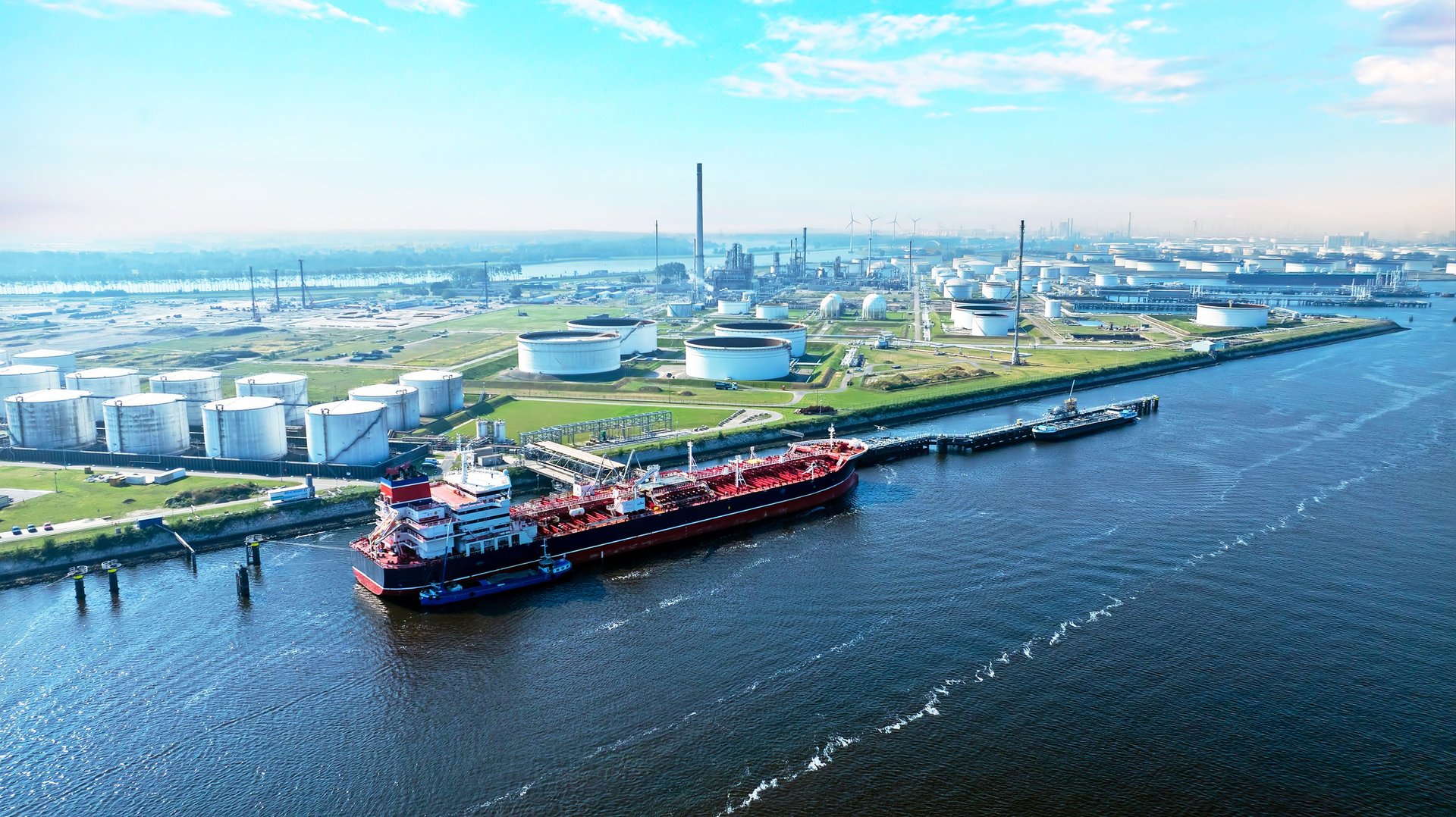
 South Korea Market
Reliable Naphtha Supply Solutions
For South Korea's Petrochemical Industry
Light & Heavy Naphtha • FOB & CIF Ulsan / Yeosu / Daesan • Hamriyah Free Zone, Sharjah
One Of The World's Largest Petrochemical Markets
South Korea is the world's fifth-largest petrochemical producer — operating some of the most advanced steam crackers, reformers, and aromatics complexes on the planet. The country is structurally dependent on Naphtha imports to sustain its massive petrochemical capacity.
South Korea's Petrochemical & Refining Landscape
World-Class Petrochemical Capacity
South Korea operates over 12 million tonnes per year of ethylene capacity — the world's fifth-largest — concentrated in three major industrial complexes: Ulsan (home to SK Energy, SK Geo Centric, S-Oil, Korea Petrochemical), Yeosu (LG Chem, Lotte Chemical, Hanwha TotalEnergies), and Daesan (Hyundai Chemical, Lotte Chemical, Hanwha TotalEnergies). These crackers are predominantly Naphtha-fed, making South Korea one of the world's largest Naphtha importers.
Massive Olefins Production
South Korea's steam crackers produce more than 12.7 million tonnes of ethylene and approximately 7 million tonnes of propylene annually — feeding the country's vast downstream polymer, fiber, chemical, and specialty material industries. Korean cracker operators run at high utilization rates and require consistent, specification-grade Naphtha supply to maintain production.
Global Export-Oriented Sector
South Korea is the world's third-largest petrochemical exporter, shipping polyethylene, polypropylene, paraxylene, benzene, synthetic rubber, and specialty chemicals to global markets — particularly China, Southeast Asia, and India. This export orientation demands reliable, cost-competitive feedstock supply to maintain Korea's position in global petrochemical markets.
Structural Naphtha Import Dependence
South Korea imports over 85 million barrels of Naphtha annually — among the world's largest Naphtha import volumes. Despite operating significant refinery capacity, Korea's petrochemical demand far exceeds domestic Naphtha production, creating sustained, large-volume Naphtha import requirements from Middle Eastern and international suppliers.
UAE–South Korea Trade Corridor
The UAE–South Korea maritime corridor is a core artery of global petrochemical trade — connecting Middle Eastern Naphtha supply with East Asia's massive petrochemical demand. South Korea is one of the UAE's most important crude oil and petroleum product trading partners, with deep commercial relationships extending to petrochemical and Naphtha trade.
Virginia Trading FZE serves Korean petrochemical buyers through this established commercial corridor — providing specification-grade Naphtha with professional logistics management and comprehensive documentation.
Key Naphtha Import Ports
South Korea's major petrochemical ports are among the world's busiest — purpose-built to receive large-volume Naphtha cargoes supporting massive steam cracker and refinery complexes.
Ulsan
Gyeongsang, Southeast CoastSouth Korea's — and one of the world's — premier petrochemical port cities. Ulsan hosts SK Energy (Korea's largest refiner and Naphtha consumer), SK Geo Centric, S-Oil, Korea Petrochemical, and numerous chemical manufacturers. The Ulsan Petrochemical Complex is the country's largest — home to multiple steam crackers, reformers, and aromatics plants consuming vast Naphtha volumes. Deep-water berths accommodate VLCC-sized tankers.
Yeosu
Jeollanam, Southern CoastThe Yeosu National Industrial Complex is South Korea's second-largest petrochemical hub — hosting LG Chem (Korea's largest chemical company), Lotte Chemical, and Hanwha TotalEnergies. Yeosu's crackers are predominantly Naphtha-fed, producing ethylene, propylene, butadiene, and aromatics. The port's liquid bulk terminals are designed for large-volume Naphtha discharge with pipeline connectivity to on-site cracker complexes.
Daesan
Chungcheongnam, West CoastThe Daesan Petrochemical Complex — hosting Hyundai Chemical, Lotte Chemical, and Hanwha TotalEnergies — is South Korea's third major petrochemical center. Located on the Yellow Sea coast, Daesan's crackers and aromatics plants represent significant Naphtha demand. The port's modern liquid cargo infrastructure supports efficient large-parcel Naphtha discharge and on-site storage.
Busan
Gyeongsang, Southeast CoastSouth Korea's largest port by total cargo volume and a major liquid bulk handling center. While Busan is more diversified than Ulsan/Yeosu, it serves as a secondary Naphtha import gateway supporting chemical and industrial operations in the Busan-Gyeongnam region. World-class port infrastructure with extensive tank storage and efficient customs processing.
Incheon
Gyeonggi, West CoastThe primary port serving the Seoul Metropolitan Area and Gyeonggi industrial region. Incheon's petrochemical and chemical terminals support industrial operations across South Korea's largest economic zone. While Incheon handles less Naphtha volume than Ulsan/Yeosu/Daesan, it provides critical import capability for chemical and industrial consumers in northern South Korea.
Industries Using Naphtha In South Korea
South Korea's Naphtha-consuming industries span petrochemical cracking, aromatics production, refining, and specialty chemical manufacturing — representing some of the world's largest and most sophisticated operations.
Petrochemical Plants & Steam Crackers
South Korea's Naphtha-based steam crackers — operated by SK Geo Centric, LG Chem, Lotte Chemical, Hanwha TotalEnergies, Hyundai Chemical, Korea Petrochemical, and S-Oil — represent over 12 million tonnes/year of ethylene capacity. These are among the world's most efficient and largest single-train crackers, each consuming 1–3 million tonnes of Naphtha annually. Reliable feedstock supply is critical to cracker economics and utilization.
Aromatics Producers
South Korea is the world's largest paraxylene (PX) producer and a major benzene/toluene supplier — operated by SK Geo Centric, S-Oil, Lotte Chemical, Hanwha TotalEnergies, and Hyundai Cosmo. These aromatics complexes use Heavy Naphtha as reformer feedstock to produce PX (for polyester and PET), benzene (for styrene, phenol, nylon), and toluene — primarily for export to China and global markets.
Refineries
South Korea's five major refineries — SK Energy (Ulsan, 840,000 bpd), GS Caltex (Yeosu, 800,000 bpd), S-Oil (Ulsan, 669,000 bpd), Hyundai Oilbank (Daesan, 520,000 bpd), and Hanwha TotalEnergies (Daesan) — represent over 3 million bpd of refining capacity. While these refineries produce Naphtha, their integrated petrochemical operations consume significant additional volumes, creating net Naphtha import demand.
Chemical Manufacturers
South Korea's specialty and industrial chemical sector — LG Chem, Lotte Chemical, Kumho Petrochemical, Hanwha Solutions, and numerous mid-size chemical companies — uses Naphtha-derived olefins and aromatics to manufacture synthetic resins, engineering plastics, synthetic rubber, specialty chemicals, electronic materials, and advanced industrial products exported worldwide.
Downstream Polymer & Material Producers
South Korea's downstream polymer industry — producing polyethylene (PE), polypropylene (PP), ABS, polystyrene (PS), PVC, PET, polycarbonate, and specialty polymers — is the ultimate consumer of Naphtha-derived feedstocks. Korea's polymer exports supply automotive, electronics, packaging, construction, textile, and consumer goods manufacturing globally, creating sustained pull-through demand for Naphtha.
Light Naphtha Applications
Light Naphtha (C5–C6, boiling range 30–90°C) is the primary steam cracker feedstock — the lifeblood of South Korea's olefins industry and the country's largest-volume Naphtha import category.
Ethylene Production
South Korea's steam crackers — including SK Geo Centric (Ulsan, 860,000 tpy), LG Chem (Yeosu/Daesan, 3.3 million tpy combined), Lotte Chemical (Yeosu/Daesan, 2.3 million tpy), Hanwha TotalEnergies (Daesan, 1.5 million tpy), and Hyundai Chemical (Daesan, 850,000 tpy) — use Light Naphtha as their primary feedstock. Light Naphtha's high paraffin content (70–90%) delivers superior ethylene yields essential for Korean cracker economics.
Propylene Production
Light Naphtha cracking produces significant propylene co-product — approximately 0.4–0.5 tonnes of propylene per tonne of ethylene. South Korea's approximately 7 million tonnes of annual propylene production feeds polypropylene (PP), acrylonitrile, propylene oxide, cumene/phenol, and oxo-alcohol plants across the country — supporting Korea's position as a global petrochemical supplier.
Olefins Manufacturing
Beyond ethylene and propylene, Light Naphtha cracking yields butadiene (essential for Korea's synthetic rubber industry — Kumho Petrochemical, LG Chem), butylenes, and pyrolysis gasoline (pygas). These C4 and aromatics-rich co-products are essential inputs to Korea's diversified petrochemical product slate, maximizing cracker economics.
Steam Cracking Optimization
Korean cracker operators continuously optimize feedstock selection between Naphtha, LPG, and ethane/propane based on relative economics. However, Korea's limited domestic ethane/propane supply and the product slate flexibility Naphtha provides — particularly for propylene and butadiene production — mean Naphtha remains the dominant and structurally essential Korean cracker feedstock.
Heavy Naphtha Applications
Heavy Naphtha (C7–C12, boiling range 90–200°C) is the primary feedstock for catalytic reforming — essential to South Korea's world-leading aromatics production industry.
Catalytic Reforming
South Korea operates one of the world's largest catalytic reforming capacities — converting Heavy Naphtha into high-octane reformate and aromatic-rich streams at SK Energy (Ulsan), GS Caltex (Yeosu), S-Oil (Ulsan), Hyundai Oilbank (Daesan), and Hanwha TotalEnergies (Daesan). Specification-grade Heavy Naphtha with balanced PNA composition is critical for reformer performance, catalyst life, and product quality.
Aromatics Production
South Korea is the world's largest paraxylene (PX) producer — over 10 million tonnes/year capacity — and a major benzene producer. Heavy Naphtha reforming followed by aromatics extraction produces paraxylene (for PTA/PET/polyester), benzene (for styrene/phenol/caprolactam), and toluene. Korea's aromatics industry is predominantly export-oriented, supplying China's massive polyester and chemical industries.
Benzene & Toluene Production
Korea's benzene production capacity exceeds 7 million tonnes/year — among the world's largest — feeding downstream styrene monomer (SM), phenol, cyclohexane, and caprolactam plants. Heavy Naphtha-derived reformate is the primary benzene source for Korean producers including SK Geo Centric, LG Chem, Lotte Chemical, and Hanwha TotalEnergies.
Refinery-Petrochemical Integration
South Korea's five major refineries are deeply integrated with petrochemical operations — with Heavy Naphtha serving as the critical feedstock bridge between refining and petrochemicals. This integration allows Korean operators to optimize the Naphtha balance between gasoline blending and petrochemical aromatics production based on relative margins, market conditions, and product demand.
Why Source Naphtha From UAE For South Korea
The UAE is one of South Korea's most important energy and petrochemical trade partners — offering Korean buyers supply reliability, logistics connectivity, and commercial flexibility.
Established Energy Trade Relationship
The UAE and South Korea maintain a deep strategic energy partnership. The UAE supplies approximately 10% of South Korea's crude oil imports, has attracted major Korean investment (including the $20 billion Barakah nuclear project and ADNOC-SK Energy cooperation), and hosts Korean EPC contractors across energy and infrastructure. This established commercial and diplomatic relationship provides a strong foundation for Naphtha trade.
Reliable Export Infrastructure
UAE ports — Fujairah, Jebel Ali, and Ruwais — feature world-class liquid bulk terminals capable of loading the large parcel sizes (30,000–90,000 MT) preferred by Korean buyers. Extensive tank storage, efficient vessel turnaround, and reliable loading operations provide Korean buyers with supply certainty and scheduling confidence.
Flexible Cargo Arrangements
UAE-based suppliers offer Korean buyers flexibility in cargo sizing (from 30,000 MT to 90,000+ MT VLCC-size parcels), delivery terms (FOB, CIF, CFR), contract structures (spot, term contracts), and payment terms. This flexibility allows Korean petrochemical companies to optimize procurement strategy based on cracker feedstock economics and inventory position.
International Commodity Trading Expertise
UAE-based international trading companies bring deep expertise in global Naphtha markets, price discovery (linked to Platts Naphtha C+F Japan/Korea assessments), chartering and freight management, trade finance, and documentation. Korean buyers benefit from professional transaction execution and market intelligence.
Competitive Logistics
The UAE–Korea route is one of global petrochemical trade's most liquid corridors — supported by multiple shipping lines, regular parcel tanker services, and competitive freight rates. The route's high volume and established nature mean Korean buyers benefit from logistics market efficiency and vessel availability.
Alternative Supply Diversification
While Korean buyers maintain diversified Naphtha supply portfolios, UAE-based supply provides important diversification alongside other Middle Eastern, Indian, and Southeast Asian sources. A diversified supply base enhances feedstock security, price competition, and operational resilience for Korean cracker operators.
UAE–South Korea Trade Routes & Logistics
End-to-end Naphtha logistics management — from UAE load ports through the Indian Ocean and East Asian sea lanes to Korean petrochemical terminals.
Arabian Gulf Export Terminals
Naphtha cargoes load at UAE deep-water terminals — Fujairah (Indian Ocean access, no Strait of Hormuz transit), Jebel Ali (Dubai, world-class container/bulk port), and Ruwais (ADNOC's integrated refinery-petrochemical terminal). These facilities handle the large parcel tanker sizes (30,000–90,000 MT) that Korean buyers prefer for freight economics and operational efficiency.
Tanker Transportation
Naphtha cargoes to Korea are shipped via MR (Medium Range, 30,000–50,000 DWT) and LR1/LR2 (Long Range, 55,000–90,000 DWT) parcel tankers. Vessels are inspected for tank cleanliness and Naphtha cargo compatibility. Experienced shipbrokers and chartering desks secure competitive freight from a liquid regional tanker market serving East Asian petrochemical demand.
East Asia Trade Routes
The UAE–Korea route — Arabian Gulf → Indian Ocean → Malacca Strait → South China Sea → East China Sea / Korea Strait — is one of global energy trade's most established corridors. Multiple weekly sailings, regular liner and spot charter availability, and competitive freight rates make this a reliable supply route for Korean buyers requiring scheduled, large-volume Naphtha deliveries.
Export Documentation
Complete export documentation for Korean customs clearance: Bill of Lading, Commercial Invoice, Certificate of Origin (UAE-Korea FTA where applicable), Certificate of Quality (SGS/Intertek/Bureau Veritas), Certificate of Quantity, Material Safety Data Sheet (MSDS), Dangerous Goods Declaration — all prepared to Korean importer requirements and international standards.
Delivery Coordination
Dedicated operations team manages vessel nomination, load port scheduling, independent cargo inspection, loading supervision, stowage planning, and voyage monitoring. Korean port agency relationships ensure efficient discharge at Ulsan, Yeosu, or Daesan terminals with pipeline connectivity to cracker and reformer operations.
Supply Chain Efficiency
Professional supply chain execution: Incoterm selection, letter of credit (L/C) coordination with Korean banks, marine insurance per Institute Cargo Clauses (A), demurrage management, claims handling, and multi-cargo supply program structuring. Korean buyers benefit from end-to-end logistics managed by experienced commodity trading professionals.
South Korea Naphtha Market Insights
Expert perspectives on South Korea's petrochemical industry, Naphtha demand dynamics, and market trends.
South Korea's Petrochemical Industry — A Global Leader
South Korea is the world's fifth-largest petrochemical producer and third-largest exporter, with an industry deeply integrated into global supply chains. The country's petrochemical sector is built on Naphtha-based steam cracking — with over 12 million tonnes/year of ethylene capacity spread across three major complexes at Ulsan, Yeosu, and Daesan. Korean petrochemical companies — SK Geo Centric, LG Chem, Lotte Chemical, Hanwha TotalEnergies, Hyundai Chemical — are among the world's most sophisticated operators, running crackers at consistently high utilization rates that demand reliable, specification-grade Naphtha supply.
South Korea imports over 85 million barrels (~11 million tonnes) of Naphtha annually — among the world's largest Naphtha import volumes — sourced primarily from Middle Eastern suppliers including the UAE, Qatar, Kuwait, and Saudi Arabia, supplemented by Indian and Southeast Asian cargoes. This structural import dependence reflects Korea's limited domestic Naphtha production relative to its massive petrochemical capacity.
Steam Cracker Feedstock Dynamics
South Korea's steam crackers are predominantly Naphtha-fed, though operators maintain feedstock flexibility to optimize between Naphtha, LPG, and ethane/propane based on relative economics. Despite periodic LPG cracking when propane economics are favorable, Naphtha remains the dominant Korean cracker feedstock — accounting for approximately 70–75% of total cracker feed — due to its superior propylene and butadiene co-product yields and the product slate flexibility Korean operators require.
The key Naphtha specification parameters for Korean crackers include: paraffin content (≥ 65% for Light Naphtha preferred by crackers optimized for ethylene), low sulfur (≤ 500 ppm to protect cracking furnace metallurgy), consistent distillation range, and low metals/contaminants. Korean buyers frequently specify detailed Naphtha quality parameters in supply contracts, with independent cargo inspection at load port as a standard requirement.
Naphtha Demand Trends & Market Dynamics
South Korea's Naphtha demand has remained structurally strong, driven by sustained high cracker operating rates and the completion of capacity expansion projects at Ulsan, Yeosu, and Daesan over the past decade. Looking forward, the industry is navigating several dynamics: competition from Chinese crackers (which reduces Korea's polymer export market share), energy transition pressures, and the increasing availability of US ethane-based ethylene — all of which influence Korean cracker feedstock selection and Naphtha import volumes.
Despite these dynamics, Naphtha is expected to remain the dominant Korean cracker feedstock through the medium term. Korea's limited access to ethane (no domestic shale gas, no US ethane export terminal capacity committed to Korea), its integrated refinery-petrochemical complexes optimized for Naphtha, and the co-product value Naphtha provides (propylene, butadiene, aromatics) support sustained large-volume Naphtha import demand.
Aromatics Production & Heavy Naphtha Demand
South Korea is the world's largest paraxylene (PX) producer with over 10 million tonnes/year of capacity — operated by SK Geo Centric, S-Oil, Lotte Chemical, Hanwha TotalEnergies, and Hyundai Cosmo. This aromatics capacity is predominantly Heavy Naphtha-fed through catalytic reforming, with Korea exporting the vast majority of its PX production to China's polyester and PET industry.
Korea's benzene production — exceeding 7 million tonnes/year — is also largely Heavy Naphtha-derived. Benzene feeds Korea's styrene monomer, phenol, and caprolactam plants, with substantial export volumes to China and global markets. The sustained growth of Korea's aromatics exports provides steady, large-volume Heavy Naphtha demand that international suppliers serve.
Import Market Considerations For Korean Buyers
Korean Naphtha buyers — typically large petrochemical companies with sophisticated procurement operations — evaluate international supply based on: delivered price competitiveness (Platts Naphtha C+F Japan/Korea basis), product specification compliance with cracker or reformer requirements, supplier reliability and track record, logistics and shipping flexibility, payment terms, and commercial relationship quality.
Korean procurement teams value suppliers who demonstrate deep understanding of their operational requirements, provide transparent pricing, offer flexible delivery options, and maintain consistent product quality. Virginia Trading FZE provides Korean buyers with professional, reliable Naphtha supply supported by market intelligence, logistics expertise, and commitment to long-term commercial partnership.
UAE–Korea Strategic Partnership
The UAE–South Korea commercial relationship is among the most comprehensive in the Middle East–Asia energy corridor. Beyond crude oil and petroleum product trade, the relationship encompasses nuclear energy (Barakah), infrastructure investment, EPC contracting, and growing cooperation in petrochemicals and downstream industries. This deep institutional and commercial relationship provides a strong foundation for reliable, long-term Naphtha trade.
For Korean petrochemical buyers, UAE-based Naphtha supply offers the combination of product availability, logistics reliability, competitive pricing, and commercial partnership that supports their operational and strategic objectives. As Korea's petrochemical industry evolves to meet the challenges of global competition and energy transition, reliable international feedstock supply partnerships remain essential to the industry's competitiveness.
Frequently Asked Questions
Common questions about Naphtha supply for the South Korean market.
Why does South Korea import Naphtha?
South Korea is one of the world's largest Naphtha importers — importing over 85 million barrels (~11 million tonnes) annually — because its massive petrochemical steam cracker and aromatics reformer capacity far exceeds domestic refinery Naphtha production. Despite operating five major refineries with over 3 million bpd capacity, Korea's petrochemical demand for Naphtha feedstock is structurally larger than domestic supply, requiring sustained large-volume imports primarily from Middle Eastern suppliers.
What is Naphtha used for in South Korea?
In South Korea, Naphtha is primarily used as: (1) steam cracker feedstock — producing ethylene, propylene, butadiene, and other olefins at Ulsan, Yeosu, and Daesan complexes; (2) catalytic reformer feedstock — producing BTX aromatics (benzene, toluene, xylenes) and high-octane gasoline blendstock at Korea's five major refineries; and (3) industrial solvent and chemical intermediate in Korea's specialty chemical manufacturing sector.
Which companies consume Naphtha in South Korea?
South Korea's major Naphtha consumers include: SK Geo Centric (SK Group's petrochemical arm), LG Chem (Korea's largest chemical company), Lotte Chemical, Hanwha TotalEnergies, Hyundai Chemical, S-Oil, GS Caltex, SK Energy, Hyundai Oilbank, Korea Petrochemical, and Kumho Petrochemical. These are among the world's largest and most sophisticated petrochemical and refining companies.
Which ports receive Naphtha cargoes in South Korea?
South Korea's primary Naphtha import ports are Ulsan (largest — serving SK Energy, SK Geo Centric, S-Oil, Korea Petrochemical), Yeosu (serving LG Chem, Lotte Chemical, GS Caltex), and Daesan (serving Hyundai Chemical, Lotte Chemical, Hanwha TotalEnergies). Secondary ports include Busan and Incheon. These ports feature deep-water liquid bulk berths, extensive tank storage, and direct pipeline connectivity to on-site cracker and reformer complexes.
How much Naphtha does South Korea import annually?
South Korea imports over 85 million barrels of Naphtha per year — approximately 11 million tonnes — making it one of the world's three largest Naphtha importing nations alongside China and Japan. Korean Naphtha imports have been structurally high for decades, reflecting the country's position as a global petrochemical manufacturing powerhouse with Naphtha-based crackers at its industrial core.
What is the transit time for Naphtha from UAE to South Korea?
Transit time from UAE ports (Fujairah, Jebel Ali, Ruwais) to South Korean ports is approximately 18–22 days via the route: Arabian Gulf → Indian Ocean → Malacca Strait → South China Sea → East China Sea → Korea Strait. Actual transit varies by vessel speed, weather conditions, routing, and any intermediate port calls. Korean buyers typically plan Naphtha procurement on 30–60 day delivery windows to manage inventory and cracker feedstock supply.
What are typical Naphtha shipment sizes to South Korea?
Korean buyers typically receive Naphtha in large parcel sizes: 30,000–50,000 MT on MR (Medium Range) tankers and 55,000–90,000+ MT on LR1/LR2 (Long Range) tankers. VLCC-size cargoes (80,000–90,000+ MT) are common for large-volume Korean term contract deliveries. Korean ports — particularly Ulsan and Yeosu — have deep-water berths capable of accommodating large tankers, enabling freight economies of scale.
What Naphtha specifications do Korean crackers require?
Korean steam crackers typically require Light Naphtha with: paraffin content ≥ 65% (preferably 70–90% for maximum ethylene yield), sulfur ≤ 500 ppm, distillation range IBP ~30°C / FBP ~90°C, low aromatics (≤ 5%), low olefins, and low metals/contaminants. Heavy Naphtha for reformers typically requires: balanced PNA composition, sulfur ≤ 1,000 ppm, distillation range IBP ~90°C / FBP ~200°C. Specific parameters are defined in supply contracts.
How is Naphtha priced for Korean deliveries?
Naphtha delivered to Korea is typically priced on a Platts Naphtha C+F Japan/Korea basis — the regional benchmark assessment published by S&P Global Platts. Contract pricing may use a fixed formula (e.g., Platts monthly average + premium/discount), negotiated fixed price, or floating market price. Price discovery is transparent given the depth and liquidity of the Asian Naphtha market.
What Incoterms are used for Naphtha supply to South Korea?
Common Incoterms for Naphtha supply to Korea include: CIF (Cost, Insurance & Freight — Korean discharge port, seller arranges shipping and insurance), CFR (Cost & Freight — similar to CIF but buyer arranges insurance), and FOB (Free On Board — UAE load port, buyer arranges shipping). CIF is most common for Korean term contracts, providing delivered-price convenience. FOB is used when Korean buyers prefer to manage shipping through their own chartering desks.
What documents are required for Naphtha import into South Korea?
Standard import documentation includes: Bill of Lading, Commercial Invoice, Packing List, Certificate of Origin, Certificate of Quality (independent inspection by SGS/Intertek/Bureau Veritas), Certificate of Quantity, Material Safety Data Sheet (MSDS/K-OSHA compliant), Dangerous Goods Declaration, and customs import declaration (KCS). The Korea Customs Service processes Naphtha imports under HS code 2710.12 with applicable duties and VAT.
What are South Korea's import duties on Naphtha?
South Korea applies customs duty on Naphtha imports under HS code 2710.12. Duty rates vary based on the Korea-United Arab Emirates Comprehensive Economic Partnership Agreement (CEPA) and other trade agreements. Under the UAE-Korea CEPA, preferential tariff rates may apply to qualifying Naphtha imports from the UAE. Korean buyers should confirm applicable rates with their customs broker.
How do Korean buyers typically procure Naphtha?
Korean petrochemical companies procure Naphtha through a combination of: (1) term contracts with Middle Eastern national oil companies and international suppliers, (2) spot market purchases for incremental or opportunistic volumes, (3) direct refinery offtake arrangements, and (4) trading company intermediaries. Large Korean buyers maintain diversified supply portfolios and sophisticated feedstock procurement teams that continuously optimize between supply sources.
What is the UAE–Korea energy trade relationship?
The UAE and South Korea have a deep, strategic energy partnership spanning crude oil, petroleum products, LNG, nuclear energy (Barakah nuclear power plant), and petrochemicals. The UAE supplies approximately 10% of Korea's crude oil imports. Korean companies — including SK, GS, Hyundai, Samsung, and others — have major investments and EPC contracting relationships in the UAE energy sector. This comprehensive relationship supports growing Naphtha and petrochemical trade.
How do I request a Naphtha quotation for South Korea delivery?
Submit your requirement through our Request Quote page or email. Include: Naphtha grade (Light or Heavy), estimated volume, preferred Korean discharge port (Ulsan, Yeosu, or Daesan), preferred Incoterm (CIF or FOB), delivery timing, and any specification requirements. Our trading desk reviews all Korea-related inquiries promptly and typically provides a commercial response within 24 hours.
Can Virginia Trading FZE supply Naphtha to South Korea's major petrochemical companies?
Yes. Virginia Trading FZE is positioned to supply Naphtha to Korean petrochemical companies and trading entities. Our team has experience in the Asian Naphtha market, understands Korean buyer requirements, and provides professional transaction execution including specification-grade product supply, logistics management, comprehensive documentation, and competitive commercial terms. We welcome inquiries from Korean petrochemical producers, refiners, and commodity traders.
Request A Naphtha Quotation For South Korea
Submit your Naphtha requirement — Light or Heavy grade, volume, preferred Korean port — and receive a competitive commercial response from our trading desk.
Light Naphtha • Heavy Naphtha • CIF Ulsan / Yeosu / Daesan • Hamriyah Free Zone, Sharjah, UAE