
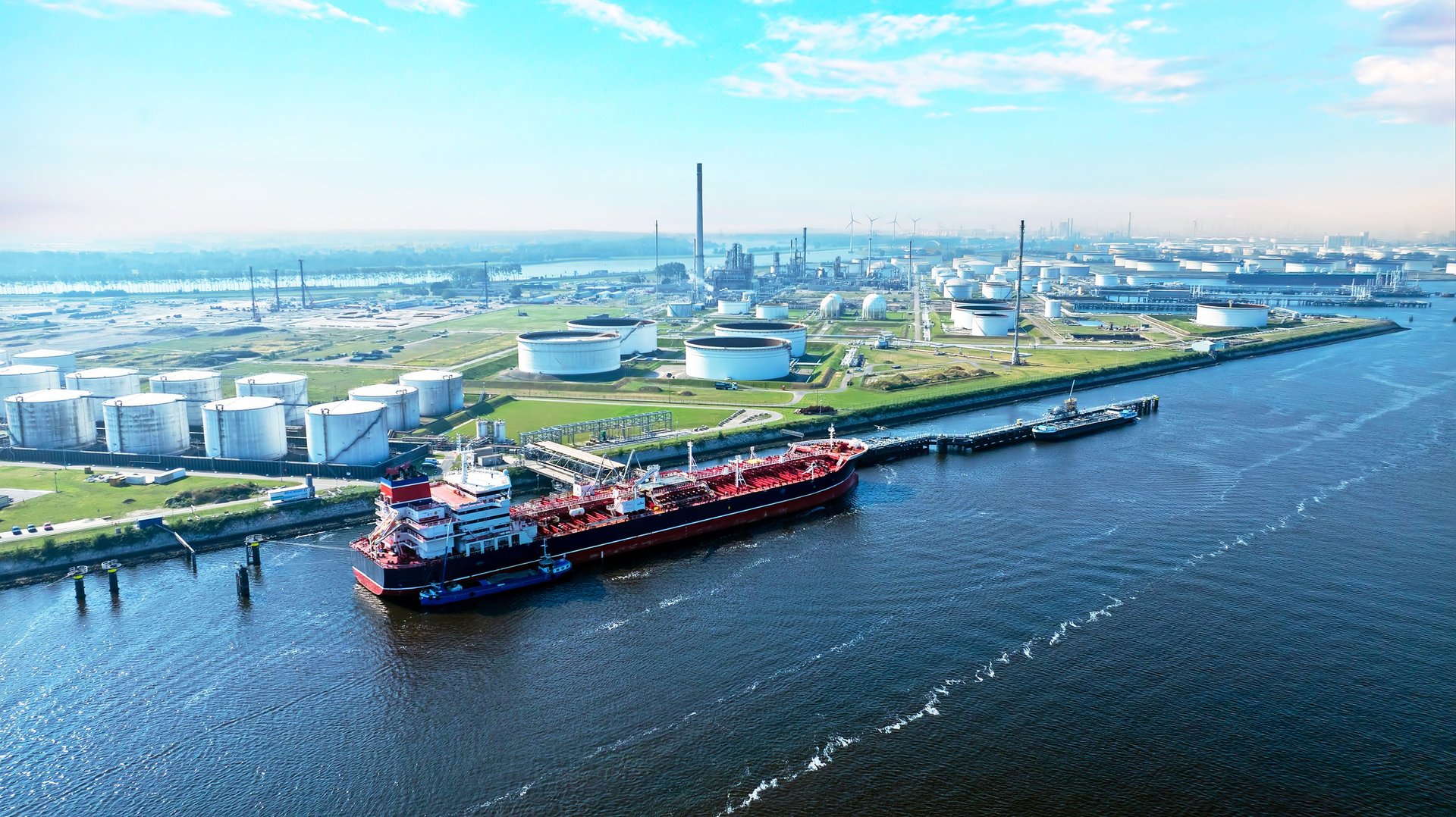
 India Market
Reliable Naphtha Supply Solutions
For The Indian Market
Light & Heavy Naphtha • FOB & CIF Mumbai / Kandla / Mundra / Chennai • Hamriyah Free Zone, Sharjah
India's Growing Naphtha Demand
India is one of the world's largest and fastest-growing consumers of petrochemical feedstocks, with Naphtha serving as a critical raw material for the country's expanding petrochemical, refining, and industrial sectors.
India's Petrochemical & Refining Landscape
Petrochemical Growth
India's petrochemical industry is projected to grow at 8–10% annually, driven by rising demand for plastics, polymers, synthetic fibers, and specialty chemicals. Naphtha-based steam crackers remain the backbone of India's olefins production, with major complexes operated by Reliance Industries, Indian Oil, Haldia Petrochemicals, and GAIL.
Refining Sector Strength
India has a refining capacity exceeding 250 million tonnes per annum across 23 refineries, making it the world's fourth-largest refining hub. Several refineries operate Naphtha-producing units — including atmospheric distillation and secondary processing — generating significant domestic Naphtha volumes alongside strong import demand for specific grades.
Growing Import Requirements
Despite domestic production, India remains a net importer of Naphtha for petrochemical applications. India's petrochemical crackers require consistent supply of specification-grade Naphtha — Light Naphtha (C5–C6) for ethylene crackers and Heavy Naphtha (C7–C12) for reformers — creating sustained import demand from reliable international suppliers.
Manufacturing & Industrial Expansion
Government initiatives including 'Make in India' and the Production-Linked Incentive (PLI) scheme are accelerating manufacturing growth, increasing demand for petrochemical derivatives — from packaging materials and automotive components to construction chemicals and consumer products — all ultimately dependent on Naphtha feedstock.
UAE–India Trade Corridor
The UAE–India petroleum trade corridor is one of the most established and efficient in global commodity markets. Geographic proximity — approximately 1,200 nautical miles from UAE ports to India's west coast — delivers transit times of just 5–8 days, among the shortest international Naphtha supply routes available to Indian buyers.
Virginia Trading FZE leverages this established trade corridor to provide Indian buyers with competitive, timely Naphtha supply — supported by deep knowledge of Indian import procedures, cargo documentation, and port operations.
Key Naphtha Import Ports
India's major ports are equipped to receive Naphtha cargoes with dedicated liquid bulk terminals, tank storage, and pipeline connectivity to refinery and petrochemical complexes.
Mumbai
Maharashtra, West CoastIndia's premier petrochemical port. Mumbai and the adjacent Jawaharlal Nehru Port (JNPT) handle significant Naphtha volumes serving Maharashtra's refinery and petrochemical complexes. Dedicated liquid berths and substantial tank storage capacity support efficient discharge and onward distribution to industrial consumers throughout western India.
Kandla
Gujarat, West CoastThe Deendayal Port at Kandla is a major liquid cargo hub serving Gujarat's petrochemical and refining industry — India's largest petrochemical manufacturing state. Proximity to the Jamnagar refinery complex and Gujarat's industrial corridors makes Kandla a strategically important Naphtha discharge point.
Mundra
Gujarat, West CoastIndia's largest private port with modern liquid bulk handling infrastructure. Mundra provides efficient discharge, significant storage capacity, and excellent road/rail connectivity to Gujarat's petrochemical and industrial consumers. Deep-water berths accommodate larger parcel tankers for economies of scale.
Chennai
Tamil Nadu, East CoastThe primary Naphtha import gateway for southern India. Chennai Port serves Tamil Nadu's refinery, petrochemical, and chemical manufacturing sector with dedicated liquid cargo berths. Strategic for supplying Naphtha to industrial consumers across Tamil Nadu, Karnataka, and Andhra Pradesh.
Visakhapatnam
Andhra Pradesh, East CoastA major east coast port with established liquid bulk handling capability and proximity to the Visakhapatnam refinery and petrochemical complex. Serves the growing industrial demand in eastern and central India, including Andhra Pradesh, Odisha, and surrounding regions.
Mangalore
Karnataka, West CoastThe New Mangalore Port serves Karnataka's refinery and petrochemical operations. With dedicated liquid cargo handling infrastructure and connectivity to the Mangalore Refinery and Petrochemicals complex, it is a key import point for Naphtha entering southwestern India.
Industries Using Naphtha In India
Indian industrial sectors that depend on consistent, specification-grade Naphtha supply.
Petrochemical Plants
India's largest Naphtha consumers — steam crackers at Reliance Jamnagar, Indian Oil Panipat, Haldia Petrochemicals, GAIL Pata, and ONGC Mangalore Petrochemicals — convert Naphtha into ethylene, propylene, butadiene, and aromatics that feed the entire downstream polymer and chemical value chain.
Refining Industry
Indian refineries use Naphtha as reformer feedstock to produce high-octane gasoline blending components and aromatic hydrocarbons (benzene, toluene, xylenes). Major refinery complexes at Jamnagar, Vadinar, Mangalore, and Paradip are significant Naphtha consumers requiring consistent quality supply.
Chemical Manufacturers
India's specialty and industrial chemical sector uses Naphtha as solvent and feedstock for manufacturing paints, coatings, adhesives, rubber chemicals, and agricultural chemicals. Gujarat, Maharashtra, and Tamil Nadu host large clusters of Naphtha-consuming chemical manufacturers.
Fuel Blending Operations
Naphtha is blended into India's gasoline pool and used as industrial fuel in specific applications. The growing Indian fuel market — one of the world's largest — creates sustained demand for blending-grade Naphtha from both domestic refineries and international imports.
Industrial Processing
Indian industrial operations — including metal processing, textile manufacturing, power generation, and construction materials — use Naphtha as process fuel and industrial solvent. Consistent specification compliance and reliable supply scheduling are essential for uninterrupted operations.
Why Source Naphtha From UAE For India
The UAE is India's natural Naphtha supply partner — offering unmatched geographic, logistical, and commercial advantages.
Geographic Proximity
The UAE–India maritime corridor is one of the shortest international petrochemical supply routes. At approximately 1,200 nautical miles from UAE ports to India's west coast, transit times of 5–8 days provide Indian buyers with rapid cargo delivery — significantly faster than sourcing from the Mediterranean, US Gulf, or Asia-Pacific suppliers.
Shorter Transit Times
5–8 day transit to India's west coast ports (Mumbai, Kandla, Mundra) versus 20–25 days from the Middle East Gulf via longer routes, 30+ days from the Mediterranean, or 35–45 days from the US Gulf. Faster transit means lower working capital, reduced inventory requirements, and quicker response to changing demand.
Reliable Shipping Connectivity
The UAE–India route is served by a dense network of parcel tanker operators, shipbrokers, and liner services. Multiple weekly sailings, established charter markets, and competitive freight rates make this one of the most liquid and reliable petrochemical shipping corridors in global trade.
Flexible Supply Options
UAE-based suppliers offer flexibility in cargo sizing (5,000–50,000 MT), delivery terms (FOB, CIF, CFR), and contract structures (spot, short-term, term contracts). This allows Indian buyers to optimize procurement strategy based on market conditions, inventory position, and operational requirements.
International Trading Expertise
UAE-based international trading companies bring deep expertise in commodity markets, price discovery, logistics management, export documentation, and trade finance — providing Indian buyers with professional transaction execution and market intelligence beyond what direct refinery procurement can offer.
Competitive Logistics Costs
Short distances, high shipping frequency, established port infrastructure at both ends, and competitive UAE port charges combine to deliver some of the lowest per-tonne logistics costs available to Indian Naphtha importers — enhancing delivered price competitiveness versus other supply origins.
Light Naphtha Applications
Light Naphtha (C5–C6, boiling range 30–90°C) is the preferred feedstock for ethylene production and olefins cracking — critical to India's polymer and petrochemical value chain.
Ethylene Production
Light Naphtha is the primary feedstock for steam crackers producing ethylene — the world's most important petrochemical building block. India's Reliance Jamnagar, Indian Oil Panipat, and GAIL Pata crackers rely on Light Naphtha for ethylene production that feeds downstream polyethylene (PE), ethylene glycol (MEG), PVC, and styrene manufacturing. Light Naphtha's high paraffin content (70–90%) delivers superior ethylene yields compared to heavier feedstocks.
Olefins Production
Beyond ethylene, Light Naphtha cracking produces propylene, butadiene, and other valuable olefins. These C3/C4 olefins are essential for polypropylene (PP), ABS, synthetic rubber, and a wide range of petrochemical derivatives that support India's automotive, packaging, construction, and consumer goods industries.
Steam Cracker Operations
Modern Indian steam crackers are optimized for Light Naphtha feedstock due to its consistent composition, high paraffin content, low aromatics, and predictable cracking yields. Reliable specification-grade Light Naphtha supply is essential for cracker utilization rates, product slate optimization, and operational economics.
Petrochemical Feedstock Security
As India's ethane and propane supply from domestic gas processing remains limited relative to cracker capacity, Light Naphtha imports are critical for feedstock security. International Naphtha supply from UAE provides Indian crackers with the feedstock diversity and volume flexibility needed to maintain high utilization rates.
Heavy Naphtha Applications
Heavy Naphtha (C7–C12, boiling range 90–200°C) is the primary feedstock for catalytic reforming — essential to India's aromatics and gasoline supply chains.
Catalytic Reforming Units
Heavy Naphtha is the primary feedstock for catalytic reformers at Indian refineries, where it is converted into high-octane reformate for gasoline blending and aromatic-rich streams for BTX (benzene, toluene, xylenes) extraction. Indian refinery reformers at Jamnagar, Mangalore, and Paradip depend on specification-grade Heavy Naphtha for consistent reformer performance, catalyst life, and product quality.
Aromatics Production
Heavy Naphtha's naphthene and aromatic content makes it the ideal feedstock for BTX aromatics production. Benzene, toluene, and xylenes are essential building blocks for India's downstream chemical industry — producing fibers (polyester, nylon), plastics (PET, polystyrene), solvents, and pharmaceutical intermediates consumed across Indian manufacturing.
Refinery Operations
Indian refineries integrate Heavy Naphtha into their product slate optimization — directing Naphtha to reformers for gasoline blending, to petrochemical integration for aromatics, or to downstream processing depending on market economics. Stable Heavy Naphtha supply supports refinery flexibility and margin optimization.
Gasoline Blending
Reformate produced from Heavy Naphtha reforming is a critical high-octane gasoline blending component for India's massive domestic fuel market — one of the world's largest. As India's gasoline demand continues growing with vehicle ownership expansion, the importance of Naphtha-derived reformate in the gasoline pool increases correspondingly.
Logistics & Supply Chain
End-to-end Naphtha logistics management from UAE load ports to Indian discharge terminals.
Marine Shipment
Naphtha cargoes are shipped via parcel tankers (5,000–50,000 MT) from UAE load ports — Fujairah, Jebel Ali, Hamriyah — to Indian discharge ports. Vessels are inspected for tank cleanliness and Naphtha compatibility prior to loading. Experienced shipbrokers and chartering desks secure competitive freight and optimal vessel scheduling aligned with buyer delivery windows.
Export Documentation
Complete export documentation package prepared for Indian customs clearance: Bill of Lading, Commercial Invoice, Certificate of Origin (UAE Chamber), Certificate of Quality (SGS/Intertek/Bureau Veritas independent inspection), Certificate of Quantity, Material Safety Data Sheet (MSDS), Dangerous Goods Declaration, and packing list — all compliant with Indian import requirements.
Cargo Coordination
Dedicated cargo operations team manages vessel nomination, terminal coordination, loading supervision, independent cargo inspection at load port, stowage planning, and post-loading documentation. Real-time cargo status updates provided throughout the loading and transit period.
Delivery Support
Post-discharge logistics coordination including customs clearance facilitation, import documentation support, tank storage coordination at Indian ports, and onward distribution planning to refinery and petrochemical plant locations. Indian port agency relationships ensure efficient discharge operations.
International Trade Execution
Professional trade execution includes Incoterm selection (FOB Fujairah/Jebel Ali/Hamriyah or CIF Indian ports), letter of credit negotiation, trade finance coordination, marine insurance arrangement, demurrage management, and claims handling — all managed by experienced commodity trading professionals.
Indian Market Support
Understanding of Indian import regulations, customs procedures, port operations, and buyer requirements. Dedicated commercial team provides Indian buyers with market intelligence, price discovery, supply planning, and ongoing relationship management beyond the individual transaction.
How To Procure Naphtha
Our structured procurement process ensures clarity, transparency, and efficient execution from inquiry to delivery.
Submit RFQ
Send your Naphtha requirement — Light or Heavy Naphtha, estimated monthly volume, preferred delivery port, Incoterm preference, and target specification. Use our Request Quote form or email directly.
Requirement Review
Our trading desk reviews your requirement against current market conditions, product availability, shipping schedules, and India-specific import considerations. We may contact you to clarify specifications or discuss additional options.
Commercial Evaluation
We prepare a competitive commercial proposal factoring in product cost, freight to your nominated Indian port, marine insurance, inspection costs, and applicable charges — presented with clear price breakdown and validity period.
Offer Submission
Formal commercial offer submitted with product specification, quantity, delivery terms (Incoterm 2020), pricing formula or fixed price, payment terms, shipment schedule, and vessel details. All terms clearly documented for straightforward evaluation.
Contract Discussion
Upon offer acceptance, we finalize the sale contract detailing all commercial and operational terms. Contract governed by English law with international arbitration provisions — standard for international commodity transactions.
Shipment Coordination
Our operations team manages vessel nomination, terminal coordination, cargo inspection, loading supervision, and documentation preparation. You receive regular status updates from loading through transit to discharge.
Delivery Support
We support discharge operations at your nominated Indian port, provide all required import documentation, and coordinate with port agents to ensure smooth cargo reception. Post-delivery support for any operational or quality follow-up.
India Naphtha Market Insights
Analysis of India's Naphtha demand, supply dynamics, and import requirements — essential intelligence for procurement decision-making.
Naphtha Demand In India
India is the world's third-largest Naphtha consumer after China and the United States, with annual demand exceeding 20 million tonnes. Approximately 65% is consumed by the petrochemical sector (steam crackers and reformers), 25% by refinery operations (reforming, gasoline blending), and 10% by industrial applications (solvents, fuel). India's Naphtha balance is structurally short — domestic refinery production of approximately 15–17 million tonnes per annum is supplemented by 3–5 million tonnes of imports, primarily from Middle Eastern suppliers.
India's Naphtha import requirement has grown steadily as petrochemical cracker capacity has expanded faster than domestic refinery Naphtha output. The commissioning of new crackers — including HPCL Rajasthan, IOC Paradip expansion, and planned capacity additions — will further increase India's call on international Naphtha markets.
Petrochemical Industry Growth
India's petrochemical industry — valued at approximately $190 billion — is projected to reach $300 billion by 2025 and $1 trillion by 2040, according to government and industry forecasts. This growth is driven by rising per-capita polymer consumption (currently ~12 kg versus a global average of ~45 kg), expanding middle-class consumer demand, manufacturing sector growth under 'Make in India', and increasing exports of petrochemical products to global markets.
Naphtha-based crackers account for approximately 70% of India's ethylene capacity, making Naphtha the dominant petrochemical feedstock. While India's cracker operators are investing in feedstock flexibility (ethane, propane, LPG), Naphtha will remain the primary feedstock for the foreseeable future — ensuring sustained import demand for reliable, specification-grade Naphtha supply.
Feedstock Requirements
Indian petrochemical and refinery operations require Naphtha that meets strict specification parameters. Light Naphtha (C5–C6, 30–90°C boiling range, paraffin content 70–90%, low aromatics) is preferred by steam crackers for maximum ethylene yield. Heavy Naphtha (C7–C12, 90–200°C boiling range, balanced PNA composition) is required by catalytic reformers for optimal reformate yield and catalyst performance.
Indian buyers increasingly prioritize consistent specification compliance, reliable supply scheduling, competitive logistics, and professional transaction execution. Working with an experienced UAE-based international trading partner provides Indian buyers with access to specification-grade Naphtha, market intelligence, flexible delivery terms, and supply chain expertise — complementing direct procurement relationships.
Import Considerations For Indian Buyers
Indian Naphtha importers should consider several factors when evaluating supply options: product specification compatibility with end-use requirements, shipping logistics and transit times to the nominated discharge port, Incoterm selection (FOB for buyer-managed freight vs CIF for seller-managed delivery), payment terms and trade finance, independent cargo inspection at load port, Indian customs and import duty considerations, and the supplier's track record in international Naphtha trading.
The UAE–India corridor's short transit times, high shipping frequency, and established commercial relationships provide Indian buyers with a supply option that combines product quality, logistics reliability, and competitive delivered pricing — making UAE-based Naphtha supply a natural choice for Indian petrochemical and refining companies.
UAE–India Trade Routes
The Arabian Sea maritime corridor connecting UAE ports (Fujairah, Jebel Ali, Hamriyah) to India's west coast ports (Mumbai, Kandla, Mundra, Mangalore) is one of global commodity trading's most established routes. Multiple parcel tanker operators provide regular sailings, with competitive freight rates reflecting the route's high liquidity and vessel availability.
For India's east coast ports (Chennai, Visakhapatnam), Naphtha cargoes transit via the Arabian Sea and around Sri Lanka, adding approximately 2–3 days versus west coast deliveries while still maintaining competitive transit times of 7–10 days. Virginia Trading FZE can supply Naphtha to all major Indian ports with FOB or CIF delivery terms as preferred by the buyer.
Frequently Asked Questions
Common questions about Naphtha supply for the Indian market.
Does India import Naphtha?
Yes, India imports approximately 3–5 million tonnes of Naphtha annually, primarily from Middle Eastern suppliers including the UAE, Qatar, Kuwait, and Saudi Arabia. Despite India's substantial domestic refinery Naphtha production (15–17 million tonnes/year), petrochemical cracker demand exceeds domestic supply, requiring sustained imports — particularly for specification-grade Light Naphtha for steam crackers and Heavy Naphtha for reformers.
Which Indian industries use Naphtha?
India's major Naphtha-consuming industries include petrochemical plants (steam crackers producing ethylene, propylene, butadiene), refineries (catalytic reforming for gasoline blending and aromatics production), chemical manufacturers (solvents, specialty chemicals), fuel blending operations, and industrial processing sectors. India's petrochemical industry is the largest consumer, accounting for approximately 65% of total Naphtha demand.
What ports receive Naphtha cargoes in India?
Major Indian ports receiving Naphtha imports include Mumbai and JNPT (Maharashtra), Kandla (Deendayal Port) and Mundra (Gujarat), Mangalore (Karnataka) on the west coast, and Chennai (Tamil Nadu) and Visakhapatnam (Andhra Pradesh) on the east coast. These ports have dedicated liquid bulk berths, tank storage, and pipeline connectivity to nearby refineries and petrochemical complexes.
Can Naphtha be supplied from UAE to India?
Yes, the UAE is one of India's most important Naphtha supply partners. The UAE–India maritime corridor is approximately 1,200 nautical miles with transit times of just 5–8 days to west coast ports — among the shortest international Naphtha supply routes available to Indian buyers. Multiple parcel tanker operators provide regular sailings between UAE and Indian ports.
What are common Naphtha shipment sizes to India?
Typical Naphtha parcel sizes to India range from 5,000 to 50,000 metric tonnes, depending on buyer requirements, port draft restrictions, storage capacity, and commercial considerations. Most Indian imports are shipped in 20,000–40,000 MT parcels, balancing freight economics with port and storage constraints at the discharge location.
What documents are provided with Naphtha shipments to India?
Standard export documentation includes: Bill of Lading, Commercial Invoice, Packing List, Certificate of Origin (UAE Chamber of Commerce), Certificate of Quality (independent inspection by SGS, Intertek, or Bureau Veritas), Certificate of Quantity, Material Safety Data Sheet (MSDS), Dangerous Goods Declaration, and UAE customs export declaration — all compliant with Indian import requirements.
What Incoterms are available for Naphtha supply to India?
Virginia Trading FZE offers FOB (Free On Board — UAE load port) and CIF (Cost, Insurance & Freight — Indian discharge port) delivery terms. FOB gives Indian buyers control over shipping and insurance; CIF provides delivered-price convenience with seller-managed logistics. We can also offer CFR (Cost & Freight) if preferred. The most suitable Incoterm depends on buyer logistics capability, trade finance arrangements, and commercial preference.
What is the transit time from UAE to Indian ports?
Transit times from UAE ports (Fujairah, Jebel Ali, Hamriyah) to India's west coast ports: Mumbai/JNPT 5–7 days, Kandla/Mundra 5–8 days, Mangalore 6–8 days. To India's east coast: Chennai 8–10 days, Visakhapatnam 9–11 days (routing via Arabian Sea around Sri Lanka). These are among the shortest international Naphtha supply transit times available to Indian buyers.
What is the difference between Light and Heavy Naphtha?
Light Naphtha (C5–C6, boiling range 30–90°C) has high paraffin content (70–90%), low aromatics (1–5%), and is the preferred steam cracker feedstock for ethylene and olefins production. Heavy Naphtha (C7–C12, boiling range 90–200°C) has moderate paraffins (40–60%), higher naphthenes/aromatics, and is the primary catalytic reformer feedstock for BTX aromatics production and high-octane gasoline blending.
How is Naphtha quality verified before shipment?
Naphtha quality is verified by independent international inspection agencies — SGS, Intertek, or Bureau Veritas — at the UAE load port prior to vessel loading. A comprehensive Certificate of Quality covering density, distillation (IBP, FBP, boiling range), paraffin/naphthene/aromatic (PNA) composition, sulfur content, and other specification parameters is issued and provided to the buyer before payment.
What Naphtha specifications can Virginia Trading FZE supply?
We supply Light Naphtha (C5–C6, 30–90°C IBP–FBP, ≥ 70% paraffins, ≤ 5% aromatics, ≤ 500 ppm sulfur) and Heavy Naphtha (C7–C12, 90–200°C IBP–FBP, balanced PNA composition, ≤ 1,000 ppm sulfur). We can also supply intermediate or customized Naphtha grades to match specific buyer requirements. Visit our Naphtha Specifications page for detailed technical parameters.
What are the payment terms for Naphtha supply?
International Naphtha transactions typically use Letter of Credit (L/C) at sight, confirmed and irrevocable, issued by a reputable Indian bank. Alternative payment structures including CAD (Cash Against Documents) or telegraphic transfer may be available depending on buyer relationship and transaction size. Payment terms are discussed and agreed during the commercial negotiation stage.
How do I request a Naphtha quotation for India delivery?
Submit your requirement through our Request Quote page or email. Include: Naphtha grade (Light or Heavy), estimated monthly volume, preferred Indian discharge port, Incoterm preference (FOB or CIF), and any specification requirements. Our trading desk reviews all India-related inquiries as a priority and responds within 24 hours during business days.
Does Virginia Trading FZE have experience supplying to Indian buyers?
Yes, Virginia Trading FZE has experience serving Indian petrochemical plants, refineries, and chemical manufacturers with Naphtha and petrochemical supply from the UAE. Our team understands Indian import procedures, port operations, buyer preferences, and commercial practices — ensuring professional and efficient transaction execution for Indian buyers.
What are Indian import duties on Naphtha?
Indian customs duty on Naphtha imports varies by classification and trade agreement applicability. Under the India-UAE Comprehensive Economic Partnership Agreement (CEPA), preferential tariff rates may apply to qualifying Naphtha imports from the UAE. We recommend Indian buyers confirm the applicable duty rate with their customs broker or trade advisor for the specific Naphtha grade and HS code. Our commercial team can provide the documentation required for CEPA clearance.
Is Naphtha supply subject to Indian government regulations?
Naphtha import into India is regulated — importers typically require an Import-Export Code (IEC) from DGFT, and certain end-use declarations or approvals may apply depending on the Naphtha grade and application. Indian buyers should ensure they hold the necessary import authorizations. The commercial importation of Naphtha is well-established in India and thousands of cargoes are cleared annually through Indian ports.
Request A Naphtha Quotation For India
Submit your Naphtha requirement and receive a competitive commercial response from our trading desk — typically within 24 hours.
Light Naphtha • Heavy Naphtha • FOB & CIF Indian Ports • Hamriyah Free Zone, Sharjah, UAE