
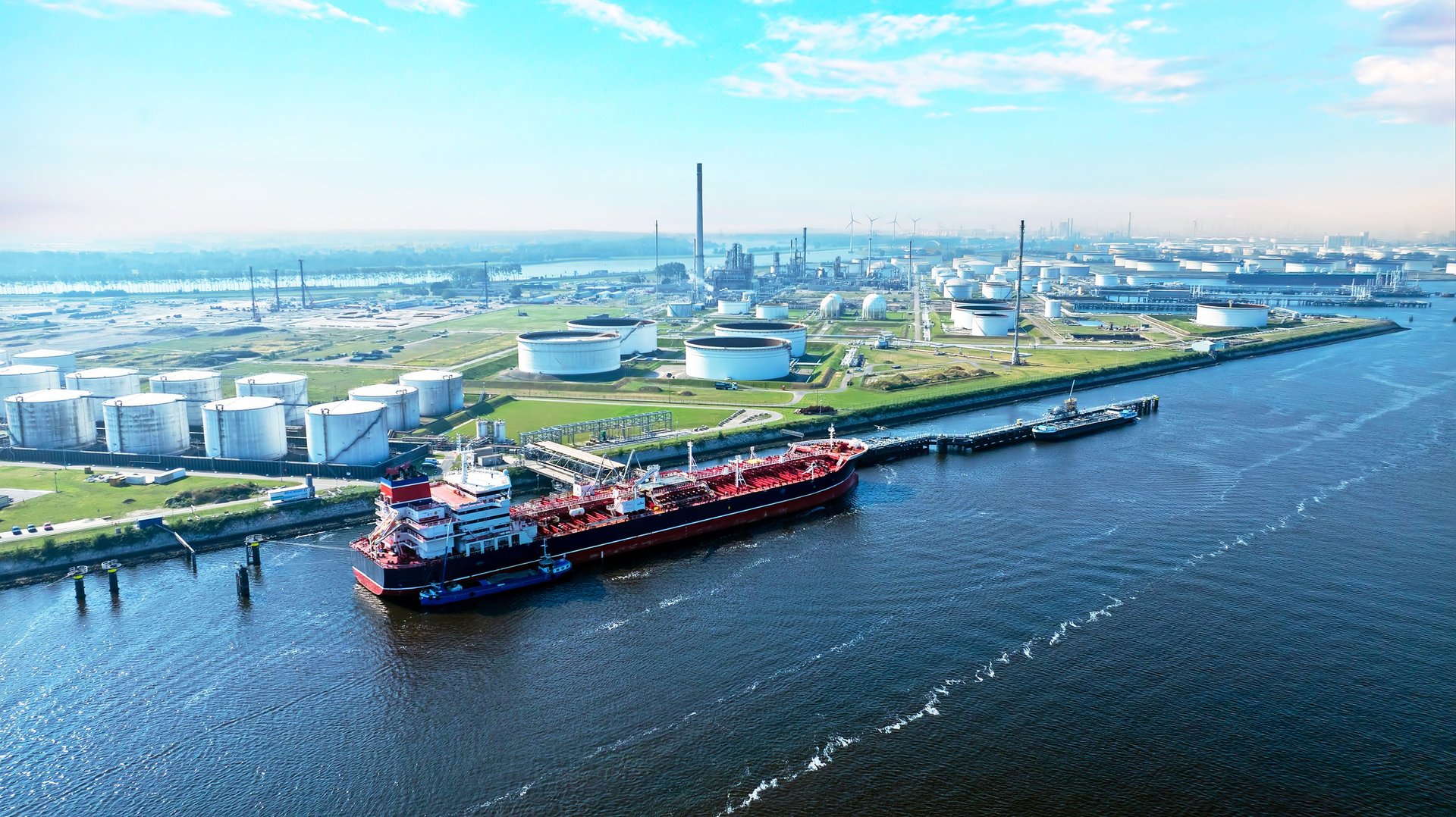
 Ghana Market
Reliable EN590 Diesel Supply
Solutions For Ghana
EN590 10ppm Diesel • CIF Tema / Takoradi • Hamriyah Free Zone, Sharjah, UAE
Ghana's Growing Diesel Demand
Ghana is one of West Africa's most dynamic economies, with diesel serving as the primary fuel for transport, mining, power generation, and industrial operations — creating sustained demand for reliable, specification-grade fuel supply.
Ghana's Fuel & Energy Landscape
Growing Fuel Demand
Ghana's petroleum consumption has grown at approximately 5–7% annually, driven by GDP growth (averaging 5–6% pre-pandemic), expanding transport sector activity, rising vehicle ownership, and increasing industrial fuel demand. Diesel accounts for approximately 40% of petroleum product consumption — reflecting the country's reliance on diesel-powered transport, mining equipment, power generation, and industrial machinery.
Mining Industry — A Major Diesel Consumer
Ghana is Africa's largest gold producer and a significant producer of manganese, bauxite, and diamonds. The mining sector alone accounts for approximately 20–25% of Ghana's diesel consumption — powering heavy earth-moving equipment, haul trucks, processing plants, and remote mine-site power generation. Mining operations run 24/7 and require uninterrupted, specification-grade diesel supply.
Transportation & Logistics Growth
Ghana's transport sector — the largest petroleum-consuming sector at approximately 55% of total fuel demand — continues to expand with economic growth, urbanization, and regional trade integration. The country's position as a West African trade and logistics hub, combined with port operations at Tema and Takoradi, drives sustained diesel demand for freight trucks, intercity buses, and commercial vehicle fleets.
Power Generation & Energy Sector
Despite significant natural gas-fired and hydroelectric generation capacity, Ghana's electricity grid experiences reliability challenges. Diesel generators provide essential backup and primary power for businesses, industries, mining operations, telecommunications infrastructure, healthcare facilities, hotels, and government installations — creating geographically distributed, reliability-driven diesel demand nationwide.
UAE–Ghana Trade Corridor
The UAE–Ghana maritime trade corridor connects the Middle East Gulf's diesel export infrastructure to West Africa's premier fuel import gateway at Tema. This established international shipping route supports Ghana's fuel import requirements with competitive logistics and reliable vessel availability.
Virginia Trading FZE leverages this trade corridor to provide Ghanaian buyers with competitive, reliable EN590 Diesel supply — supported by knowledge of Ghanaian import procedures, cargo documentation, and Tema port operations.
Key Diesel Import Ports
Ghana's ports are equipped to receive diesel cargoes with dedicated liquid bulk terminals, tank storage, and connectivity to fuel distribution networks nationwide.
Tema
Greater Accra, Gulf of GuineaGhana's primary fuel import gateway and one of West Africa's most important petroleum discharge ports. The Tema Oil Refinery (TOR) terminal, bulk oil storage terminals, and private petroleum discharge facilities handle the majority of Ghana's diesel imports. Tema's deep-water berths accommodate product tankers up to 60,000 DWT, with dedicated pipeline connectivity to storage and distribution infrastructure serving Accra, Kumasi, and nationwide markets.
Takoradi
Western Region, Gulf of GuineaGhana's secondary petroleum import port, strategically located near the country's major mining regions and the Jubilee/TEN offshore oil fields. Takoradi handles diesel cargoes serving the Western Region's mining operations, industrial consumers, and power generation facilities. The port's liquid bulk handling capability provides important import capacity diversification and regional fuel supply resilience.
TOR Terminal
Tema, Greater AccraTema Oil Refinery's marine terminal is Ghana's primary refined product reception facility. With dedicated product tanker berths, substantial tank storage, and pipeline connectivity to TOR's refining and distribution infrastructure, the TOR terminal is the entry point for a significant portion of Ghana's diesel imports and provides critical fuel import infrastructure for the national market.
BOST Terminals
Nationwide Storage NetworkThe Bulk Oil Storage and Transportation Company (BOST) operates strategic fuel storage terminals across Ghana — including Tema, Kumasi, Buipe, Bolgatanga, and Akosombo. These terminals form the backbone of Ghana's national fuel distribution network, providing storage capacity, product handling infrastructure, and distribution logistics that ensure diesel availability throughout the country.
Private Terminals
Tema & TakoradiGhana's downstream petroleum sector includes private fuel import terminals operated by major Oil Marketing Companies (OMCs) and bulk distribution companies. These modern facilities — many with deep-water access and substantial tankage — provide competitive fuel import pathways and supply chain flexibility for Ghanaian diesel buyers.
Regional Gateway
West African Fuel HubGhana's ports — particularly Tema — serve not only Ghana's domestic fuel market but also function as a regional fuel distribution hub for neighboring landlocked countries including Burkina Faso, Mali, and Niger. This regional demand amplifies the strategic importance of Ghana's diesel import infrastructure and creates additional supply requirements served through Ghanaian import channels.
Who Buys EN590 In Ghana
Ghanaian fuel sector participants that depend on consistent, specification-grade EN590 Diesel supply.
Fuel Importers
Bulk fuel importers and trading companies that source diesel cargoes for Ghana's downstream petroleum market. These entities manage the international procurement, marine logistics, and import documentation for diesel shipments to Tema and Takoradi — supplying OMCs, BDCs, and large industrial consumers with specification-grade product.
Oil Marketing Companies
Ghana's OMCs — including GOIL, TotalEnergies Ghana, Vivo Energy (Shell), Puma Energy, Engen, and Star Oil — are the primary diesel distributors to retail fuel stations, commercial customers, and industrial consumers nationwide. These companies source bulk diesel for their nationwide retail and commercial fuel networks.
Mining Companies
Ghana's mining industry — Africa's largest gold producer — is one of the single largest diesel-consuming sectors. Major mining operations by Newmont, Gold Fields, AngloGold Ashanti, and Golden Star require massive volumes of diesel for haul trucks, excavators, processing plants, and remote site power generation.
Transport Fuel Suppliers
Companies supplying diesel to Ghana's road transport sector — intercity buses, freight trucks, taxi fleets, and commercial vehicles. The growing transport sector, expanding vehicle ownership, and regional trade logistics create sustained diesel demand across Ghana's road transport network.
Government Procurement
Government entities and state-owned enterprises that procure diesel for public infrastructure, power generation, public transport, military operations, and strategic fuel reserves. Government procurement represents a significant and stable demand channel in Ghana's diesel market.
Energy Distributors
Bulk Distribution Companies (BDCs) and energy companies that supply diesel to power plants, industrial consumers, commercial facilities, and institutional users. These distributors manage diesel supply chains from import terminals to end-users across Ghana's diverse economic sectors.
What Is EN590 Diesel?
EN590 is the European standard specification for automotive diesel fuel — the most widely referenced international diesel quality benchmark, trusted by fuel importers, distributors, and industrial consumers worldwide.
European Diesel Standard
EN590 is the European Committee for Standardization (CEN) specification for automotive diesel fuel, referenced in international fuel trade as the benchmark for high-quality diesel. The standard defines comprehensive fuel parameters — including sulfur content, cetane number, density, distillation characteristics, lubricity, flash point, and cold temperature behavior — ensuring consistent, predictable fuel performance across all diesel engine types and operating conditions.
Sulfur ≤ 10 ppm — Ultra-Low
The defining characteristic of EN590 Diesel is its ultra-low sulfur content — maximum 10 mg/kg (10 parts per million). This specification enables the use of advanced emissions control technologies including diesel particulate filters (DPF), selective catalytic reduction (SCR), and oxidation catalysts. Compared to higher-sulfur diesel (500 ppm, 2,000 ppm, or 5,000 ppm grades still used in some markets), EN590 delivers dramatically cleaner combustion and reduced harmful emissions.
High Fuel Quality Standards
EN590 specifies minimum cetane number ≥ 51 for excellent ignition quality and smooth engine operation; controlled density (820–845 kg/m³ at 15°C); maximum 95% distillation recovery at ≤ 360°C; minimum flash point ≥ 55°C for safe handling; maximum lubricity (HFRR) ≤ 460 μm for fuel injection system protection; and maximum FAME (biodiesel) content ≤ 7% v/v — all parameters that ensure consistent, dependable fuel quality.
Modern Engine Compatibility
Ghana's vehicle fleet is modernizing, with increasing numbers of Euro 4/5/6 compliant diesel vehicles, modern commercial trucks, and advanced diesel-powered industrial and mining equipment. These modern engines require low-sulfur diesel for reliable operation, emissions compliance, and fuel system longevity. EN590 10ppm Diesel is the fuel specification these engines were designed for.
Key Benefits Of EN590 Diesel
Why Ghanaian fuel buyers, mining companies, and industrial consumers choose EN590 10ppm Diesel.
Ultra-Low Sulfur
Maximum 10 ppm (10 mg/kg) sulfur content ensures cleaner combustion, dramatically reduced SOx emissions, compatibility with modern emissions control systems, and compliance with the most stringent international fuel quality standards. Essential for modern diesel engines and environmental compliance.
Reduced Emissions
EN590's ultra-low sulfur specification, combined with controlled cetane and density parameters, delivers significantly lower particulate matter (PM), sulfur oxides (SOx), nitrogen oxides (NOx), and carbon monoxide (CO) emissions compared to higher-sulfur diesel grades — contributing to improved air quality and environmental performance.
Reliable Performance
High cetane number (≥ 51), controlled distillation, and consistent density ensure dependable engine starting, smooth operation, and predictable fuel consumption across all operating conditions — from high-temperature mining environments to cold starts at elevation, and from light-duty vehicles to heavy industrial equipment.
International Standard Compliance
EN590 compliance aligns with Ghana Standards Authority (GSA) fuel quality specifications, West African regional fuel harmonization objectives, and international fuel quality best practices. Importing EN590 Diesel supports compliance with Ghana's fuel quality regulatory framework and the country's progressive transition toward cleaner fuel standards.
Modern Fleet Compatibility
Ghana's modernizing commercial vehicle fleet, mining equipment, diesel generators, and industrial machinery — including Euro 4/5/6 compliant engines — requires low-sulfur diesel for reliable operation, warranty compliance, fuel injection system protection, and emissions control system functionality. EN590 is the specification these engines were engineered for.
Why Source EN590 From UAE For Ghana
The UAE is Ghana's natural diesel supply partner — offering compelling geographic, logistical, and commercial advantages for West African fuel buyers.
Strategic Export Location
The UAE — positioned at the crossroads of Middle Eastern refinery production, global diesel blending operations, and international tanker markets — is one of the world's premier diesel export hubs. Fujairah alone is the world's second-largest bunkering and oil products trading center. This strategic location gives Ghanaian buyers access to some of the most competitive and well-serviced diesel supply in global markets.
Reliable Shipping Routes
The UAE–West Africa maritime corridor is well-established, with regular product tanker sailings from Fujairah, Jebel Ali, and other UAE ports to Tema and Takoradi. Established shipbroker networks, competitive freight markets, and experienced tanker operators ensure reliable cargo scheduling and predictable transit for Ghana-bound diesel shipments.
Global Commodity Trading Ecosystem
The UAE hosts one of the world's most sophisticated commodity trading ecosystems — including international trading houses, shipbrokers, inspection agencies (SGS, Intertek, Bureau Veritas), trade finance banks, marine insurers, and logistics providers. This ecosystem supports professional, transparent, and efficient diesel transactions for Ghanaian buyers.
Competitive Logistics
Despite the longer distance compared to European or Mediterranean suppliers, UAE diesel supply to Ghana benefits from: economies of scale with larger parcel sizes (20,000–60,000 MT), high vessel availability and competitive freight rates on the Middle East Gulf–West Africa route, and the UAE's deep, liquid diesel market providing competitive FOB pricing.
Flexible Supply Solutions
UAE-based suppliers offer Ghanaian buyers flexibility in cargo sizing (from 5,000 MT spot parcels to larger term-contract volumes), delivery terms (FOB UAE or CIF Tema/Takoradi), and contract structures (spot, short-term, or term contracts). This allows Ghanaian buyers to optimize procurement strategy based on market conditions, storage capacity, and commercial requirements.
International Trading Expertise
UAE-based international trading companies bring deep expertise in diesel markets, price discovery, freight logistics, export documentation, trade finance, and West African import procedures — providing Ghanaian buyers with professional transaction execution and market intelligence that complements direct procurement relationships.
EN590 Diesel Product Parameters
The EN590 specification defines comprehensive diesel fuel parameters — ensuring consistent, predictable performance for modern diesel engines across all applications.
Sulfur Content (≤ 10 ppm)
The defining parameter of EN590 Diesel — sulfur content not exceeding 10 mg/kg (10 ppm). This ultra-low sulfur level protects diesel particulate filters (DPF), selective catalytic reduction (SCR) systems, and diesel oxidation catalysts from sulfur poisoning. Ghana's fuel quality standards increasingly align with low-sulfur diesel specifications, making EN590 the forward-compatible choice for fuel importers investing in cleaner fuel supply.
Cetane Number (≥ 51)
Minimum cetane number of 51 ensures excellent ignition quality and combustion characteristics. Higher cetane means shorter ignition delay, smoother engine operation, reduced engine knock, reliable cold starting, and lower exhaust emissions. Particularly important for high-performance diesel engines in Ghana's mining equipment and heavy commercial vehicles operating under demanding conditions.
Density & Distillation Control
Controlled density range (820–845 kg/m³ at 15°C) and distillation profile (95% recovered at ≤ 360°C) ensure consistent fuel injection characteristics, predictable power output, and reliable engine performance. Tight specification ranges eliminate the fuel quality variability that can affect engine calibration, fuel consumption, and emissions performance.
Lubricity & Flash Point Safety
Maximum HFRR wear scar diameter ≤ 460 μm ensures adequate fuel lubricity to protect diesel injection pumps and injectors from excessive wear — critical for modern high-pressure common rail injection systems. Minimum flash point ≥ 55°C provides safe fuel handling during transport, storage, and refueling operations across Ghana's fuel supply chain.
Logistics & Supply Chain
End-to-end EN590 Diesel logistics management from UAE load ports to Ghanaian discharge terminals.
Marine Shipment
EN590 Diesel cargoes are shipped via clean product tankers (20,000–60,000 MT parcels) from UAE load ports — Fujairah, Jebel Ali, Hamriyah — to Tema and Takoradi. Vessels are inspected for tank cleanliness and diesel compatibility prior to loading. Established shipbroker relationships secure competitive freight rates and optimal vessel scheduling aligned with Ghanaian buyer delivery requirements.
Export Documentation
Complete export documentation package prepared for Ghanaian customs clearance: Bill of Lading, Commercial Invoice, Certificate of Origin (UAE Chamber), Certificate of Quality (independent SGS/Intertek/Bureau Veritas inspection), Certificate of Quantity, Material Safety Data Sheet (MSDS), and packing list — all compliant with Ghana Revenue Authority (GRA) and Ghana Standards Authority (GSA) import requirements.
Cargo Coordination
Dedicated cargo operations team manages vessel nomination, terminal coordination at UAE load port, loading supervision by independent surveyor, stowage planning, and post-loading documentation. Real-time cargo status updates provided from loading through ocean transit to Tema or Takoradi discharge.
Delivery & Discharge Support
Post-discharge logistics coordination including customs clearance facilitation at Tema/Takoradi, import documentation support, tank storage coordination, and onward distribution planning to buyer facilities. Relationships with Ghanaian port agents, clearing agents, and logistics companies ensure efficient cargo discharge and inland delivery.
International Trade Execution
Professional trade execution includes Incoterm selection (CIF Tema being the most commonly requested for Ghana-bound cargoes), letter of credit negotiation, trade finance coordination, marine insurance arrangement, demurrage management, and claims handling — all managed by experienced commodity trading professionals familiar with West African fuel import procedures.
Ghanaian Market Support
Understanding of Ghana's fuel import regulations (NPA, GSA, GRA), port operations, customs procedures, and buyer requirements. Dedicated commercial team provides Ghanaian buyers with market intelligence, diesel price discovery, supply planning, and ongoing relationship management beyond the individual transaction.
How To Procure EN590 Diesel For Ghana
Our structured procurement process — transparent, documented, and managed end-to-end.
Inquiry & Product Specification
Buyer shares EN590 Diesel requirements — estimated monthly volume, preferred Ghanaian discharge port (Tema or Takoradi), target price indication, preferred Incoterms, and desired delivery schedule. We provide product specification sheet, indicative pricing, and Ghana market supply context.
Commercial Offer & Negotiation
Based on the inquiry profile, we issue a detailed SCO (Soft Corporate Offer) with price, payment terms, delivery schedule, Incoterms, product specification, inspection terms, and commercial conditions. Buyer reviews and we work through any commercial clarification or adjustment.
Contract & Payment Instrument
Draft sales and purchase agreement (SPA) prepared with full commercial terms, product specification appendix, quality determination clause, inspection appendix, and demurrage terms. Buyer establishes payment instrument (LC / SBLC / TT) — we provide draft LC text for buyer's Ghanaian bank.
Vessel Nomination & Inspection
Clean product tanker nominated and presented to buyer for acceptance. Independent surveyor appointed (SGS/Intertek/Bureau Veritas) for loading supervision, tank inspection protocol confirmed, and marine insurance arranged for the voyage to Tema or Takoradi.
Loading & Independent Quality Testing
Cargo loaded at UAE port under independent surveyor supervision. Full quality testing against EN590 parameters (sulfur, cetane, density, distillation, lubricity, flash point, FAME). Certificate of Quality, Certificate of Quantity, and Ullage Report issued by independent surveyor.
Shipping & Real-Time Cargo Tracking
Vessel sails from UAE to Ghana. Buyer receives shipping documents and vessel tracking information. Transit typically 18–22 days from UAE to Tema. Shipping documents available for buyer's bank and Ghana customs clearance preparation.
Discharge, Customs & Cargo Reception
Cargo discharged at Tema or Takoradi under independent surveyor supervision (discharge survey with outturn quantity and quality verification). Customs clearance through Ghana Revenue Authority (GRA), documentation verified against Ghana Standards Authority requirements, and cargo received at buyer's storage terminal.
Delivery Support
Post-delivery reconciliation of marine outturn and shore receipt quantities. Support for any operational or quality follow-up, documentation verification, and ongoing supply relationship management. Dedicated after-sales support for Ghanaian buyers.
Ghana Diesel Market Insights
Key intelligence for EN590 Diesel buyers and fuel importers operating in the Ghanaian market.
Ghana's Fuel Market Structure & Diesel Demand
Ghana consumes approximately 3.5–4.0 million tonnes of petroleum products annually, with diesel (automotive gasoil) representing the largest single product category at 40–45% of total consumption. The downstream petroleum sector is regulated by the National Petroleum Authority (NPA) under the NPA Act 2005 (Act 691). Key market participants include Oil Marketing Companies (OMCs — approximately 25 licensed), Bulk Distribution Companies (BDCs), and the Bulk Oil Storage and Transportation Company (BOST) which maintains strategic fuel reserves. Ghana's diesel market is supplied through a combination of domestic refinery production (TOR, with nameplate capacity of 45,000 bpd, though actual throughput varies) and significant imports that supplement domestic production.
Mining Industry — Dominant Diesel Consumer
Ghana's mining sector — Africa's largest gold producer and a significant producer of manganese, bauxite, and diamonds — is the single most important industrial diesel consumer. Mining operations require diesel for: heavy earth-moving equipment (excavators, bulldozers, graders); haul trucks (100–400 tonne capacity operating 24/7); processing plants (crushers, mills, concentrators); and remote mine-site power generation (many mines operate off-grid with dedicated diesel power plants). Mining companies require high-quality, specification-grade diesel to protect expensive equipment, maintain operational reliability, and meet environmental performance standards — EN590 10ppm Diesel meets all these requirements.
Transportation Sector Growth & Diesel Demand
Ghana's transport sector — the economy's largest petroleum consumer — continues to expand with GDP growth (projected at 5–6% annually), urbanization (Accra and Kumasi are among West Africa's fastest-growing cities), regional trade integration under ECOWAS and AfCFTA frameworks, and rising vehicle ownership. Diesel demand from the transport sector includes: intercity passenger buses and freight trucks on the Accra–Kumasi–Tamale corridor; port logistics vehicles at Tema and Takoradi; regional transit freight to Burkina Faso, Mali, and Niger; and the growing commercial vehicle fleet serving Ghana's expanding economy.
West African Fuel Trade & Ghana's Regional Role
Ghana functions as a regional fuel distribution hub for West Africa — Tema's fuel import infrastructure serves not only Ghana's domestic market but also supplies neighboring landlocked countries. Burkina Faso, Mali, and Niger receive a significant portion of their imported petroleum products via Ghanaian ports and the Ghana–Burkina transit corridor. This regional demand amplifies Ghana's diesel import requirements and positions Ghana as a strategic fuel supply gateway for West Africa. Ghana's NPA, port infrastructure, and fuel quality regulations are among the most developed in the region.
Import Logistics & UAE–Ghana Supply Dynamics
Ghana's diesel imports arrive primarily through Tema (the dominant fuel import gateway, handling approximately 80–85% of imported petroleum products) with Takoradi serving as the secondary import point. The UAE–Ghana diesel supply route — approximately 6,500 nautical miles with 18–22 days transit — is well-established with regular product tanker sailings serving West African demand. UAE diesel supply offers Ghanaian buyers competitive FOB pricing from the Fujairah diesel complex, established international trade documentation practices that align with Ghanaian import requirements, and the flexibility of the world's second-largest oil products trading hub.
Frequently Asked Questions
Common questions from Ghanaian buyers about EN590 Diesel sourcing from the UAE.
Does Ghana import EN590 Diesel?
Yes, Ghana imports diesel — including EN590 10ppm specification — to supplement domestic refinery production and meet growing national fuel demand. Ghana imports approximately 60–70% of its diesel consumption, primarily through Tema and Takoradi ports. EN590 Diesel is increasingly preferred by Ghanaian importers for its quality, consistency, and compatibility with modern diesel engine technology.
What is EN590 10ppm Diesel?
EN590 is the European standard specification (CEN EN 590) for automotive diesel fuel. The '10ppm' designation means the diesel contains no more than 10 milligrams of sulfur per kilogram of fuel (10 parts per million) — classifying it as ultra-low sulfur diesel (ULSD). EN590 defines comprehensive fuel parameters including sulfur content, cetane number (≥ 51), density, distillation, lubricity, and flash point — ensuring consistent, high-quality diesel suitable for modern diesel engines.
Can EN590 Diesel be supplied to Tema?
Yes — Tema is Ghana's primary fuel import gateway and can receive EN590 Diesel cargoes via product tankers (20,000–60,000 MT). Tema's liquid bulk terminals — including the TOR marine terminal, private OMC terminals, and BOST storage infrastructure — have the berthing, discharge, and storage capacity to handle diesel import cargoes efficiently. Virginia Trading FZE can supply EN590 Diesel CIF Tema with full documentation and cargo inspection.
Can EN590 Diesel be supplied CIF Ghana?
Yes, CIF Tema and CIF Takoradi are standard delivery terms for Ghana-bound EN590 Diesel shipments. Under CIF terms, Virginia Trading FZE arranges and pays for the product, marine freight to the Ghanaian discharge port, and marine insurance — providing the buyer with delivered-price certainty at their nominated Ghanaian port. FOB UAE delivery terms are also available for buyers who prefer to manage shipping and insurance independently.
What documents are provided with EN590 Diesel shipments to Ghana?
Complete export documentation includes: Bill of Lading, Commercial Invoice, Certificate of Origin (UAE Chamber of Commerce), Certificate of Quality (independent SGS/Intertek/Bureau Veritas inspection covering all EN590 parameters), Certificate of Quantity, Material Safety Data Sheet (MSDS), packing list, and UAE customs export declaration. All documentation is prepared to meet Ghana Revenue Authority (GRA) and Ghana Standards Authority (GSA) import requirements.
How is EN590 Diesel transported from UAE to Ghana?
EN590 Diesel is transported via clean product tankers — specialized vessels with coated or stainless steel tanks designed for refined petroleum products. Cargo sizes typically range from 20,000 to 60,000 metric tonnes. Transit time from UAE ports (Fujairah, Jebel Ali, Hamriyah) to Tema is approximately 18–22 days via the Arabian Sea, around the Cape of Good Hope or through the Suez Canal, to the Gulf of Guinea.
Which industries consume diesel in Ghana?
Ghana's major diesel-consuming sectors include: mining (Africa's largest gold producer — approximately 20–25% of diesel consumption for heavy equipment, processing, and power generation); transport (approximately 55% of consumption — freight trucks, buses, commercial vehicles); power generation (backup and primary diesel generators for businesses, industries, and institutions); industrial operations (manufacturing, processing, construction equipment); and government/institutional consumers (public services, military, infrastructure).
What Ghana-specific fuel regulations apply to EN590 Diesel imports?
Ghana's downstream petroleum sector is regulated by the National Petroleum Authority (NPA) under the NPA Act 2005 (Act 691). Key regulatory requirements for diesel imports include: Ghana Standards Authority (GSA) fuel quality specifications (which increasingly align with low-sulfur international standards), NPA import licensing and reporting requirements, Ghana Revenue Authority (GRA) customs and duty procedures, and BOST regulatory framework for strategic fuel reserves. EN590 Diesel is fully compliant with Ghana's fuel quality requirements.
What Incoterms are available for EN590 Diesel supply to Ghana?
Virginia Trading FZE offers CIF Tema, CIF Takoradi, and FOB UAE delivery terms for Ghana-bound EN590 Diesel. CIF (Cost, Insurance & Freight) is the most commonly requested Incoterm — providing delivered-price convenience with seller-managed marine logistics and insurance. FOB UAE is available for buyers with their own shipping and insurance arrangements. We also offer CFR (Cost & Freight) if preferred.
What is the minimum order quantity for EN590 Diesel supply to Ghana?
Minimum parcel size for direct marine shipment to Ghana is typically 20,000–30,000 MT (a single product tanker parcel). For smaller requirements, consolidation or spot cargo options may be available. We work with Ghanaian buyers across a range of volumes and can advise on optimal parcel sizing given Tema/Takoradi berth capabilities, storage availability, and buyer requirements.
How is EN590 Diesel quality verified before shipment?
EN590 Diesel quality is verified by independent international inspection agencies — SGS, Intertek, or Bureau Veritas — at the UAE load port prior to and during vessel loading. Sampling is conducted according to international standards (ISO 3170/3171) with retained samples sealed for both parties. A comprehensive Certificate of Quality covering all EN590 parameters is issued and provided to the buyer. Optional discharge survey at Tema or Takoradi provides outturn quality and quantity verification.
What are the payment terms for EN590 Diesel supply?
International diesel transactions typically use irrevocable confirmed Letter of Credit (LC) at sight, issued by a reputable Ghanaian bank with correspondent banking relationships. Alternative structures including Standby Letter of Credit (SBLC) or telegraphic transfer (TT) may be available depending on buyer relationship and transaction specifics. Payment terms are discussed and agreed during commercial negotiation.
Why source EN590 Diesel from UAE rather than European or Mediterranean suppliers?
UAE-sourced EN590 Diesel offers Ghanaian buyers competitive advantages including: access to the deep, liquid Fujairah diesel trading hub with competitive FOB pricing; established shipping routes and high vessel availability on the Middle East Gulf–West Africa corridor; UAE's position as a global diesel blending and trading center with access to multiple refinery production sources; professional international trading infrastructure; and established trade documentation compatible with Ghanaian banking and customs systems.
What are Ghana's key fuel import and logistics considerations?
Key considerations for Ghanaian diesel importers include: Tema port congestion and berthing availability (planning vessel scheduling well in advance); NPA regulatory compliance and import documentation; Ghana Standards Authority fuel quality testing at discharge; BOST storage and throughput arrangements; exchange rate and trade finance considerations; inland distribution logistics from Tema/Takoradi to consumption centers; and market structure dynamics including OMC and BDC supply arrangements.
How do I start the procurement process for EN590 Diesel from UAE to Ghana?
Contact Virginia Trading FZE with your EN590 Diesel requirements: estimated monthly volume, preferred Ghanaian discharge port (Tema or Takoradi), preferred Incoterms (CIF or FOB), desired delivery schedule, and any specific Ghana import or quality requirements. Our trading desk reviews Ghana-related inquiries as a priority and will prepare a commercial offer, discuss payment terms, and guide you through the full procurement process from inquiry to Tema/Takoradi delivery.
Ready To Source EN590 Diesel For Ghana?
Contact Virginia Trading FZE for a commercial offer and supply proposal tailored to your Ghana destination requirements.