
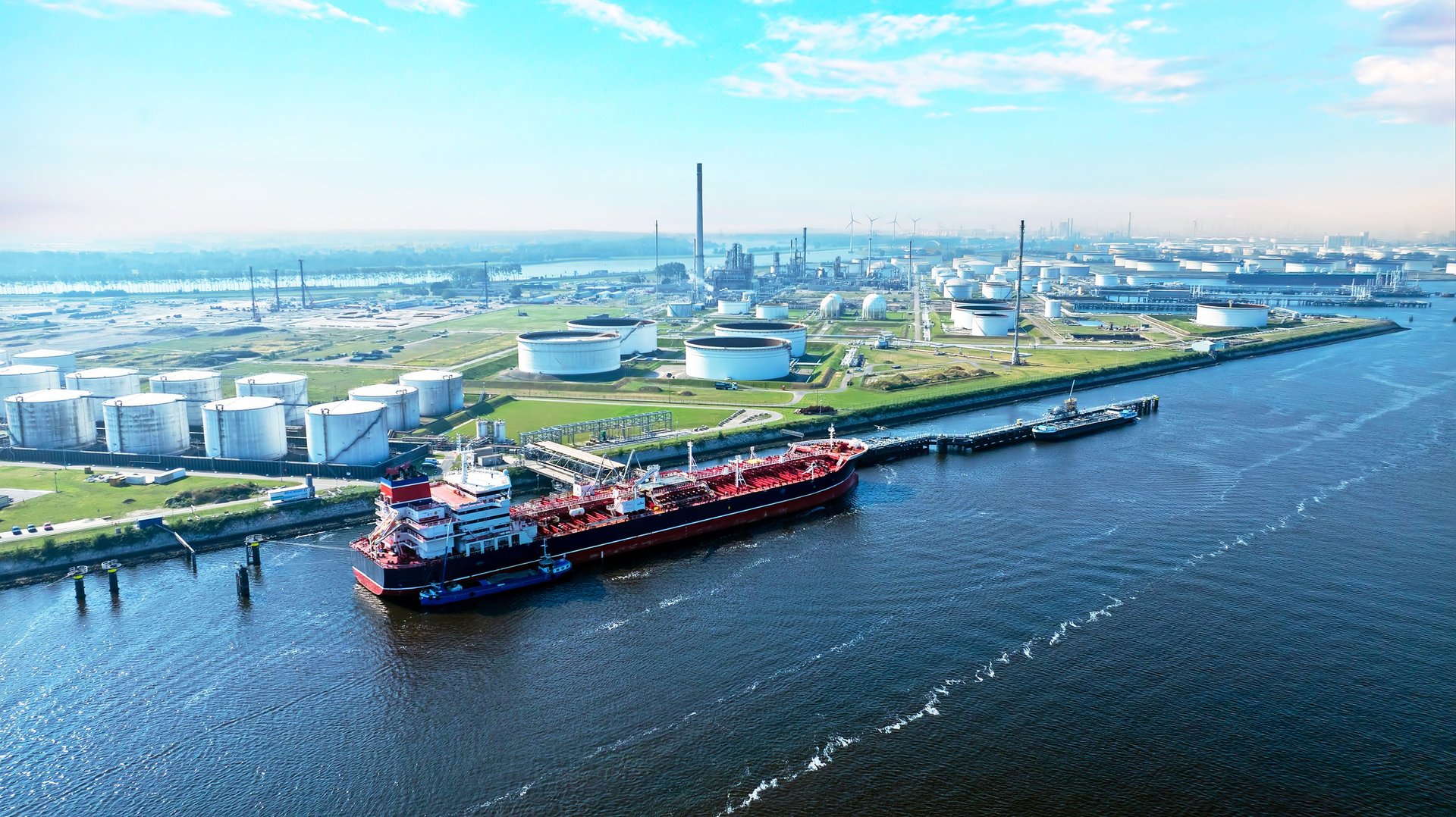
 Bangladesh Market
Reliable EN590 Diesel Supply
Solutions For Bangladesh
EN590 10ppm Diesel • CIF Chittagong / Mongla • Hamriyah Free Zone, Sharjah, UAE
Bangladesh's Growing Diesel Demand
Bangladesh is one of South Asia's fastest-growing economies, with diesel serving as the primary fuel for transport, industry, agriculture, and power generation — creating sustained import demand for reliable, high-quality fuel supply.
Bangladesh's Fuel & Energy Landscape
Rapid Economic Growth
Bangladesh's economy has grown at an average of 6–7% annually over the past decade, with GDP surpassing $460 billion. This sustained economic expansion — driven by the ready-made garment (RMG) industry, manufacturing, infrastructure development, and services — has fueled consistent growth in petroleum consumption. Diesel demand has grown at approximately 8–10% annually, reflecting the economy's structural dependence on diesel-powered transport, industry, and power generation.
Industrial & Manufacturing Powerhouse
Bangladesh is the world's second-largest garment exporter, with over 4,000 garment factories operating nationwide. Beyond garments, the country's industrial base includes pharmaceuticals, textiles, leather processing, jute, ceramics, shipbuilding, and light engineering. Industrial operations — particularly captive power generation for factories — are among Bangladesh's largest diesel consumers, as grid electricity reliability remains a challenge for continuous manufacturing operations.
Infrastructure Megaprojects
Bangladesh is in the midst of an infrastructure transformation — the Padma Bridge, Dhaka Metro Rail, Karnaphuli Tunnel, Rooppur Nuclear Power Plant, Payra Deep Sea Port, Dhaka Elevated Expressway, and numerous economic zones. These mega-projects consume massive volumes of diesel for construction equipment, heavy machinery, transport logistics, and site power generation — creating significant near-to-medium term diesel demand.
Power Generation & Energy Requirements
Bangladesh's grid electricity reaches approximately 95% of the population, but reliability remains a challenge — particularly during peak demand periods. Diesel generators provide critical backup power for factories, commercial establishments, healthcare facilities, telecommunications infrastructure, and rural areas. Additionally, diesel-fired power plants (both utility-scale and captive) contribute to the national electricity supply, particularly during gas supply shortages and seasonal demand peaks.
UAE–Bangladesh Trade Corridor
The UAE–Bangladesh maritime corridor connects the Middle East Gulf's diesel export infrastructure to Bangladesh's primary fuel import gateway at Chittagong. This well-established route supports Bangladesh's substantial fuel import requirements with competitive logistics and regular vessel availability.
Virginia Trading FZE leverages this established trade corridor to provide Bangladeshi buyers with competitive, reliable EN590 Diesel supply — supported by knowledge of Bangladeshi import procedures, cargo documentation, and Chittagong port operations.
Key Diesel Import Ports
Bangladesh's major ports are equipped to receive diesel cargoes with dedicated liquid bulk terminals, tank storage, and connectivity to national fuel distribution networks.
Chittagong
Chattogram Division, Bay of BengalBangladesh's principal seaport and primary fuel import gateway, handling approximately 90% of the country's seaborne trade and virtually all petroleum product imports. The port's liquid bulk terminals — including the Eastern Refinery (ERL) terminal and private petroleum discharge facilities — receive diesel cargoes from product tankers. Chittagong is the entry point for diesel supplying the entire national market, with pipeline, river barge, and road tanker connectivity to Dhaka and nationwide distribution.
Mongla
Khulna Division, Bay of BengalBangladesh's second-largest seaport, located on the Pashur River in southwestern Bangladesh. Mongla handles a growing share of petroleum imports and serves as an important alternative fuel import gateway — particularly for diesel supplying the southwestern region and reducing Chittagong congestion. The port's liquid cargo handling capability provides valuable import capacity diversification for Bangladesh's fuel supply chain.
Eastern Refinery
Chittagong, Bangladesh Petroleum CorporationThe Eastern Refinery Limited (ERL) — Bangladesh's sole petroleum refinery with 1.5 million tonnes per annum capacity — operates marine import terminals at Chittagong for crude oil and refined product imports. ERL's import infrastructure, tank storage, and refining operations are central to Bangladesh's petroleum supply, with supplementary refined diesel imports supplementing domestic refinery production.
Payra Deep Sea Port
Patuakhali Division, Bay of BengalBangladesh's first deep-sea port (under development) is designed to handle larger vessels than Chittagong can accommodate and will include liquid bulk cargo handling capacity. Once fully operational, Payra will provide Bangladesh with strategic fuel import capacity diversification and the ability to receive larger diesel cargoes with improved draft and turnaround times — important for the country's long-term fuel supply resilience.
BPC Import Infrastructure
Nationwide, Bangladesh Petroleum CorporationBangladesh Petroleum Corporation (BPC) — the state-owned petroleum import, refining, and distribution entity — manages the country's primary fuel import infrastructure including Chittagong and Mongla import terminals, tank farms at major consumption centers, river barge distribution, and the nationwide petroleum product supply chain. BPC's import operations are the principal entry channel for diesel into Bangladesh.
River & Inland Distribution
Nationwide Waterway NetworkBangladesh's extensive river network — one of the world's largest inland waterway systems — provides fuel distribution from Chittagong and Mongla to inland depots and consumption centers nationwide. River barges transport diesel from import terminals to major depots at Dhaka, Narayanganj, Khulna, and across the country's waterways — a cost-effective and high-capacity distribution network essential for national fuel logistics.
Who Buys EN590 In Bangladesh
Bangladeshi fuel sector participants that depend on consistent, specification-grade EN590 Diesel supply.
Fuel Importers
Bangladesh Petroleum Corporation (BPC) is the country's primary fuel importer, managing the procurement and importation of diesel and other petroleum products. International trading companies and fuel suppliers that sell to BPC through competitive international tenders are key participants in Bangladesh's diesel supply chain. BPC's import requirements — approximately 4–5 million tonnes of diesel annually — make Bangladesh one of Asia's most important diesel import markets.
Oil Marketing Companies
BPC's subsidiary companies — Padma Oil, Jamuna Oil, and Meghna Petroleum — are the primary oil marketing companies (OMCs) distributing diesel nationwide. These state-owned OMCs manage retail fuel station networks, commercial fuel supply, and industrial fuel delivery across Bangladesh. They source diesel from BPC imports through the national petroleum distribution system.
Industrial Manufacturers
Bangladesh's massive manufacturing sector — over 4,000 garment factories, plus pharmaceuticals, textiles, leather processing, jute, ceramics, shipbuilding, steel re-rolling, and light engineering — depends on diesel for captive power generation, backup electricity, boilers, process heating, and material handling equipment. Industrial captive power alone represents one of the largest diesel-consuming segments in Bangladesh.
Power Generation Companies
Bangladesh Power Development Board (BPDB) and independent power producers (IPPs) operate diesel-fired power plants — both utility-scale peaking/emergency plants and smaller distributed generation facilities — that supplement the national grid during gas supply shortages, seasonal demand peaks, and irrigation season. Additionally, thousands of factories operate diesel generators for reliable captive power due to grid supply constraints.
Government Procurement
Government entities and state-owned enterprises — including BPC, Bangladesh Army, Bangladesh Navy, Bangladesh Railway, and various government departments — procure diesel for strategic reserves, military operations, public transport, infrastructure maintenance, and emergency response. Government procurement represents a significant and institutional demand channel in Bangladesh's diesel market.
Logistics & Transport Companies
Bangladesh's transport and logistics sector — freight trucks, passenger buses, cargo vessels, and inland waterway transport — is the economy's largest diesel-consuming segment. The growing road transport fleet (over 4 million registered vehicles), expanding logistics networks, and increasing river transport activity create sustained diesel demand from logistics companies, fleet operators, and transport businesses nationwide.
What Is EN590 Diesel?
EN590 is the European standard specification for automotive diesel fuel — the most widely referenced international diesel quality benchmark, trusted by fuel importers, distributors, and industrial consumers worldwide.
European Diesel Standard
EN590 is the European Committee for Standardization (CEN) specification for automotive diesel fuel, referenced in international fuel trade as the benchmark for high-quality diesel. The standard defines comprehensive fuel parameters — including sulfur content, cetane number, density, distillation characteristics, lubricity, flash point, and cold temperature behavior — ensuring consistent, predictable fuel performance across all diesel engine types and operating conditions. EN590 compliance is increasingly specified by Bangladeshi fuel importers and BPC procurement requirements.
Sulfur ≤ 10 ppm — Ultra-Low
The defining characteristic of EN590 Diesel is its ultra-low sulfur content — maximum 10 mg/kg (10 parts per million). This specification enables the use of advanced emissions control technologies and delivers dramatically cleaner combustion compared to higher-sulfur diesel grades (500 ppm, 2,000 ppm, or 5,000 ppm) still prevalent in some South Asian markets. Bangladesh's fuel quality standards are progressively tightening, and EN590 10ppm Diesel meets the most stringent current and anticipated requirements.
Cleaner Combustion & Reduced Emissions
EN590's ultra-low sulfur specification, combined with controlled cetane (≥ 51) and density parameters, delivers significantly lower particulate matter (PM), sulfur oxides (SOx), nitrogen oxides (NOx), and carbon monoxide (CO) emissions compared to higher-sulfur diesel. For Bangladesh — where air quality in Dhaka and other industrial centers is a critical public health concern — transitioning to lower-sulfur diesel represents an important environmental improvement opportunity.
Modern Engine Compatibility
Bangladesh's vehicle fleet is steadily modernizing, with increasing numbers of modern diesel-powered vehicles, commercial trucks, industrial equipment, and generator sets that require low-sulfur diesel for reliable operation, fuel system protection, and warranty compliance. EN590 10ppm Diesel is the fuel specification that modern diesel engines — including those increasingly imported into Bangladesh — were designed to use.
Key Benefits Of EN590 Diesel
Why Bangladeshi fuel buyers, industrial consumers, and energy companies choose EN590 10ppm Diesel.
Ultra-Low Sulfur
Maximum 10 ppm (10 mg/kg) sulfur content ensures dramatically cleaner combustion, significantly reduced SOx emissions, compatibility with modern emissions control systems, and compliance with the most stringent international fuel quality standards. Essential for modern diesel engines and aligned with Bangladesh's progressive fuel quality improvement trajectory.
High Fuel Efficiency
EN590's controlled density, high cetane number (≥ 51), and consistent distillation profile deliver optimal combustion efficiency — translating to better fuel economy, predictable power output, and reduced fuel consumption per unit of work. Particularly important for Bangladesh's industrial consumers where fuel costs represent a significant operational expense.
Cleaner Emissions
EN590 10ppm Diesel reduces particulate matter (PM) by up to 90% compared to 500 ppm diesel, virtually eliminates SOx emissions, and enables proper functioning of diesel particulate filters (DPF) and selective catalytic reduction (SCR) systems. In Bangladesh's densely populated urban and industrial areas, lower emissions from diesel engines contribute to improved air quality.
International Compliance
EN590 compliance aligns with international fuel quality standards and Bangladeshi regulatory requirements. BPC's procurement specifications increasingly reference international quality parameters, and EN590 Diesel provides a well-documented, internationally recognized specification framework that supports transparent commercial transactions and quality assurance.
Modern Equipment Compatibility
Bangladesh's modernizing industrial base — including advanced diesel generators, modern commercial vehicles, construction equipment, and industrial machinery — increasingly requires low-sulfur diesel for reliable operation, fuel injection system longevity, and manufacturer warranty compliance. EN590 is the specification these modern assets were engineered to use.
Why Source EN590 From UAE For Bangladesh
The UAE is Bangladesh's natural diesel supply partner — offering compelling geographic, logistical, and commercial advantages for South Asian fuel buyers.
Strategic Export Hub
The UAE — positioned at the heart of Middle Eastern refinery production and global diesel trading — is one of the world's premier diesel export hubs. Fujairah's position as the world's second-largest bunkering and oil products trading center gives Bangladeshi buyers access to some of the most competitive and liquid diesel supply in global markets. The UAE's diesel exports serve markets across the Indian Ocean rim, with Bangladesh as a key trading partner.
Competitive Shipping Routes
The UAE–Bangladesh maritime corridor is well-established and efficient — approximately 3,500 nautical miles with 10–14 days transit time. This relatively short transit (comparable to Singapore–Bangladesh and significantly faster than European or US Gulf supply) gives Bangladeshi buyers competitive freight economics, good vessel scheduling flexibility, and responsive supply chain management.
Global Fuel Trading Ecosystem
The UAE hosts one of the world's most sophisticated commodity trading ecosystems — including international trading houses, shipbrokers, inspection agencies (SGS, Intertek, Bureau Veritas), trade finance banks, marine insurers, and logistics providers. This ecosystem supports professional, transparent, and efficient diesel transactions aligned with BPC's international procurement practices.
International Commodity Expertise
UAE-based international trading companies bring deep expertise in diesel markets, Platts pricing, freight logistics, export documentation, trade finance, and South Asian import procedures — providing Bangladeshi buyers with professional transaction execution and market intelligence that supports informed procurement decisions.
Flexible Commercial Solutions
UAE-based suppliers offer Bangladeshi buyers flexibility in cargo sizing (from 10,000 MT spot parcels to larger term-contract volumes), delivery terms (FOB UAE or CIF Chittagong/Mongla), and contract structures (spot, short-term, or term contracts). This allows Bangladeshi buyers to optimize procurement strategy based on market conditions, storage capacity, and BPC tender requirements.
Reliable Trading Infrastructure
The UAE's established legal framework, international banking system, marine insurance market, and port infrastructure provide a secure, reliable environment for international diesel transactions. UAE trade documentation is well-recognized and compatible with Bangladeshi banking, customs, and BPC procurement systems — supporting smooth transaction execution.
EN590 Diesel Product Parameters
The EN590 specification defines comprehensive diesel fuel parameters — ensuring consistent, predictable performance for modern diesel engines across all Bangladeshi applications.
Sulfur Content (≤ 10 ppm)
The defining parameter of EN590 Diesel — sulfur content not exceeding 10 mg/kg (10 ppm). This ultra-low sulfur level protects diesel particulate filters (DPF), selective catalytic reduction (SCR) systems, and diesel oxidation catalysts from sulfur poisoning. For Bangladesh's progressive fuel quality improvement trajectory, EN590 10ppm already exceeds current requirements and positions importers ahead of regulatory tightening.
Cetane Number (≥ 51)
Minimum cetane number of 51 ensures excellent ignition quality and combustion characteristics. Higher cetane means shorter ignition delay, smoother engine operation, reduced engine knock, reliable cold starting, and lower exhaust emissions. Important for Bangladesh's industrial generators and heavy commercial vehicles operating under demanding load and climate conditions.
Density & Distillation Control
Controlled density range (820–845 kg/m³ at 15°C) and distillation profile (95% recovered at ≤ 360°C) ensure consistent fuel injection characteristics, predictable power output, and reliable engine performance across Bangladesh's varied operating conditions — from hot, humid coastal environments to seasonal temperature variations.
Lubricity & Flash Point Safety
Maximum HFRR wear scar diameter ≤ 460 μm ensures adequate fuel lubricity to protect diesel injection pumps and injectors from excessive wear — critical for modern high-pressure common rail injection systems in Bangladesh's modernizing vehicle fleet. Minimum flash point ≥ 55°C provides safe fuel handling during marine transport, port discharge, inland distribution, and consumer refueling.
Logistics & Supply Chain
End-to-end EN590 Diesel logistics management from UAE load ports to Bangladeshi discharge terminals.
Marine Shipment
EN590 Diesel cargoes are shipped via clean product tankers (10,000–35,000 MT parcels) from UAE load ports — Fujairah, Jebel Ali, Hamriyah — to Chittagong and Mongla. Vessels are inspected for tank cleanliness and diesel compatibility prior to loading. Chartered through established shipbroker networks with competitive freight rates on the Middle East Gulf–Bay of Bengal route.
Export Documentation
Complete export documentation package prepared for Bangladeshi customs clearance and BPC import requirements: Bill of Lading, Commercial Invoice, Certificate of Origin (UAE Chamber), Certificate of Quality (independent SGS/Intertek/Bureau Veritas inspection covering all EN590 parameters), Certificate of Quantity, Material Safety Data Sheet (MSDS), and packing list — compliant with Bangladesh Customs and BPC procurement documentation standards.
Cargo Coordination
Dedicated cargo operations team manages vessel nomination, terminal coordination at UAE load port, loading supervision by independent surveyor, stowage planning, and post-loading documentation. Real-time cargo status updates provided from loading through ocean transit to Chittagong or Mongla discharge.
Delivery & Discharge Support
Post-discharge logistics coordination at Chittagong or Mongla including customs clearance facilitation, import documentation support, tank storage coordination, and onward distribution planning. Familiarity with Bangladeshi port operations, BPC cargo reception procedures, and inland distribution from Chittagong to Dhaka and nationwide depots.
International Trade Execution
Professional trade execution includes Incoterm selection (CIF Chittagong being commonly requested for Bangladesh-bound cargoes), letter of credit negotiation through international banks with Bangladeshi correspondent relationships, trade finance coordination, marine insurance arrangement, demurrage management, and claims handling — all managed by experienced commodity trading professionals.
Bangladesh Market Support
Understanding of BPC procurement processes, Bangladeshi import regulations, customs procedures, port operations, and buyer requirements. Dedicated commercial team provides Bangladeshi buyers with market intelligence, diesel price discovery, supply planning, and ongoing relationship management beyond the individual transaction.
How To Procure EN590 Diesel For Bangladesh
Our structured procurement process — transparent, documented, and managed end-to-end.
Submit RFQ
Buyer shares EN590 Diesel requirements — estimated monthly/quarterly volume, preferred Bangladeshi discharge port (Chittagong or Mongla), target specification, preferred Incoterms, and desired delivery schedule. For BPC tender participants, we review the specific tender documentation and requirements.
Quantity Confirmation & Review
Our trading desk reviews the requirement against current market conditions, product availability, shipping schedules, and Bangladesh-specific import and BPC tender considerations. We confirm feasible cargo sizing (typically 10,000–35,000 MT parcels given Chittagong port draft constraints) and provide market context.
Commercial Offer & Pricing
We prepare a competitive commercial proposal factoring in FOB diesel pricing (typically referenced to Platts Arab Gulf or Singapore assessments), freight to Chittagong/Mongla, marine insurance, inspection costs, and applicable charges — presented with clear price breakdown and validity period.
Offer Submission
Formal commercial offer submitted with product specification (EN590 10ppm), quantity, delivery terms (Incoterm 2020), pricing formula or fixed price, payment terms (LC terms acceptable to Bangladeshi banks), shipment schedule, and cargo details. All terms clearly documented for straightforward evaluation and BPC/end-buyer review.
Specification Verification
Detailed EN590 product specification reviewed with buyer. Independent inspection agency (SGS/Intertek/Bureau Veritas) appointed for cargo quality and quantity determination at load port. Inspection protocol, sampling methodology, and quality parameters confirmed in writing.
Documentation & Inspection
Cargo loaded at UAE port under independent surveyor supervision. Full quality testing against EN590 parameters. Complete documentation package prepared: Certificate of Quality, Certificate of Quantity, Bill of Lading, Certificate of Origin, Commercial Invoice, MSDS, and all documents required for Bangladeshi customs clearance and BPC acceptance.
Shipment Coordination
Vessel loading coordination, independent cargo inspection at load port, stowage planning, and post-loading documentation. Real-time cargo tracking from UAE departure through ocean transit to Chittagong or Mongla arrival. Shipping documents transmitted to buyer for bank processing and customs preparation.
Delivery Support
Cargo discharged at Chittagong or Mongla. Post-delivery support including customs clearance coordination, documentation verification, discharge quantity reconciliation, and any operational or quality follow-up. Ongoing commercial relationship management for future supply requirements.
Bangladesh Diesel Market Insights
Key intelligence for EN590 Diesel buyers and fuel importers operating in the Bangladeshi market.
Bangladesh's Diesel Market Structure
Bangladesh consumes approximately 6–7 million tonnes of petroleum products annually, with diesel (HSD — high-speed diesel) representing approximately 60–65% of total petroleum consumption — one of the highest diesel shares of any major Asian economy. This reflects the country's structural dependence on diesel for transport, industrial captive power, agriculture (irrigation pumps), and power generation. Bangladesh Petroleum Corporation (BPC) is the state monopoly importer and primary supplier of diesel to the national market, procuring diesel through international competitive tenders on FOB or CIF/CFR Chittagong/Mongla basis. BPC's diesel import requirement is approximately 4–5 million tonnes annually, supplemented by domestic production from the Eastern Refinery (ERL, approximately 0.7 million tonnes of diesel per year).
Industrial & Manufacturing Energy Demand
Bangladesh's industrial sector — dominated by the ready-made garment (RMG) industry (over 4,000 factories, employing 4+ million workers and generating $40+ billion in annual exports) — is a massive diesel consumer. RMG factories, textile mills, pharmaceutical plants, steel re-rolling mills, ceramic manufacturers, and other industrial operations rely on diesel generators for captive power generation due to grid electricity reliability constraints. Industrial captive power generation alone is estimated to consume 1.5–2.0 million tonnes of diesel annually, making it one of the largest diesel-consuming segments. Reliable, specification-grade diesel supply is essential for uninterrupted industrial production and Bangladesh's export competitiveness.
Manufacturing Growth & Infrastructure Development
Bangladesh's manufacturing sector continues to expand and diversify beyond garments into pharmaceuticals, light engineering, shipbuilding, leather goods, jute products, and electronics. The government's Vision 2041 and the 8th Five Year Plan prioritize manufacturing growth, export diversification, and infrastructure development. Major infrastructure projects — including the Dhaka Metro Rail, Karnaphuli Tunnel, Padma Bridge rail link, Dhaka Elevated Expressway, Payra Deep Sea Port, and numerous economic zones (100 planned nationwide) — are diesel-intensive during construction and will generate sustained diesel demand for transport logistics and operational energy.
South Asia Fuel Trade & Bangladesh Import Dynamics
Bangladesh is one of South Asia's largest diesel import markets. Key supply origins include: Middle Eastern refineries (UAE, Kuwait, Saudi Arabia, Qatar), Singapore (regional trading hub), Indian refineries (state-owned and private), and occasional Mediterranean/European cargoes. BPC's procurement through international competitive tenders attracts global diesel suppliers. UAE supply offers competitive advantages including: established Middle East–Bay of Bengal shipping routes; competitive FOB pricing from the Fujairah diesel complex; UAE export infrastructure capable of handling large diesel cargoes; and established trade documentation and banking relationships with Bangladeshi counterparts.
Import Logistics & Supply Chain Considerations
Bangladesh's diesel import logistics are centered on Chittagong port, which handles approximately 90% of petroleum imports. Key logistics considerations include: Chittagong port draft restrictions (typically accommodating product tankers up to 30,000–35,000 DWT, with lightering required for larger vessels); port congestion and vessel waiting times (a chronic challenge requiring careful scheduling); monsoon season (June–October) operational impacts on port operations and inland distribution; BPC's import terminal and tank storage capacity; inland distribution from Chittagong to Dhaka and nationwide depots via river barge, rail tank wagon, and road tanker; and the crucial role of the Bangladesh Inland Water Transport network for cost-effective, high-volume fuel distribution across the riverine country.
Frequently Asked Questions
Common questions from Bangladeshi buyers about EN590 Diesel sourcing from the UAE.
Does Bangladesh import EN590 Diesel?
Yes, Bangladesh imports substantial quantities of diesel annually — approximately 4–5 million tonnes — through Bangladesh Petroleum Corporation (BPC) international competitive tenders. While BPC's procurement specifications vary by tender, EN590 10ppm Diesel is increasingly specified as the quality benchmark. International fuel suppliers, including UAE-based exporters, participate in BPC tenders and supply diesel to the Bangladeshi market.
What is EN590 10ppm Diesel?
EN590 is the European standard specification (CEN EN 590) for automotive diesel fuel with maximum 10 ppm (10 mg/kg) sulfur content — classifying it as ultra-low sulfur diesel (ULSD). The specification defines comprehensive parameters including sulfur content, cetane number (≥ 51), density (820–845 kg/m³), distillation, lubricity (HFRR ≤ 460 μm), flash point (≥ 55°C), and FAME content (≤ 7% v/v) — ensuring consistent, high-quality diesel suitable for modern diesel engines and industrial applications.
Can EN590 Diesel be supplied to Chittagong?
Yes — Chittagong is Bangladesh's primary fuel import gateway and can receive EN590 Diesel cargoes via product tankers (typically 10,000–35,000 MT given port draft constraints). Chittagong's liquid bulk terminals, including the Eastern Refinery (ERL) terminal and BPC import infrastructure, handle the vast majority of Bangladesh's diesel imports. Virginia Trading FZE can supply EN590 Diesel CIF/CFR Chittagong with full documentation and independent cargo inspection.
Can EN590 Diesel be supplied CIF Bangladesh?
Yes, CIF Chittagong and CIF Mongla are standard delivery terms for Bangladesh-bound EN590 Diesel shipments. Under CIF terms, Virginia Trading FZE arranges and pays for the product, marine freight to the Bangladeshi discharge port, and marine insurance — providing the buyer with delivered-price certainty at the nominated port. FOB UAE delivery terms are also available for buyers who prefer to manage shipping and insurance independently.
What documents are provided with EN590 Diesel shipments to Bangladesh?
Complete export documentation includes: Bill of Lading, Commercial Invoice, Certificate of Origin (UAE Chamber of Commerce), Certificate of Quality (independent SGS/Intertek/Bureau Veritas inspection covering all EN590 parameters), Certificate of Quantity, Material Safety Data Sheet (MSDS), packing list, and UAE customs export declaration. All documentation is prepared to meet Bangladesh Customs, BPC, and Bangladesh Bank import and LC requirements.
How is EN590 Diesel transported from UAE to Bangladesh?
EN590 Diesel is transported via clean product tankers — specialized vessels with coated or stainless steel tanks designed for refined petroleum products. Cargo sizes for the Bangladesh route typically range from 10,000 to 35,000 metric tonnes, reflecting Chittagong port draft and berthing constraints. Transit time from UAE ports (Fujairah, Jebel Ali, Hamriyah) to Chittagong is approximately 10–14 days across the Arabian Sea and Bay of Bengal.
Which industries consume diesel in Bangladesh?
Bangladesh's major diesel-consuming sectors include: transport (freight trucks, buses, commercial vehicles — the largest consuming sector at approximately 40–45% of diesel demand); industrial captive power generation (garment factories, textile mills, pharmaceutical plants, manufacturing — approximately 25–30% of demand); agriculture (diesel-powered irrigation pumps, tractors, harvesters — approximately 15–20% of demand, concentrated in the dry-season irrigation period); power generation (utility-scale diesel power plants and peaking units); and construction/infrastructure (heavy equipment and transport).
What Bangladesh-specific regulations apply to EN590 Diesel imports?
Bangladesh's petroleum sector is regulated by the Energy and Mineral Resources Division (EMRD) under the Ministry of Power, Energy and Mineral Resources. Key regulatory considerations for diesel imports include: Bangladesh Petroleum Corporation (BPC) as the state monopoly importer (private direct importation requires BPC authorization); Bangladesh Standards and Testing Institution (BSTI) fuel quality standards; Bangladesh Bank import LC and foreign exchange regulations; National Board of Revenue (NBR) customs duty and tax requirements; and Department of Environment (DoE) fuel quality and emissions regulations. Buyers should ensure compliance with all applicable import requirements.
What Incoterms are available for EN590 Diesel supply to Bangladesh?
Virginia Trading FZE offers CIF Chittagong, CIF Mongla, CFR Chittagong, and FOB UAE delivery terms for Bangladesh-bound EN590 Diesel. CIF/CFR is commonly requested by Bangladeshi buyers and BPC — providing delivered-price convenience with seller-managed marine logistics. FOB UAE is available for buyers who participate directly in BPC tenders or have their own shipping arrangements.
What is the minimum order quantity for EN590 Diesel supply to Bangladesh?
Minimum parcel size for direct marine shipment to Bangladesh is typically 10,000–15,000 MT. Larger cargo sizes (20,000–35,000 MT) benefit from freight economies of scale but must be sized to accommodate Chittagong port draft restrictions. We work with Bangladeshi buyers to optimize cargo sizing based on port capabilities, discharge logistics, and commercial requirements.
How is EN590 Diesel quality verified before shipment?
EN590 Diesel quality is verified by independent international inspection agencies — SGS, Intertek, or Bureau Veritas — at the UAE load port prior to and during vessel loading. Sampling is conducted according to international standards (ISO 3170/3171) with retained samples sealed for both parties. A comprehensive Certificate of Quality covering all EN590 parameters is issued. This independent inspection is essential for BPC tender compliance, LC documentation, and buyer quality assurance.
What are the payment terms for EN590 Diesel supply to Bangladesh?
International diesel transactions for Bangladesh typically use irrevocable confirmed Letter of Credit (LC) at sight, issued by a reputable Bangladeshi bank with international correspondent banking relationships — in line with BPC procurement practices and Bangladesh Bank regulations. LC terms and text are discussed and agreed during commercial negotiation. Alternative structures may be available depending on the counterparty and transaction specifics.
What are the Bangladesh port and logistics considerations for diesel imports?
Key logistics considerations for diesel imports into Bangladesh: Chittagong port draft restrictions (maximum draft approximately 9–10 meters, limiting vessel sizes to 30,000–35,000 DWT for direct berthing — larger vessels require lightering); port congestion and vessel waiting/queuing (can add 3–7 days to discharge schedule); monsoon season (June–October) weather impacts on port operations; BPC tank storage capacity and ullage availability at Chittagong; inland distribution from Chittagong to Dhaka (250 km) and nationwide via river barge (cost-effective, high-capacity), rail tank wagon, and road tanker; and the importance of the inland waterway network for fuel distribution across Bangladesh.
Why source EN590 Diesel from UAE rather than other supply origins?
UAE-sourced EN590 Diesel offers Bangladeshi buyers competitive advantages including: proximity — 10–14 days transit to Chittagong versus 14–18 days from Singapore and 25–30+ days from the Mediterranean; competitive FOB pricing from the deep, liquid Fujairah diesel trading hub; established Middle East Gulf–Bay of Bengal shipping routes with high vessel availability; UAE's position as a global diesel blending and trading center with access to multiple refinery sources; and established trade documentation compatible with Bangladeshi banking, customs, and BPC systems.
How do I start the procurement process for EN590 Diesel from UAE to Bangladesh?
Contact Virginia Trading FZE with your EN590 Diesel requirements: estimated monthly/quarterly volume, preferred Bangladeshi discharge port (Chittagong or Mongla), preferred Incoterms (CIF/CFR or FOB), desired delivery schedule, and any specific BPC tender or Bangladesh import requirements. Our trading desk reviews Bangladesh-related inquiries as a priority and will prepare a commercial offer, discuss payment terms, and guide you through the full procurement process from inquiry to port delivery.
Ready To Source EN590 Diesel For Bangladesh?
Contact Virginia Trading FZE for a commercial offer and supply proposal tailored to your Bangladesh destination requirements.